
Choose the Difficult Path: To Keep Growing in Treasury | Treasury Careers Podcast
What does it take to keep growing when treasury, technology and leadership are constantly evolving?
In this episode we chat with Anika Williams the Head of Treasury and Customer Payment Operations at Zalando Payments to explore why choosing difficult challenges, stepping outside your comfort zone and maintaining a learning mindset can be crucial to continued development in treasury.
Listen on:



Featuring
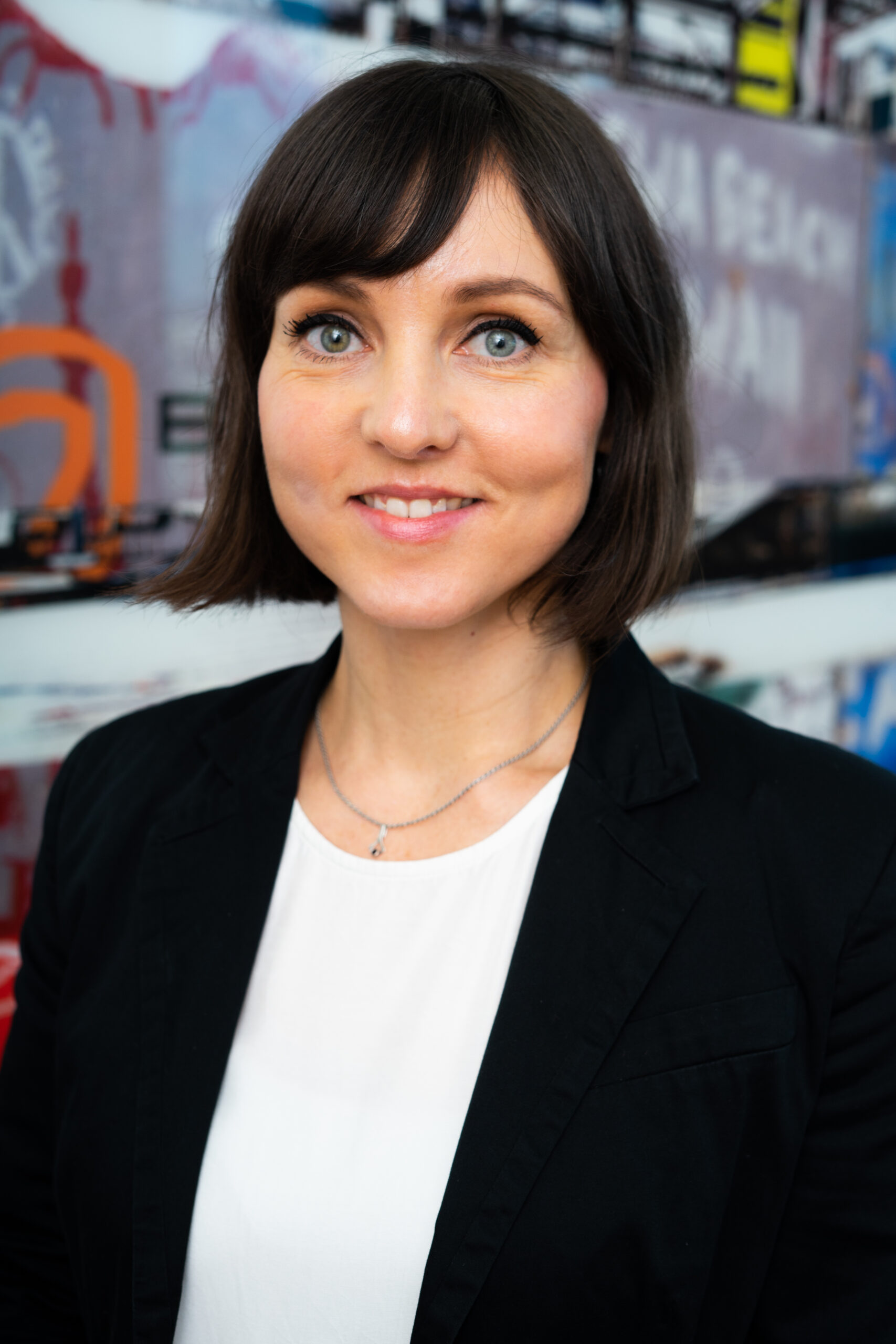
Anika Williams
Head of Treasury and Customer Payment Operations at Zalando Payments

About this episode
Anika Williams is Head of Treasury and Customer Payment Operations at Zalando Payments, where she combines treasury leadership with responsibility for a significant operations function.
Working within Zalando’s technology-driven payments business, Anika oversees treasury in a regulated environment while managing the challenges that come with high volumes of customer transactions, evolving compliance requirements, automation and AI.
She also leads a team of around 40 people and is actively involved in mentoring and Berlin’s treasury community.
In this conversation, Anika shares her perspective on what modern treasury leadership looks like and why professionals should actively seek out difficult projects and opportunities to learn.
She discusses the changing role of treasury, from operational activities towards greater CFO advisory, alongside the impact of technology, data and AI. Anika also explores why the biggest challenge around AI may not be the technology itself, but having the right people and mindset to keep adapting as the definition of “good” continues to change.
The conversation also covers leadership, mentoring, operations and the importance of learning from mistakes. Above all, Anika encourages treasury professionals to be bold, stay humble and never stop learning.
What we discuss:
- How treasury at Zalando Payments manages high volumes of customer payments and seasonal cash flows
- Why compliance plays such an important role within a regulated payments business
- How data science and technology can complement traditional treasury expertise
- Why people and mindset may be a bigger AI challenge than the technology itself
- How the role of treasury is becoming increasingly focused on CFO advisory
- What leading a team of around 40 people has taught Anika about leadership
- Why mentoring and learning from people outside treasury can broaden your perspective
- Why treasury professionals should choose difficult projects and step outside their comfort zones
You can connect with Anika Williams on LinkedIn.
—
🎙️ Subscribe to the Treasury Career Corner podcast – Never miss an episode! Subscribe on your favourite platform:
CLICK HERE for 🎧Spotify Podcasts
CLICK HERE for 🍏Apple Podcasts
🎓 Exclusive discount on CTP & FPAC – Visit our AFP partner page to find out how much you can save: https://treasuryrecruitment.com/partners/afp/
💡 Earn CTP credits just by listening – Selected episodes of the Treasury Career Corner are AFP-accredited. Listen, take a short quiz, score 80% or more, and we’ll send you your free certificate. Filter by CTP Eligible at https://treasuryrecruitment.com/podcasts/
👉 FIND OUT MORE HERE https://treasuryrecruitment.com/partners/
Mike, CEO, The Treasury Recruitment Company: [00:00:00] So welcome to this week’s Treasury Career Corner Podcast, where I interview treasury professionals about their treasury careers. Each and every [00:00:05] week, I talk to treasurers about how they built their careers, where they are now, where they see both themselves and the treasury [00:00:10] profession going to next.
Mike: In this week’s show, delighted to be joined by Anika Williams, the Head of [00:00:15] Treasury and Customer Payment Operations at Zalando Payments.
Mike: Founded in [00:00:20] Berlin in 2008, Zalando is the leading European technology platform for fashion and [00:00:25] lifestyle, connecting 62 million active customers with more than 7,000 brands across [00:00:30] 29 markets. Their business is built on a unique AI-powered data and infrastructure [00:00:35] platform, which Anika will talk about a little bit later.
Mike: But, what we want to do is go back to the [00:00:40] beginning of Anika’s career, how you first started. Discover finance and then treasury. Over to [00:00:45] you.
Anika, Head of Treasury and Customer Payment Operations at Zalando Payments: Hello. Nice to be here. Thanks for having me.
Mike: Pleasure. [00:00:50] So how did you first start? You when you… ‘Cause you started your career at Shell, but, [00:00:55] did you think treasury was where you were gonna be?
Mike: Or talk us through.
Anika: So I [00:01:00] originally, when I started working in finance in my first jobs, I didn’t know what treasury is. Yeah. [00:01:05] I started working in accounting, and that was a great foundation, ’cause the [00:01:10] higher you get in your career, at some point in time it all comes back to the P&L and the balance sheet, and [00:01:15] it’s great to understand how accounting works, how audit works, [00:01:20] how closing processes work in your first career steps.
Anika: And then I worked in [00:01:25] various other finance func- functions where I had the first interface to treasury, and I fell in [00:01:30] love with it. I thought, I really want to work in it. But I worked in Germany, and usually [00:01:35] treasury is a headquarter function, and the headquarters of Shell were in, or [00:01:40] are still in, in London, so treasury was based in London.
Anika: So hence, [00:01:45] at some point in time I tried to move to London in order to work in [00:01:50] treasury, and that was successful, and I really, enjoyed it. And since then [00:01:55] on, I stayed in treasury ’cause in my view it’s the best finance function.
Mike: And what [00:02:00] did those early years, those early roles if you like, what do, what did they…
Mike: If you’re looking back [00:02:05] now, what did they teach you about treasury?
Anika: I think [00:02:10] they taught me a lot of things that the treasury professional who [00:02:15] starts their career in treasury doesn’t necessarily know and learn as [00:02:20] part of their role, but they needed to make a holistic assessment of financial [00:02:25] risks, of financial costs and benefits of particular [00:02:30] businesses.
Anika: And so you need to, or you learn to connect the dots between [00:02:35] what does my P&L and balance sheet look like? What impact does that have on my financial statements? [00:02:40] What impact does a certain business cas- case have on planning [00:02:45] processes, which tax implications are there? And [00:02:50] putting all of these pieces of the puzzle together and then integrating it [00:02:55] into your treasury picture gives you a very holistic, almost CFO-like picture.[00:03:00]
Mike: And those moves themselves, because I know that you did some moves overseas and you were moving [00:03:05] different countries and things. Did you plan that or was it just they came along and you said, I’ll take that [00:03:10] opportunity.” How did it work?
Anika: So I grew up in Berlin, [00:03:15] and ever since I was little, I always wanted to live abroad at some point in time.[00:03:20]
Anika: And I studied in Korea, and I fell in love with this [00:03:25] part of Asia. So when I started working for an international company and the opportunity [00:03:30] came along, I really pushed for this opportunity to become real, to [00:03:35] go back to Asia. And hence I started where I worked in a service [00:03:40] center in Malaysia for a year, which was a great experience, extremely different from the [00:03:45] usual country or headquarters experience.
Anika: And also that was the time of, [00:03:50] offshoring, right? Like, where service centers were popping up or where big [00:03:55] corporates were pushing a lot of operational activities into service centers. So it [00:04:00] was a great opportunity to be part of the journey, and in those days it was also considered a good [00:04:05] foundation for future leadership roles.
Mike: , What was the biggest difference for you being out there? how did… You say it [00:04:10] was very different. What do you mean?
Anika: The [00:04:15] incentives an employee gets are very different. So your salary structures are [00:04:20] different, your, performance rankings in terms of how your performance is ranked is [00:04:25] different.
Anika: So in a usual headquarter function your [00:04:30] performance is based on how well you execute, but in a service center it’s a lot more [00:04:35] around how you execute, when you execute, how do you streamline, how do you automate.
Anika: [00:04:40] And that was, I think, the service centers where, or business operational centers, [00:04:45] they’re called different in different entities, we’re further ahead on that journey of [00:04:50] automation compared to the usual onshore experience- onshore [00:04:55] locations.
Mike: I’d spoke to Felix recently at ABB and, it was a [00:05:00] re-interview, if you like. I caught up with him, he’d been on before, and he loves his tech. But one of the things [00:05:05] with the show was we talked about insourcing, and actually what they’re to- [00:05:10] doing is actually bringing… They’re not letting some of those operations go overseas.
Mike: They’re [00:05:15] saying, actually when they go overseas, we then have this merry-go-round of recruiting. Actually, we get some [00:05:20] people here at the center, and actually we have greater control. We can look after the talent and things.” [00:05:25] have you seen a similar thing, or what was that like?
Anika: Yeah. Staff churn in service [00:05:30] centers is incredibly higher than in onshore locations.[00:05:35]
Anika: And that also drives how you plan your work there, how [00:05:40] you plan resources, how staff development looks like. So it’s a very different [00:05:45] approach to your operational excellence and to talent management. [00:05:50]
Mike: And working for a group like Shell and I’ve known, known some of the Shell [00:05:55] team and things like that particularly.
Mike: You came back to Shell in London as deputy treasurer, EMEA, and [00:06:00] things. What was that like as a role?
Anika: So I first started [00:06:05] working on the trading floor in London. So I moved to London from Germany and looked [00:06:10] at working capital, where I worked very closely with various treasury functions [00:06:15] as part of, Shell trading in London.
Anika: And that was a great experience because you learned a [00:06:20] lot about trading, and which is obviously a huge driver for, [00:06:25] for the financial success of various energy companies around the world. [00:06:30] And, then I did my ACT qualification ’cause I decided I want to [00:06:35] stay at treasury and then started working at corporate treasury, and then, was [00:06:40] promoted at some point in time to deputy treasurer.
Anika: And what I [00:06:45] really enjoyed, and what I didn’t appreciate at the time because you are in the center of [00:06:50] excellence, is the level of excellence at Shell. Shell is one of the biggest corporate [00:06:55] treasuries in the world, so you see a lot of different pockets of [00:07:00] treasury, and I was just amazed at the level of experience.
Anika: [00:07:05] And talking about staff turnover at service centers where some people only stay for two, three months, or sometimes [00:07:10] don’t show up at all to, to their first work, day of work. And then in Shell treasury in [00:07:15] London where you had people that worked there for 40 years. Yeah. And you’re not [00:07:20] talking months of corporate experience.
Anika: You’re talking decades, [00:07:25] and, that just really drives excellence, and you learn a lot, [00:07:30] and I really, enjoyed it. But I only really truly appreciate it when I left.
Mike: And [00:07:35] do you, see, though, again, when I’d recruited for Shell, in previous years, [00:07:40] some people just said, “No I feel I’ll be too small a [00:07:45] part of a,” what is it?
Mike: big machine.” A too smaller cog, if you like. “I want a bigger role,” and things [00:07:50] like that. Did you never feel about that? Or how do you, when you’re coaching people and things like that, you [00:07:55] didn’t feel like that?
Anika: So it’s true that in big companies [00:08:00] work is more segmented.
Anika: So you can compare it to a lake and an ocean, right?
Anika: so [00:08:05] in a company like Shell, one area in a lot [00:08:10] of depth, but not in a lot of width. Yeah. And in smaller companies you see a lot of [00:08:15] breadth, right? but not so deep because it’s, they simply don’t have these complicated or a lot of the [00:08:20] complex stuff simply isn’t, as sophisticated as you would have it in big international [00:08:25] companies.
Anika: But I think it’s also part of the reason, I think, why I [00:08:30] also was successful in the past is because you try to look beyond your role. You go for lunch with [00:08:35] people, you have knowledge exchanges, you ask a lot, you try to understand [00:08:40] different worlds. And if you do that, I think companies like Shell, when I [00:08:45] worked there, give you a great opportunity to learn a lot and expand your horizon, and also figure [00:08:50] out where you want to go next and where you don’t want to go.
Mike: Yeah. It’s a really good opportunity that- [00:08:55] making the most of it. And then from Shell, you then joined DLE Group as [00:09:00] their first, building a treasury from the ground up. Can you maybe talk us through that role? [00:09:05]
Anika: Yeah, so we left Shell in 2022.
Mike: Yeah.
Anika: [00:09:10] And I’ve always worked in a big corporate, right?
Anika: I started my career in Shell and [00:09:15] worked in various functions and various seniority levels, and I wanted to [00:09:20] experience the other side of a startup, of a scale-up. And Berlin [00:09:25] is a, a city where you have a lot of startups, and I felt- going to Berlin, going [00:09:30] back to my roots, I need that experience.
Anika: So hence I took the opportunity to [00:09:35] build a treasury function in a small company that was scaling up at that time. [00:09:40] And while I was doing that, you learn a lot of the basics, coming back to [00:09:45] very- … compartmentalized work in, a big corporate. You have a big learning curve, [00:09:50] or you have a really steep learning curve on how do the basics works, how do technical [00:09:55] integrations work.
Anika: And I then quickly realized that there’s a [00:10:00] big unknown of how can you improve your work, how can you automate, how can [00:10:05] you simplify beyond the usual pivot tables and macros in Excel. [00:10:10] And hence I decided to do a data science degree. [00:10:15]
Mike: And DLE, they were real estate so quite a different industry.
Mike: What was that [00:10:20] like for you?
Anika: So DLE is a private equity-owned [00:10:25] company that- … that buys real estate and develops it. And, the ways of [00:10:30] working are a lot a lot more horizontal, right? you, get a lot more [00:10:35] done in half an hour, but also the topics you discuss are simply not that complex. Yeah.
Anika: So you have less [00:10:40] meetings. It’s a lot more going quickly to someone, discussing things, and then getting on [00:10:45] with your work. And it’s a very local experience, right? And it was very in the [00:10:50] beginning at least, Germany focused. So it, at the end it all comes [00:10:55] down to the people you work with and how do you make decisions, how can you move the business [00:11:00] forward, what are the trade-offs you’re willing to take, and that was a very [00:11:05] interesting and different experience to a big corporate, but both of them have their pros and cons.[00:11:10]
Mike: Yeah. And then talk us through the move to Zalando and how your role fits in, ’cause we were [00:11:15] just talking about you’re more focused on the payment side of the business or… talk us through the next move. [00:11:20]
Anika: Yeah, so then I worked for a few years in DLE and did my data science qualification, [00:11:25] and then the opportunity at Zalando wasn’t really planned for.
Anika: It came up, [00:11:30] and I thought it’s a great role ’cause Zalando, very [00:11:35] tech-driven. It was a great opportunity to combine the newly learned data science knowledge [00:11:40] with treasury. And Zalando Payments is 100% [00:11:45] subsidiary of Zalando. That is the payments processing unit. So every time you buy a product [00:11:50] on Zalando, the payment goes via Zalando Payments.
Anika: So we [00:11:55] manage the whole cash flow of the cash stream. And, in addition to the very [00:12:00] payment processing related activities, it’s also the typical corporate treasurer [00:12:05] role of managing the risks of a treasury function and of the [00:12:10] basically safeguarding the balance sheet. And it’s different in a way that it’s a regulated [00:12:15] institution.
Anika: Compliance is your best friend, and you just have a lot more compliance [00:12:20] related activities, and the approach you take to certain [00:12:25] activities or operational activities differ slightly than a traditional corporate treasury. [00:12:30] And also an online marketplace like Zalando has [00:12:35] unique challenges and different sort of cash movements than you would have [00:12:40] in a Shell, for example.
Anika: So in, Zalando, in a marketplace, you tend to have a [00:12:45] lot of payments and seasonal cash flows with [00:12:50] smaller values, whereas, if you’re if you ship a, a cargo full of fuel [00:12:55] oil or full of- … crude oil over the ocean, of course, it’s one big payment with [00:13:00] different risks rather than lots of small payments.
Mike: And you’ve got these millions [00:13:05] of customer transactions. How does that change how you think about treasury risk, [00:13:10] for example? How, do you break it down in your head?[00:13:15]
Anika: So first of all, in terms of [00:13:20] risk management, I think you have to differentiate between the customer [00:13:25] risk of not pay- like, and of course, Zalando [00:13:30] doesn’t require background checks when you, when you open an account and start buying. Yeah. [00:13:35] there are risks, risk checks on which payment methods you get [00:13:40] offered, and, you have risk checks in terms of which [00:13:45] suppliers you deal with, like which fashion brands, sell via your [00:13:50] platform.
Anika: But I think overall we are not… We are paying out to [00:13:55] suppliers we know, we work with regularly. So hence I think that risk [00:14:00] is pretty well-balanced in our company. The risk that is more difficult to [00:14:05] manage, but that is done via a risk management team, is steering [00:14:10] different payment methods to different customer channels.
Anika: So who [00:14:15] gets offered which payment method in order to avoid fraud and to avoid losses. [00:14:20]
Mike: Make sure it works
Anika: and that- But maximize… Exactly. Yeah. But maximize customer [00:14:25] convenient and at the end GMV
Mike: and bottom line impact. And you’re at [00:14:30] the forefront of things with now AI and technology and things.
Mike: ‘Cause, [00:14:35] just over the period of the past few years we’ve gone from treasury transformation and [00:14:40] improvement, now then digitalization, and now it’s AI. Everyone’s talking AI and tech and everything else. [00:14:45] What would you say is perhaps the biggest challenge? Is it the technology or [00:14:50] is it get the people to embrace the technology, or h- how does it work?[00:14:55]
Anika: First of all, I think AI is currently the [00:15:00] buzzword of the season, right? Yeah. people use AI, and they [00:15:05] sometimes mean things that are not necessarily AI, right? Like for example, you talk [00:15:10] machine learning. Machine learning has been around since the ’70s.
.
Anika: You talk a stochastical [00:15:15] methods, they’re not necessarily sophisticated AI methods, right?
Anika: So I, [00:15:20] feel at the moment everybody’s talking AI because it’s part of the wave, but [00:15:25] let’s see what actually materializes. As we’ve seen with EuroFinance, the [00:15:30] actual use cases are extremely limited that have been brought to life. People have lots of [00:15:35] ideas, but let’s see what the future brings.
Anika: I think the technical challenge can be [00:15:40] mastered, right? if you have the right engineers, if you have the right mindset, if you have the right [00:15:45] steering from the top, support from the top, then you can [00:15:50] develop your processes, your whatever you want to AI, right? Yeah,
Mike: yeah, [00:15:55] You, will get it done.
Anika: For me, the biggest challenge is always having the right people and the [00:16:00] right mindset to get this done, and with get this done, [00:16:05] AI is an ongoing journey, right? This is… we don’t know what AI will look [00:16:10] like in 10 years. We don’t know what automation would look like in 10 [00:16:15] years. This, I think, has changed because in the past 20 years, 10 years when s- [00:16:20] when, we started to automate, we knew what automation looks like.[00:16:25]
Anika: We knew what good looks like.
Anika: We necessarily didn’t know in every company how we get [00:16:30] there with various IT challenges, different systems, different processes, et [00:16:35] cetera, but we knew what good looks like, and I think this has changed because [00:16:40] what good looks like today, we might know what good looks like in half a year, but we don’t [00:16:45] know, what good looks like in two years, in three years.
Anika: And [00:16:50] that, I think, is quite a significant leadership challenges across the [00:16:55] industry to shape your function, to shape your [00:17:00] mindset, to shape processes, to shape what does my strategy look like. I know I’m gonna [00:17:05] implement AI, and I know I’m gonna do the best possible with the available [00:17:10] resources that creates bottom line impact, but this might change.
Anika: This is a [00:17:15] far more fluid journey than in my view it was 10 years ago.
Mike: [00:17:20] Yeah. And you talk about people and resources and things like that, and get them in the [00:17:25] right direction. So when you were at Shell and then DLE, what were the size of your teams there? Because [00:17:30] now you’ve gone up and up, and now you lead a team of 40 plus.
Mike: So [00:17:35] how has that developed, if you like?
Anika: So my first leadership experience [00:17:40] outside treasury in Shell was, when I worked in Malaysia, when I led an [00:17:45] operational team, and that were three, four people. Yeah. in addition to the usual [00:17:50] staff challenges, you had different cultures, you had different, [00:17:55] work patterns.
Anika: Or, not work patterns, but you had, Different job [00:18:00] expectations, right? The team size has changed and the roles I had, [00:18:05] but so it was usually between three and 10 people. The [00:18:10] reason why the team size now is bigger because in addition to treasury, a [00:18:15] few months ago I also took on the operations role at Zalando Payments, [00:18:20] and that’s roughly 40 people.
Mike: Wow. And what’s that like? [00:18:25]
Anika: I really enjoy it. I enjoy the [00:18:30] intellectual challenge. I enjoy learning a new part of [00:18:35] the business, side of the business, and a, a side of the business that frankly exists in [00:18:40] most companies at various degrees. Like operations is often not talked about that much, but- Yeah
Anika: [00:18:45] it’s everywhere. It’s the backbone of your infrastructure in finance. [00:18:50] And it’s exciting to see how we’re gonna develop the future there [00:18:55] together, and what’s on the radar for, for these teams. [00:19:00]
Mike: And what are your biggest leadership lessons, if you like, that you’ve learned so far? You’ve [00:19:05] taken on this bigger team and, there’s a period of evolution.
Mike: You’re learning different things. What, [00:19:10] what things have you thought, “Oh, this will work,” and it perhaps hasn’t, or the, you’ve [00:19:15] found other things, you’ve gone, “Wow, this is great, and this actually really helps everyone”?[00:19:20] [00:19:25]
Anika: My biggest leadership lessons in this [00:19:30] current role are, not that different to roles I had before.
Anika: So [00:19:35] I first of all don’t see mistakes as bad, right? I think mistakes are great to [00:19:40] learn from, and if you’re only successful in your life, you [00:19:45] maybe don’t grow as fast and as much as you grow when you make mistakes.
Anika: [00:19:50] And I also convey that message to my team, so it’s okay to make mistakes. It’s not okay to make the same mistake three, [00:19:55] four times – No … but it’s okay to make mistakes and learn. Learn from
Mike: the mistakes. Yeah.
Anika: Exactly. I think as a [00:20:00] manager and as a leader, be humble. Support your team [00:20:05] wherever you can, and be very realistic that support looks very different for [00:20:10] different people, right?
Anika: A young mother or a young parent requires different [00:20:15] support than, and a different challenge also, than a 20-year-old who [00:20:20] just graduated.
Anika: I think what I’ve learned is have patience. So [00:20:25] I’m not particularly a very patient person, but the [00:20:30] different, leadership, the different years in leadership taught me [00:20:35] to maybe stop, pause, reflect, and then act.
Anika: Whereas 10 years ago, [00:20:40] 20 years, I would have acted first.
Mike: Just go on and done it, and then, oh, yeah.
Anika: Yeah. so you [00:20:45] learn, not every email needs an immediate answer. Yeah. And [00:20:50] I think you just try to support your team, right? And you- Yeah. But one [00:20:55] big learning I would say that I didn’t appreciate in my early years is I, that I [00:21:00] usually choose my roles based on the line manager, that I always made sure, and that was [00:21:05] easy in Shell because you are in one company, you know the network.
Anika: That [00:21:10] for me it’s extremely important who I report to because I want to have a line manager that supports [00:21:15] me, that challenges me, that I can learn from, that I can, just develop.
Mike: Yeah. [00:21:20] And part of this, sort of you as a person, [00:21:25] you’ve also established a Berlin-based treasury network, which I was actually gonna talk to you about before the show.
Mike: I was [00:21:30] like, “Oh, no, I need to…” So but what’s that been like? what inspired you to do [00:21:35] that?
Anika: A friend of mine moved to [00:21:40] Berlin from London around a year before me, and both of us work in [00:21:45] treasury, and we both realized that we don’t actually know anyone in Berlin in treasury. [00:21:50] And so we just randomly reached out to people on LinkedIn, right- Yeah
Anika: [00:21:55] in similar positions, and started, basically meet up for coffee [00:22:00] to discuss challenges we have, issues we have, and from there developed a… Felix Luber from [00:22:05] HelloFresh, for example, he is really active in in [00:22:10] broadening that network in, in, in [00:22:15] having additional educational sessions being offered on [00:22:20] a reg- regular basis.
Anika: And what I like about the Treasury Network is that it’s quite small, right? So [00:22:25] it’s based on trust. It’s what stays inside the room. It’s all what’s discussed inside [00:22:30] the room. It’s not… It’s confidential. It we are on purpose not [00:22:35] inviting banks, so it’s really a self-help group, if you wish.
Mike: Yeah. [00:22:40] also we can give a shout-out to Felix.
Mike: He’s coming back on the show. Great. Yeah, he was [00:22:45] on the show before when he was with, is it Marley Spoon, I think it was? Marley [00:22:50] Spoon, yeah. So he was there, but now he’s director of group treasury over at HelloFresh, and we’re gonna do an [00:22:55] update show because we had a really good show a few years ago now, and I was like, “You’ve got to come back on.”
Mike: He was like, “All [00:23:00] right.” So now that’s it, I’ve got the leverage now. I say, “Well- … Anika said you have to come on. That’s it.” [00:23:05] just don’t tell him. that’s it.” I’d say, and so this sort [00:23:10] of this networking, and as you mentioned there, this sort of mentoring, sort [00:23:15] of thing as well. I know that you mentor some of your staff and things, helping others.
Mike: What do you [00:23:20] get from that? Because I’ve heard, we had, we’ve [00:23:25] had a number of clients on the, podcast. We had Karen van der Gesche, and she talked about, I’ve [00:23:30] always… One of my first episodes, she had a mentor. She said, “I can be mad.” I said, “What? W- [00:23:35] whoa, Hang on, you’re in treasury.
Mike: You can’t be mad.” She went, “No, I can have a, a crazy idea, run it past my [00:23:40] mentor, and they can… We can work it through. There might actually be an, an ounce of a really good idea [00:23:45] in there.” But, you might… You couldn’t just go to your boss. You go to my CFO, “I’ve had this [00:23:50] idea.” “Get out.” that’s… You can’t do that. Instead, you can role play it and went [00:23:55] through, and actually it’s really helped her over the years, and we, caught up recently. Is that something you’ve done, [00:24:00] or what do you think about mentoring?
Anika: I love mentoring. I [00:24:05] think it’s a great tool for career succession.
Anika: It’s a great tool [00:24:10] for benchmarking yourself, for exactly discussing out of the box [00:24:15] ideas. I am surprised that it’s not offered in bigger companies automatically. I [00:24:20] was spoiled in Shell because when I started there, I automatically had a mentor assigned to [00:24:25] me, and it was, great because he was not in my reporting line.
Anika: He was very senior, [00:24:30] so you discuss things that are not part of your usual work. Yeah. And what [00:24:35] I, apart from ideas, what I often discuss are also challenges. So how do you [00:24:40] deal with this person, right? So for me it was always also a [00:24:45] tool to discuss the usual leadership challenges that you have along the way.[00:24:50]
Anika: And leadership doesn’t necessarily mean staff responsibility. It can also [00:24:55] mean leading a project and, leading a diverse group of stakeholders without [00:25:00] influence.
Anika: And I offer it on purpose. I don’t [00:25:05] necessarily offer it to everyone as part of an official dialogue, right? You just do it, [00:25:10] and I hope it helps.
Anika: I hope I hope that it hel- I h- I help people [00:25:15] develop. I hope I can help them in whatever they want to achieve, and [00:25:20] that’s often always the first question that you ask, “What do you want to get out of it?” For me, I can say [00:25:25] that, to answer your question, what do I wanna get out of it? [00:25:30] I think it’s a great tool to understand also the younger generation, Gen Z, how they think, [00:25:35] right?
Anika: To stay connected because your team is not always only [00:25:40] your own age, your own gender, et cetera. And it’s [00:25:45] a it’s a great tool to see what’s going on in the organization, what’s on their [00:25:50] minds, and what are next steps to, bounce ideas. [00:25:55] yeah.
Mike: And it’s an interesting one. Jessica Siu from [00:26:00] Authentic Brands, who’s one of my speakers at AFP, she talked about how…
Mike: I said, how did you get your [00:26:05] mentor?” And she said, I had lots of coffees with people, and my mentor [00:26:10] doesn’t work in finance or treasury.” Yeah. “That works actually in, [00:26:15] actually, on the shop floor and more in operations and things like that. And they’re [00:26:20] amazing because they think totally differently to me.”
Mike: Yeah. She went, “The way they approach problems, [00:26:25] I go one direction, and they go, ‘Have you thought about this?’ And it’s, literally at 90 [00:26:30] degrees.” And she’s like, no. No.” And, and- Yeah … but also they’ve said it’s, been [00:26:35] a, a really nice equal relationship, that they’ve also got things from the way she [00:26:40] approaches a problem as well.
Mike: And that, that was one of the things that really inspired her as well. And it sounds like you’ve got the [00:26:45] same.
Anika: Yeah, very much. I really, enjoy talking to, to [00:26:50] peers or juniors from various departments because they think differently. If you talk to a data [00:26:55] scientist, if you talk to an IT engineer, if you talk, to a tax [00:27:00] professional, they think differently- Yeah
Anika: to a treasury professional. So you also learn how [00:27:05] they approach problems. And you, I feel often, especially with IT people [00:27:10] they often benefit from finance people on this, on the influencing skills [00:27:15] side, right? Yeah. how to get what you want. they’re often very left brain [00:27:20] of thinking.
Anika: Yeah. Very this is the problem, and solve it.
Mike: Solve it, and yeah,
Anika: and move- The softer part of [00:27:25] it, like how you get your way. Your, way from A to B is not always a straight line, right? Yeah. It [00:27:30] can be a bit S-shaped.
Mike: Squiggly line. Yeah, yeah. Yeah. [00:27:35] and you and I, we’ve just been at conferences together and things like that.
Mike: As you say… [00:27:40] we had it last year at the conference, and we just said, “Anyone that put AI, tagged it on the end [00:27:45] of your session, whether it was about AI or not.” the, the room was queuing up just to find out. That’s [00:27:50] obviously a big watch word. But are there any other areas, or what else do you think the treasury professionals need [00:27:55] to be focusing on over the next, six to 12 months?
Mike: Or where, do you think we’re [00:28:00] going?
Anika: Apart from the obvious automation AI-type [00:28:05] activities that you just mentioned, for me, big areas to watch out for [00:28:10] are compliance. Obviously, I work in a regulated industry, [00:28:15] so compliance is not only a big buzzword, but it’s also a very evolving one. And new laws are [00:28:20] coming into play that affect the way we do business.
Anika: [00:28:25] Instant, right? That’s a big buzzword, but related to AI, so whether you call it [00:28:30] instant reporting, instant cash steering. So that is, yes, [00:28:35] it’s linked to automation and AI, but it’s it has slightly different challenges to get, [00:28:40] to get where you want to go. I think the role of treasury has become more [00:28:45] international and is still becoming more international.
Anika: The world is more connected than it was 10 [00:28:50] years ago. So that I think is a trend that continues to exist, and it also means that [00:28:55] you have to manage your workforce in that regard, right?
Anika: If I put a job on [00:29:00] LinkedIn on Zalando, you have a very, international crowd applying for that.
Anika: So it’s [00:29:05] important to be up to date on like how the international treasury talent [00:29:10] development going on. And I think the role of treasury has [00:29:15] become more CFO advisory than it was 10 years ago, where it was more like process your payments [00:29:20] and do operational activities. And that I think is also is hopefully one [00:29:25] of the consequences of automation and AI, that you have the data, that you [00:29:30] have the information available in order to fulfill that role.
Anika: . And for me, [00:29:35] one of the big areas to look out for and to work on are operations, right? [00:29:40] Everybody has operations. Even the smallest company has some element of operations, but what does good [00:29:45] look like, and what does good look like tomorrow? And that answer is very [00:29:50] different to different industries and company sizes.[00:29:55]
Anika: But for me, I haven’t really made up my mind yet [00:30:00] on what does operations look like in five years, and that’s an area where I still learn a lot [00:30:05]
Mike: And you haven’t mentioned it, so I’ll mention it. Obviously I’m [00:30:10] speaking to a rising star of treasury. Recognition.
Mike: I think a [00:30:15] lot of treasurers, treasury professionals are poor at representing themselves [00:30:20] or putting themselves forward and things like that, but you have actually been recognized. You’ve got some awards and things like [00:30:25] that. Can you talk about, just talk around them and things, why they’re important, why they should [00:30:30] be.
Mike: so you were, given the Rising Star Award by EuroFinance, and, just talk us through [00:30:35] some of the recognition that you’ve received and, what a difference that makes and why other people should do it. [00:30:40]
Anika: So this year we, in Zalando, we [00:30:45] won the Adam Smith Award for Best Risk Management Solution for a compliant solution that was [00:30:50] quite a pathfinder in the industry, and I was awarded Rising Star at EuroFinance [00:30:55] and Rising Star at Adam Smith Award.
Anika: None of these nominations were done by myself, [00:31:00] right? so go to that-
Mike: Yeah, You say this. I saw the papers. It’s like, “I’m [00:31:05] great.” look at this. Yeah. I voted for myself 15 times. I’m in. I’m the [00:31:10] winner.
Anika: So I was nominated, and I was grateful for [00:31:15] Deutsche Bank for doing it ’cause frankly I would have never done it myself.
Anika: And, you’re right, [00:31:20] I don’t think I’m particularly good at at-
Mike: Self-promotion … [00:31:25]
Anika: self-promotion, and think it’s partly also a female thing that, women [00:31:30] tend to be a bit worse at it than men are in general. For me, [00:31:35] of course, right? These awards are great, and it’s a great honor to receive [00:31:40] them, but it doesn’t really change my day-to-day life, right?
Anika: So [00:31:45] that’s, the challenge
Mike: Do you not walk around the office just with a big badge, like with a big medal just [00:31:50] saying, “Look, sorry. Sorry, no, you have to speak to… I’m a rising star now. That’s it.” No.
Anika: No? Not [00:31:55] at
Mike: all. Okay.
Anika: No. They also don’t match my outfit.
Mike: Oh, okay.
Anika: [00:32:00] so they are a great recognition, but as soon as you have [00:32:05] them, life is back to normal, and,
Anika: It’s the challenge ahead of you that you’re trying to solve. [00:32:10] I hope it’s a recognition to the team that- Yeah … [00:32:15] it’s, never a about Anika award, right? It’s a team effort in the background. [00:32:20] And yeah, it’s great that I received that award, and, but especially for the risk [00:32:25] management solution there were a team of about 40 people working on that for almost a [00:32:30] year.
Anika: And honestly, it’s also these solutions are in place and working [00:32:35] because you receive the support from the boss and from the senior management to enable [00:32:40] that. And when all these little wheels work well together, then you [00:32:45] have a functioning machine, and then you are successful. Yeah. And the awards are a great [00:32:50] honor.
Anika: But yeah, onto the next tasks I would say.
Mike: I remember when I spoke to [00:32:55] Wolfgang at Porsche, and he… They’d won four or five awards, and I was like, “Oh…” did, the [00:33:00] jokey conversation with him. And he said… we joke around, but he said, “Actually, [00:33:05] treasury by its very nature sometimes
Mike: this was actually to bring people out, to actually [00:33:10] recognize the effort that people make, and it sounds like you were feeling the same?[00:33:15]
Anika: The way treasury is set up in Zalando payments, we are [00:33:20] on the forefront, and it’s part of my role as a leader to make sure I’m in an advisory [00:33:25] role to the management board. And hence, I can see where he’s coming from.
Anika: [00:33:30] I personally don’t feel like that.
Mike: We were saying that, I was, joking with him and saying, [00:33:35] you need recognition. this is why you’re doing it for the big gold star.” He said, “Actually, the opposite.” [00:33:40] It was actually to recognize the team, to recognize the efforts because otherwise, sometimes you [00:33:45] get so just working on, we’ve done that project.
Mike: We delivered that. Boom. Yeah. It’s actually to take a breath and [00:33:50] go, “Wow, that was pretty amazing.” Yeah. And that, yeah, that, I think that was a positive thing. [00:33:55]
Anika: I think once you do complex things like- the risk management solution was while [00:34:00] you are in the depth of the project, you don’t realize that you are actually [00:34:05] creating a pathfinder for the industry.
Anika: You don’t realize that you’re actually doing a great thing because you are going [00:34:10] from challenge to challenge.
Anika: And you go two steps ahead and one step back, and then three [00:34:15] steps ahead, and then slowly- slowly, the project develops. And when you’ve done it, you go [00:34:20] like, “Oh, great.
Anika: Finally, it’s done . It’s one more work.” Yeah. And then on to the next [00:34:25] things. But you… it’s a good time to reflect and say, “Okay, we’ve actually achieved something [00:34:30] that is, internationally recognized.” And that was a great moment for the [00:34:35] company and a great moment for the team, and I’m most proud of my team who did it.
Mike: That’s fantastic. [00:34:40] As we approach the end, we’ll put your, LinkedIn details in the show notes, you’ll be flooded with [00:34:45] connection requests. The people do say this to me. no, they do, and it- it’s quite cool ’cause you then you know [00:34:50] people that listen to the podcast, and we get num- yeah, hundreds of listeners now [00:34:55] every, every, episode.
Mike: But we’ll put that in there. But takeaway advice [00:35:00] what advice would you give to maybe someone earlier in their career, as you were, we [00:35:05] talked about earlier, mid-level or more senior? what are the takeaways that if someone’s [00:35:10] having their, cup of tea or coffee at the end of the week and they’re listening to this what takeaways would you give [00:35:15] them?
Anika: I would say Choose [00:35:20] the difficult path The easy path will always get you the easy [00:35:25] results. Choose the difficult projects, choose the stuff that is outside your comfort zone. [00:35:30] be bold. tell your boss what you want, ’cause [00:35:35] otherwise he or she won’t know where he or she can support you, whether that means, [00:35:40] we talked about mentors earlier, whether that means particular roles, particular projects.
Anika: [00:35:45] Be transparent and be humble, right? So I have the attitude that I [00:35:50] can learn from everyone in the room, whether it’s the cleaning staff or whether [00:35:55] it’s the CEO. There’s some things that person knows that I don’t know and maybe I should know. [00:36:00] And be humble, be bold, learn, or as [00:36:05] Cinderella said, “Have courage and be kind.”
Anika: Be nice to your team, be nice, be a good [00:36:10] person. But be bold and learn and never stop learning [00:36:15] because as we see with the challenges ahead of us, whether it’s macroeconomic [00:36:20] challenges, whether it’s IT, that’s changing, AI coming up. The world is [00:36:25] changing and if you stop and if you think you’re in a, good place and you don’t adjust your [00:36:30] mindset and keep moving, you might not learn, you might not grow [00:36:35] and it might be to your detriment.
Mike: Amazing to talk to you today. A prize winner. I’ll be [00:36:40] looking to seeing you with the big medal very soon. Anika, great chat. Thank you very much. [00:36:45] thank you for doing it today.
Anika: Thanks a lot.
- Choose the difficult path: Challenging projects and opportunities outside your comfort zone can create greater opportunities to learn and grow.
- Never stop learning: Treasury is changing alongside technology, AI, compliance and wider economic challenges, making continuous development increasingly important.
- People matter as much as technology: Successful transformation requires the right mindset, leadership support and people, not simply the right technical solution.
- Learn from mistakes: Mistakes can be valuable opportunities for development when teams are encouraged to learn from them rather than repeatedly make the same ones.
- Stay humble: There is something to learn from everyone, regardless of their role, seniority or professional background.
- Use mentoring to broaden your thinking: Mentoring can provide a space to discuss challenges, test ideas and learn how people from different generations and disciplines approach problems.
- Be clear about what you want: Tell your manager about the roles, projects and opportunities you want so they have the chance to support your development.
🎧 Earn CTP & FPAC Credits by Listening to the Podcast
Whether you’re at the gym, on your commute, or walking the dog – you can now make your podcast time count toward your professional development.
We’re thrilled to share that Treasury Career Corner podcast episodes now qualify for CTP and FPAC recertification credits through the AFP’s Independent Study category.
How It Works:
- Listen to a Treasury Career Corner podcast episode
- Complete the short multiple-choice quiz
- Score 80%+ to pass
- Submit your credits to AFP as part of your recertification record
➡️ Credits earned per episode length:
- 30 mins = 0.6 credits
- 45 mins = 0.9 credits
- 60 mins = 1.2 credits
No filler. Just real treasury conversations covering leadership, strategy, risk, technology, and team building.
🧠 Quick Facts:
- 📝 Quizzes contain 6–10 multiple-choice questions
- 🎯 You need 80%+ to pass
- ✍️ Quiz submissions are reviewed manually
- 📋 We must then VERIFY you are a CTP treasury professional to help prevent automated or non-genuine submissions
- ✅ Once verified, we mark your quiz and send CTP credit confirmations every Friday
- 📨 If you need results sooner? Then email mike@treasuryrecruitment.com and we’ll try to prioritise the marking of your latest quiz
NOTE: In line with AFP compliance requirements, no more than two quizzes may be completed per day.
