A client said something to me recently that I hear more often when the job market slows down:
“It’s an employer’s market now.”
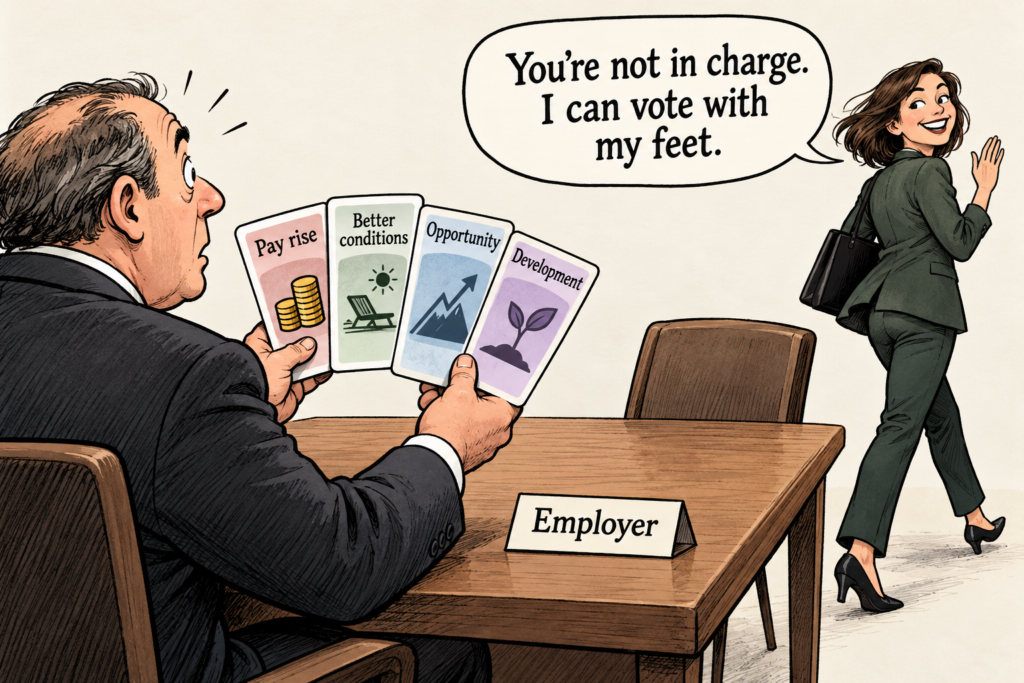
The implication being there are more candidates available, so employers hold all the cards.
They can pay less. Take longer. Communicate when it suits them. And candidates will put up with it because they need a job.
I think that’s a dangerous way to look at it.
I spoke to a treasury professional recently who gave me a perfect example…
He’d been through a recruitment process that dragged on for months.
There were interviews, long periods of silence, the process was put on hold, and eventually it looked like the whole thing had disappeared.
Then, months later, the company came back.
They told him he was by far the best candidate and wanted to re-engage.
What would you have said?
Because his answer was… “No thanks!”
And he said something to me that stuck:
“If this is how they treat me when they’re trying to recruit me, what’s it going to be like when I work for them?”
To contrast that, a bit later on, he went through the recruitment process with another company.
This time, they didn’t offer him the job.
So you might assume he’d have a negative opinion of them too, but when someone later asked him about the company, he actually recommended it.
Because the key difference was that throughout the process, they communicated with him, gave him proper feedback, kept him informed – basically, they treated him like a person throughout the process.
Think about that.
One company told him he was their best candidate (after dragging their feet for months)…
And he’d lost all interest in working for them.
Another company rejected him…
But he came away telling other people how good they were.
That’s candidate experience.
And it matters regardless of whether it’s an employer’s market OR a candidate’s market.
Now, obviously, when there are more people looking for jobs, employers have more choice.
I’m not pretending otherwise.
But there’s something I think employers need to be careful about:
Don’t confuse candidate availability with candidate desperation.
The people you REALLY want are still likely to have options.
You could stick a job advert up on LinkedIn Easy Apply and you’ll probably get hundreds of applications.
But more candidates doesn’t mean more suitable candidates.
And 300 applications don’t really help if none of them can actually do the job.
Recruitment is still an exchange.
Someone gives you their skills, experience and time.
You give them salary, opportunity, development and hopefully a decent place to work.
A slower market doesn’t suddenly change that relationship.
So yes, employers might have more choice at the moment.
Use that advantage to find someone brilliant.
But don’t use it as an excuse to treat people poorly, drag processes out indefinitely, or assume good treasury professionals will accept whatever you put in front of them.
Because markets change.
People remember.
And sometimes the candidate you’re treating as just another CV today is exactly the person you’ll be trying to persuade to work for you tomorrow.
Best regards,
Mike