
Why the Best Treasury Leaders Delegate, Trust and Verify | Treasury Careers Podcast
What does it really take to lead a successful global treasury team?
Is it about centralising everything, adopting the latest technology, or knowing when to step back and trust your people?
In this episode of the Treasury Career Corner podcast, host Mike Richards welcomes back Patrick Peters Buehler, Global Treasurer at Arcera Life Sciences, an international life sciences company operating across multiple continents.
Listen on:


Featuring

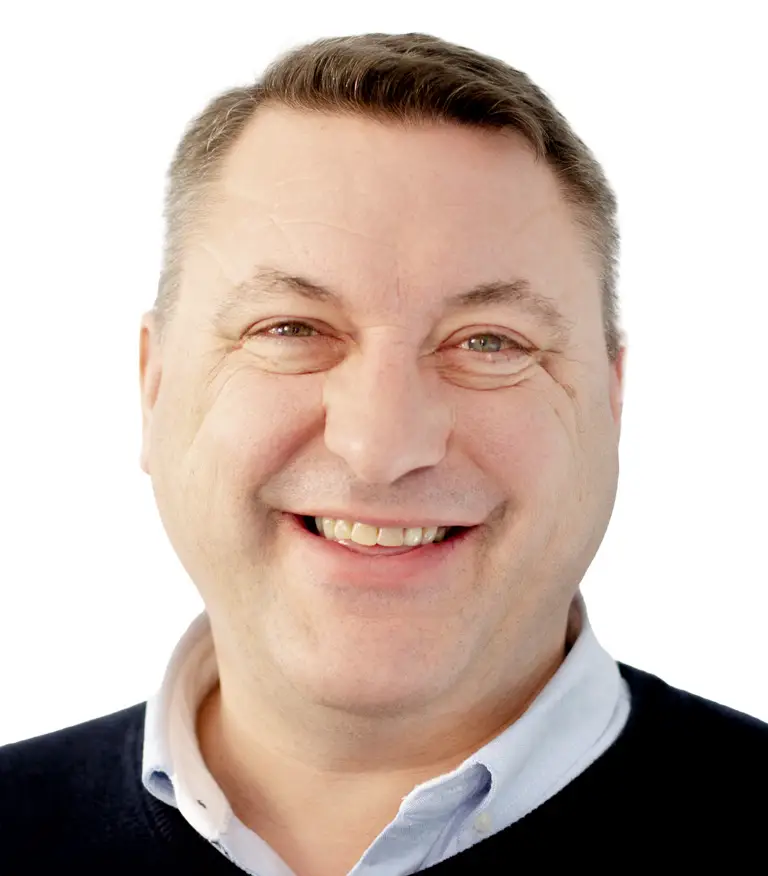
About this episode
With over 25 years of experience in treasury and finance, Patrick Peters Buehler, shares his perspectives on leadership, global treasury transformation, and the importance of building teams that are empowered to make decisions while maintaining strong processes and controls.
Drawing on his current experience leading a geographically dispersed treasury team, Patrick explains why centralising information doesn’t necessarily mean centralising people.
He also discusses the challenges of simplifying banking structures, the limitations of real-time treasury, and why human judgment remains essential as AI and new technologies continue to develop.
What We Cover in This Episode
- Why effective treasury leadership requires delegation, trust, accountability and strong processes.
- How centralised treasury data and decentralised teams can support global operations.
- Transforming treasury across 19 countries, reducing banking relationships from 60 to five core banks.
- The risks and inefficiencies of relying on Excel, manual processes and disconnected systems.
- Whether real-time treasury offers genuine advantages over traditional end-of-day reporting.
- How AI and predictive analytics could improve cash flow forecasting while retaining human judgment.
- Why continuous learning, treasury conferences and sharing best practices are essential.
- How rising costs of capital, emerging markets, blockchain and tokenisation are shaping treasury’s future.
You can connect with Patrick Peters-Bühler on LinkedIn.
—
🤝 Treasury Executive Exchange, Chicago – May 25th-26th 2027 – Join leading treasurers from across the US and internationally for two days of small roundtables, honest conversations and practical discussions, in partnership with the AFP: https://www.financialprofessionals.org/events/meetings/treasury-executive-exchange
🎓 Exclusive CTP & FPAC discounts – Find out how much you can save: https://treasuryrecruitment.com/partners/afp/
💡 Earn CTP credits by listening – Selected episodes are AFP-accredited. Listen, take the quiz and earn your certificate: https://treasuryrecruitment.com/podcasts/
🌍 Treasury Career Corner LIVE 2027 – Join us at events across London, New York, the Netherlands, Houston, Chicago and Dublin: https://treasuryrecruitment.com/events/
🎙️ Subscribe to the Treasury Career Corner podcast – Never miss an episode:
CLICK HERE for 🎧 Spotify Podcasts
CLICK HERE for 🍏 Apple Podcasts
Mike Richards, CEO, The Treasury Recruitment Company: In this week’s show, you’ll hear from Patrick Peters-Buehler, Global Treasurer at Arcira Life Sciences. It’s a catch-up episode. When I first spoke to Patrick, he was Global Group Treasurer at Savvy Games Group. Since then, he’s moved on from gaming into pharmaceuticals, and now he’s pulling together companies that are sovereign wealth fund, bought in parts, each with its own banks, systems, and processes. Tell you what, have a quick listen to some of the highlights.
Patrick Peters Buehler, Global Treasurer, Arcera Life Sciences: The thing of the digital natives, as we call the gaming industry, I would say for traditional CFOs like I am, I come from the manufacturing business, the strange thing is that you don’t have a balance sheet. The balance sheet on the left side,
Mike: Welcome to this week’s Treasury Career Corner podcast, where I interview treasury professionals about their treasury careers. Each and every week I talk to treasurers about how they built their careers, where they are now, where they see both themselves and the treasury profession going to next. Let’s get on with the show.
Mike: In this week’s show, I’m joined by Patrick Peters Buehler, the global group treasurer and senior vice president of SAVVY Games Group. SAVVY Games is a games and esports company formed with a mission to drive the long-term growth and development of esports and broader games industry worldwide It’s one of the most exciting buoyant sectors globally with games that across the world.
Mike: Dedicated to growing it. The group exists to lead global games investment and growth by empowering people. Now, we’re gonna come on to Savvy later ’cause I’ve helped Pa- Patrick this year, and we’ve got some great people with him as well. We’re gonna go beginning of Patrick’s career, bring it up to now, and then talk about the future of treasury as well.
Mike: So Patrick, over to you, sir. How did you first get started in finance and treasury? Over to you.
Patrick: I started in treasury basically, I would say, 25 years ago. I had a very short, career
Patrick: in academics. I taught in New York, and then after that I taught in Lima, Peru. In Lima, I recognized that making money from academics in Latin America is not a good thing. It barely paid for the gas. Yeah. So I moved over to corporates.
Patrick: And I moved over to several companies. First, a company, Dutch company that went belly up and where I actually came through the Chapter 11 bankruptcy, Seteco, which was selling refrigerators on credit in Peru and Venezuela. After that, I moved within the same country. In Peru, I moved to a company called DSM, which was a Dutch chemicals, pharmaceuticals, and life science company.
Patrick: And the interesting thing there is that I had a 10-year career with them in Peru, Colombia, Mexico, United States. In the United States, I was the corporate treasurer for about four years. Very interesting. We- we sold at that moment the polyethylenes and polypropylenes business to SABIC. And we purchased Roche Vitamins in this year.
Patrick: So for treasurers it was very exciting moment in life, I would
Speaker 2: say. A
Patrick: lot of thing happening on the corporate finance side, a lot of thing happening also with technology. And it was very nice to do several RFPs in the early years that I was a corporate treasurer in- in- in Georgia, USA. I would say after that it was very interesting that that Georgina Wellman from EuroFinance called me probably around 2006.
Patrick: And she said, “Hey, we need a tutor of our treasury courses, and we know you speak Spanish and Portuguese. Why- can you do please the treasury courses for EuroFinance in Miami and- and sometimes in Mexico and Argentina?” And I said, “Love to travel. Love to do that.” So I actually ended up teaching treasurers for 15 years with
Speaker 2: EuroFinance.
Speaker 2: But
Patrick: during my career, the 15 years that I worked in several position, first with DSM, and after that with Avon and AstraZeneca and two other companies in Miami. I always taught in parallel with EuroFinance for 15 years. That… So that was very nice.
Patrick: It was three times a year. I gave courses and it gave me the opportunity to not only get to know s- about 600 treasurers in 15 years, but also to master very much the conceptual parts of treasury, the fundamentals, the technology, the process, the people, the governance of treasury, and theorizing what I did in practice.
Mike: Do you think that- Um … sorry, just jump in. Do you think that treasurers and treasury professionals study enough? Do they give themselves enough time to learn things? ‘Cause it seems it’s not a s- a sales fest course like this. It’s more just I think that I’ve heard a lot of treasurers don’t give themselves that.
Mike: They, they’re asked to suddenly thrown in at the deep end, but they don’t have much training on it and things. But it sounds you really got face time with them.
Patrick: It’s actually very strange, treasury, how under-invested it is in
Speaker 2: education because
Speaker 2: legal, professional
Speaker 2: accountants.
Speaker 2: But
Patrick: And then I would say treasury is probably the area of all the finance areas where technology is taking over.
Patrick: And you have to be very comfortable to speak with your IT colleagues, to speak with technology professionals, to speak with and to understand the processes that lead to technology implementation. Otherwise, you’re lost. From a point of view of course, you need to understand finance, and you need to understand the accounting, and you need to understand the accounting and the balance sheet effects.
Patrick: But you also have to understand the fiscal and the legal laws. You have to be- A person that is understanding the bits and the bytes and the technology part. So I would really say that treasury is an octopus. And the strange thing is there are no real bachelor or undergrads educations for it. I’ve seen some master degrees in treasury, but I would say the professional education that is given- Mm
Patrick: by many organizations outside and by practitioners to practitioners is very important. And this is really a job that often you have to be focused on for many years to really understand it. So yes, I would say getting together as, as professionals, doing mid-life career treasury courses or education is essential.
Mike: Yeah. And then, s- so coming back, so you d- did these roles, and I think it was interesting because you did them internationally. Y- you were with DSM, and you, as you touched on there, you were in the US, but then you moved across and you were in Chile and then
Speaker: Mexico. So
Mike: talk us through those moves.
Patrick: I had a privilege. Of course when I was a young man some time ago, I’m still a young man, but when I was a younger man, when I realized a young man around 26 or so, I knew Latin America was the place to be.
Mike: Yeah.
Patrick: And in, in 1996, Latin America was the place to be. It was booming, it was exciting, it was growing.
Patrick: It was coming out of its perpetual debt crisis into something that become a, a very nice regional bloc- 10 years ago, we saw the same with China, and I think the people who were growing up professionally in the 2000s, they w- they have probably moved to China. I would say the last 10 years, we have seen the same for the Middle East, where the Middle East is growing.
Patrick: And I would say the next 10 years, I would advise my son, who is now 20-something, to move to Africa. I think Africa is probably the next 10 years of ex- Right … the excitement, where the growth, where the business, where best practices, where financial professionals will thrive. So in the 1996, 1997, when I moved to Peru, and afterwards to Chile, Mexico, and Uruguay, I noticed that a lot of things could be
Speaker 2: done.
Speaker 2: Wow.
Patrick: at that moment, treasury was very- Manual … very much a cycle of a month.
Mike: Yeah.
Patrick: And basically when the bank statement came in the end of the month, you would actually do the cash pooling, and if you needed in- information, you had to call the bank. We have moved beyond
Speaker 2: that.
Speaker 2: So
Patrick: from that period where you had very manual interfaces from banking, it has become completely- Automated … centralized. It has become completely standardized. We’re talking about camt.053 now. We’re talking about MT940s now. We’re talking about a one connection, and I would say there has been great advantages in the treasury management systems.
Patrick: When I first implemented the treasury management system, at that moment it was Integri. I implemented Sage. I implemented ION products, and I implement- implement now Kyriba. I would say all of them have advanced greatly, and there’s a lot of centralization taking place, standardization. And actually, the implementation of treasury management system is much easier now than it was 10 years
Speaker 2: ago.
Speaker 2: At
Patrick: the moment, there’s very low maintenance and very little customization and localization needed on the technology side. So I think we have made great advances and therefore, because implementation is always much more expensive than the software itself, that is all a matter of marginal cost.
Patrick: I would say at the moment we see implement- of treasury management systems also become affordable for midsize companies- Mm-hmm … who don’t want to spend- everything on technology, but they can do on-
Mike: need some, but not all.
Patrick: Yes. Mm-hmm.
Mike: And Patrick, we were talking there, you made that move.
Mike: You’ve been a number of roles, the CFO within corporates. You then transitioned into banking, and then you’ve done both bank… So if we talk about Bank of America in Miami, w- how come you then moved into banking? What happened?
Patrick: I had two stintures in, in banking. Both I enjoyed very much. In, in both I actually worked as a treasury advisor within the bank.
Patrick: First in Bank of America in Mexico and in Miami, and then afterwards I worked for Citibank in London and in Dubai as treasury advisor. And treasury advisor was a very interesting position because I could talk to both
Speaker 2: worlds. The
Patrick: bankers, who are often, with all respect, they are very much focused on the bank solutions, sometimes had to learn about what the clients were undergoing.
Patrick: That banking is actually not the main priorities for most treasurers. Actually, the main priorities is issues like cash flow, liquidity, that kind of things, internal processes, and bank relationship is probably 10% of a treasurer’s work. And bringing that through to the bankers in both banks where I work with very much pleasure was very important because they started to understand the order to cash and the purchase to pay processes.
Patrick: They understand the daily routine of the treasurers in companies. The reason why treasurers could never attend bankers in the morning, because they are actually
Speaker 2: busy- with
Patrick: all kinds of- Their job … cash position and making sure you have the
Speaker 2: liquidity. So
Patrick: bankers always call on your treasurers in the afternoon, because in the morning we’re actually
Speaker 2: working.
Speaker 2: I
Patrick: would say also that the treasury professional in the companies where I worked with, while I was a treasury advisor with Citibank, that was actually very nice because I could explain them and talk to them in the way that treasury people are talking rather than how bankers are talking. And that is very
Speaker 2: important-
Speaker 2: to
Patrick: have the two parts. So I very much enjoyed being the in between treasurers and banks. Being on both sides has helped me greatly to understand both processes on both sides.
Patrick: On the bank side, I would say some things are irrational on the treasurer side. I see a lot of RFPs where people say, “Oh, we need 24/7 customer service and we need global coverage.”
Patrick: The difference between 9:00 to 5:00 customer service and, and 24/7 customer service is actually four times more expensive for banks.
Mike: Yeah.
Patrick: So you have to realize that what you ask for as a treasurer in an RFP- is what you pay
Speaker 2: for. And
Patrick: if you make sure that you ask for things that you really need. To deliver a pizza, you don’t need a Ferrari, you need a Volkswagen.
Patrick: If you ask for a Ferrari, you will pay for a Ferrari.
Mike: Yeah, yeah.
Mike: You then
Speaker: moved into
Mike: a CFO
Speaker: role, and
Mike: what was that like coming back in as a CFO from having been in banking for a period of time?
Patrick: Poor treasurer. Alejandro worked for me as a
Speaker 2: treasurer in
Patrick: Miami, and
Speaker 2: unfortunately, I
Patrick: knew almost as much as he did, so that was bad for him because I never…
Patrick: I had to learn letting treasury- Let go
Mike: of treasury …
Patrick: go to the professional who was there in place. And I dedicated a lot of time to things like fiscal accounting and FP&A, which were the other three areas, and IT, who were re- reporting to me. And that, that was very good and that was very positive. But I always understood what was happening with treasury.
Patrick: To be honest now, after having been CFO two times, then a treasury advisor, I’m back at being a global treasurer and it’s also fun.
Mike: You then moved to Citi, which then brought you to the Middle East. So talk us through that and how that transitioned, because you’ve been CFO and people see this on your profile, and then talk us through how you then headed to the Middle East.
Patrick: I worked in London during the COVID years.
Patrick: Unfortunately, I, I never really got to appreciate London because we were locked in and all the undergrounds, they were stopped because of COVID, and we had to wear a mask and use Amazon, and Amazon flourished. And that was my London years. But after that it was very clear that the Middle East was growing and there was a lot of opportunity in the Middle
Speaker 2: East.
Speaker 2: And
Patrick: these 6,000 multinationals, I would say there’s about 20% of multinationals that I would consider best practices in treasury, and 80% are still working on the fundamentals In the Middle East, that is worse. That percentage, I would say there’s 10% of the multinationals here that really have quality in treasury, and there’s a large group who wants to improve, that wants to improve towards best practices, to best-in-class solutions.
Patrick: Mm-hmm. But as a percentage, it’s much smaller than, for example, London, Netherlands, or Ireland, where you see very good treasury taking place. So there’s a lot of opportunity. And for the bank that sent me here, it was an opportunity to in- invest in the clients, in helping them with setting up best practices.
Patrick: And I see that now also that doing the work in my current role, we’re setting up a first ever cash pool, a physical pool, and probably also a notional pool in the Kingdom of Saudi Arabia. We’re setting up a large treasury center globally for our organization, and we should be going towards one treasury management system globally.
Mike: We’ve got in
Speaker: there. Tell
Mike: us who you’re with now and things. I know this obviously.
Patrick: I work currently for a very interesting company, fast-growing, Savvy Games. Yeah. And it’s a, it’s a beautiful company. It’s very much investing globally in the game business.
Patrick: It’s, it is very interesting because gaming is much larger than the whole Hollywoods and the whole music scene together, and we are making games for… This is one of the games that we’re making. It’s Monopoly Go. Yeah. And that is one of the interesting sectors that are emerging. And the Kingdom of Saudi Arabia is very much supporting the investment in new technology, and that is the one that I’m working for and setting up efficiencies.
Speaker 2: Basically making
Patrick: sure that the money that we have is visible, that it can be cash pooled, and that it can be cash flow forecasted, and that we get good return. That we don’t have idle cash or trapped cash anywhere.
Mike: Yeah.
Speaker 2: together,
Speaker 2: but
Mike: Yeah. Now I know when you got there, you’d said before the show, and I know this ’cause this is where we’ve helped you, this greenfield site. There was nothing there before They wanted you to set up treasury.
Mike: But you, there was a… We’ll put it in the show notes. There’s a slide which shows how an ideal treasury should be structured. Do you want to share that screen and then we go through it?
Patrick: I use this… I created this screen, I would say, 20 years ago for when I was still teaching my EuroFinance students.
Patrick: This is really the end stage, what I would say, for an optimized treasury. You have one global liquidity master account. You create your in-house bank. The in-house bank I think is the best thing, what the Americans say, the best thing since s- sliced bread and canned beer. This is one of the great inventions.
Patrick: And the in-house bank should be located in a place where money is welcome. Yeah.
Speaker 2: currency.
Speaker 2: And
Speaker 2: so.
Speaker 2: You
Mike: But I think the key thing, as you’ve said there,
Speaker: is… but
Mike: if, again, if you’re listening, go to our show notes. You’ll be able to see this slide. It’s great. And all the goals that you put along there were 70% saving, 30% saving.
Mike: Actually, all those savings, because of the volumes, they add up pretty quick, don’t they?
Patrick: I think the, the most saving and that is why I normally don’t- push my banks too much. I need my banks for good customer service and I need them for technology. They also have to make a
Speaker 2: buck.
Speaker 2: Where
Patrick: I make my big savings, the big savings that I make as a company is getting rid of my idle cash. The cash that is left over in accounts globally, and I put them all together and then I can invest them. I can probably reduce my cash by 70% if I have them all centralized.
Mike: Yeah.
Patrick: The only way of doing that is using a good cash management bank. Use a good location like London, like New York, like Amsterdam, like ADGM, King Abdullah Financial District and Singapore for your cash management. Have a good bank that creates standardization and visibility and a good treasury management system.
Patrick: If you set that up, you can save 70% on your cost of liquidity. Yeah. You can reduce your balance sheet and all the idle cash will disappear, and that is something. And I would say there’s two good tendencies that are happening. First of all, the comp- the complex countries are becoming less complex. There’s a lot of coun- countries in the world that basically see that being difficult towards their companies Are herding
Speaker 2: themselves.
Speaker 2: But
Patrick: I would say in general you can do a lot of cash management in the GCC, in the SEPA area. But I would say broader between the 140 countries that are moving towards BEPS Pillar 2, I would say you see a standardization of acceptance of transfer pricing, of liquidity movement, of intercompany loans, of intercompany in-in-house banking.
Patrick: And I would say that the future for treasury is much brighter for the next 10 years with a lot more opportunities, and that means that companies can probably do with a shorter balance sheet.
Mike: And it was just one of the points you made earlier about being the translator.
Mike: What I mean by that, of translating between the technology guys and treasury and finance. That a lot with treasurers? That actually that by taking that role as… Because IT guys come in, “Oh, we’re gonna do this.” Actually, do we need that? Or are you actually being that middleman? Is that something you see the treasurers doing a lot for now and the future?
Patrick: Yeah. You, you have a nice expression in, in the English language which doesn’t exist in other languages, the herding the cats, no? Yeah. It’s you have to make sure that everybody’s on the same page and everybody stays in the same direction. And I would say if i- some mistakes that I made in my life is that I did an RFP at that moment with LaSalle Bank in, in, in Chicago.
Patrick: And we implemented everything. I noticed that I had
Speaker 2: all my
Patrick: treasury people ready and we were implementing, and I noticed that I didn’t have enough support from both my legal department and from my IT
Speaker 2: department. And
Patrick: when I started implementing, I noticed that the general managers from all the operating entities, we had 22 operating entities in, in the US, the 20 through to general managed, they were very
Speaker 2: afraid.
Speaker 2: And
Patrick: I had to make sure that all the general managers, that all the CFOs, that all the treasurers locally understood that doing an in-house bank basically meant that they still had access to liquidity and they still had access to cash, but that their cash was managed and invested in a professional way.
Mike: Yeah.
Patrick: But I had to make sure, and I will never do that again, in when you do an implementation of an RFP, when you prepare an RFP, make sure you have the support troops with you. That means legal support. That means IT support. And if you can, if you don’t have the internal resources, there are very s- good consultancies, specific treasury consultancies or in the Big Four that can help you walking the walk because they have done it in the past.
Patrick: It’s very difficult to do it from scratch yourself. It’s a lot of detail, and you need a good team to implement it. Is it worth it? Yes. You can save 70% of your liquidity cost.
Mike: So do
Patrick: it. And with interest rates 5% or 4%, it still makes a lot of sense
Patrick: what I will do in the future, I will do the same what I do now.
Patrick: I basically enjoy what I do. Treasury people are nice people. The people surrounding the treasury people are nice people. So it, it is a very pleasant place to be.
Patrick: Efficiency of the balance sheet and if… and visibility on your cashflow.
Mike: We’re not too far from the end of the show, but still got some time.
Mike: Patrick, n- we’ll put your LinkedIn details in the show notes so people can connect to you and as part of their network.
Mike: But what are the wrap-ups for you? If, if you’re in treasury, whatever stage you might be, maybe more junior in treasury, mid-level, or senior, what are the things, pieces of advice you would give that maybe you’ve given to your team as well in the past that… What are you saying to them they should be doing?
Patrick: I w- I would say at the moment it’s that there’s continuous education in treasury. That is clear. The next 10 years you have to be very savvy on technology. Track everything that is happening with the OECD. Track everything that is happening with fiscal and legal constructs that are developing further in the next years.
Patrick: There will be global taxation. We have to comply with that. And it’s very clear that the only way that central banks and the only way that governments are going to check on global companies or multinationals is through their cashflow. We all know from Enron, since 2000 when Enron happened, is that… So it’s very clear that the only way that governments are going to check on companies is through their cashflow.
Patrick: And that is base erosion and profit shifting, pillar two, which is going to happen. You have to understand it. It will be important, and it will be on the treasurer’s desk- To process it and to comply with it. The second thing that I would say, stay in touch with, with what is happening on AI. Stay in touch what is happening with blockchain.
Patrick: Stay in touch what is happening with real-time treasure. Not everything is useful for you, but there are some parts of it that might be useful for your business, depending if you have a large balance sheet, depending how much working capital you have, depending how structured you are, whether you’re business to business or business to consumer as a company.
Patrick: And the last thing I would say is, be a good colleague. Be a good person. This is a very small world of treasury, and actually, you will meet the same people in your career in the next 20, 30 years for many times.
Mike: Yeah.
Patrick: And I will probably see him for another 15, 20 years.
Mike: Yeah.
Patrick: This is an area where you want to be, and it, it is a very interesting, and I would say a very sophisticated
Speaker 2: family, that
Patrick: we have. We have a lot of knowledge. We have a lot of good young people that have to be trained.
Patrick: Take care of each other. There’s a lot of things that are happening, and we all need each other to grow into this, the future of treasury.
Mike: Fantastic. Thank you, sir. As I say, we’ll put your details in the
Speaker: LinkedIn show
Mike: notes so you can connect to you. And thank you very much for today.
Mike: It’s been… I knew it would be great, and it has been. Thank you.
Patrick: Thank you, Mike. See you again.
Mike: welcome back to this week’s show. We’re rejoined by Patrick Peters Buehler. Now, he, Patrick is the global treasurer for Arcerah Life Sciences. Arcerah’s an international life sciences company dedicated to enabling longer and healthier lives whilst driving sustainable growth.
Mike: With commercial operations spanning four continents, they expand access to health and wellbeing solutions across the Middle East, Turkey, North Africa, Egypt, Africa, Ukraine, and Eurasian countries, as well as Latin America. But you and I last spoke Patrick, we just had a catch-up before the show, way back in 2024, and it was like, hang on, you’ve moved, things have…
Mike: you’ve moved roles and everything else. What’s happened since then? Bring us up to date, sir, and w- talk me through.
Patrick: Oh, it’s, uh, the, the journey that I made in the last, uh, five years was incredible. Moving from London to, uh, Dubai with Citibank- Yeah … was very interesting. Moving then to Saudi and being in Saudi for, uh, KSA for 20 months working for Savvy Games Group was amazing.
Patrick: An incredible country. The most polite and most friendly people in the world. Uh, they open the door. They are polite to you, except when they’re in traffic. Uh, then- … then when they step in a car, they, the traffic can be hectic. But apart from that, a wonderful country and a wonderful nation. And, um, now back to the UAE.
Patrick: UAE is interesting for me for two reasons: one, one, this is where the family is; and second, um, uh, back to the pharmaceutical business where I’ve worked for 15 years. I think this company is heading towards, uh, establishing best in class, uh, in the pharmaceuticals.
Patrick: Very difficult, uh, footprint. Of course, the footprint is much easier in, in, for example, the petrochemical industry where everything is dollar and- Yeah … and 80% of your markets are dollarized markets. But, um, we have a footprint very strong in Africa, very strong in the Middle East, uh, eastern, uh, and Central Europe and then, uh, Latin America.
Patrick: So a footprint that is, brings a lot more difficult currencies, sometimes idle currencies, sometimes trapped currencies. But the principles, whether you’re a dollar-based company or whether you’re an emerging market company like ourselves, the, the principles are the same. Yeah. It’s all about visibility.
Patrick: It’s about standardization of processes. It is about- Mm-hmm … um, making sure that less is more, and- Yeah … that, uh, you de-complex the organization. We’re moving away from having one bank per country. We’re in 19 countries, and we have about 60 banks, and we’re moving to five core banks, and that, that really should simplify our organizations.
Patrick: And that is the treasury transformation that we’re doing so that the business, the pharmaceutical business that we’re in, can be much more transparent about where the working capital is and- And people- … how to interact.
Mike: And people will have just heard the time up until when I last spoke to you at Savvy.
Mike: And just, you know, what did, you know, maybe that period of time, you know, working in the games industry… You know, obviously now you say- Yeah … pharma, and you’ve had that experience before. What did it teach you that you perhaps hadn’t seen in previous treasury CFO-type roles? Or what, what was, what was your takeaway, if you like, from that, that-
Patrick: Well-
Patrick: very successful time? … the, the interesting thing of the digital natives, as we call the gaming industry- Yeah … it’s, it’s, uh… I would say for traditional CFOs like I am, I come from the manufacturing business, uh, the strange thing is that you don’t have a balance sheet. The balance sheet on, on the left side, there’s this old joke from 2008.
Patrick: On the left there’s nothing right, and on the right there’s nothing left. Well, that happens with the gaming industry. There is a lot of intangibles there which no bank will finance because it’s all goodwill and development cost. Uh, on the, on the right side, there is often a lot of, uh, debt that is allowed.
Patrick: For one reason, the gaming industry is counting on future cashflow and future cashflow- Mm … increases. And that is very different from, for example, a ma- manufacturing industry like the pharmaceutical industry, which has fixed assets, which has inventory, which has receivables and normal traditional balance sheet. Pharmaceuticals is very different. Yeah. Uh, basically y- you don’t consume, uh, more pharmaceuticals when, uh, the price is on offer or something.
Patrick: You consume pharmaceuticals when you need it and-
Mike: Yeah …
Patrick: actually the interesting observation I had to pharmaceuticals Mike, think about a Coca-Cola. If you want a Coca-Cola, you buy a Coca-Cola for $1. You decide that you want Coca-Cola, you pay for the Coca-Cola, and you consume it.
Mike: Yeah.
Patrick: But in the pharmaceuticals, it’s very different.
Patrick: The doctor decides for you, the insurance often pays for you, and you are, as the patient, you are the consumer. So the three components that you have in a consumer good like Coca-Cola are split in three in pharmaceuticals, where the doctor, the insurance, and the patient are very different people, and that make decision-making in pharmaceuticals so different from any other industry.
Patrick: Gaming pharmaceuticals, petrochemicals, banking. To be honest, the good thing for most finance people is that, uh, it all ends up with a debit and a credit, uh, so it’s very easy, uh-
Mike: And you can deal
Patrick: with it You c- you can deal with it and it’s very similar.
Patrick: On a balance sheet, all the numbers look the same, no?
Mike: And then you, when you came in, what was the… y- you, when you joined Azera, you’ve come in with a global treasury transformation remit sort of thing as well. And I know that you recently, uh, won an award and things. Talk us through maybe what you were brought in to, you know- Yeah
Mike: take that group through sort of thing. Talk us through that.
Patrick: I was very pleased with the award. It was, uh, third time in a row I got awarded now in 2026, not for myself but for my treasury team. Yeah. We got a award at the ACT Mid- Middle East last week for, uh, the best treasury team in the Middle East and strangely, we do have a person in, in Egypt, we do have a person in South Africa, and we do have a person in, uh, in, in Switzerland, uh, belonging to the global treasury team.
Patrick: But we were very pleased that we were nominated by the banks to be recognized as the best, uh, treasury team in the Middle East. Uh, we were very grateful the, for that, and we got the award last week
Mike: at the ACT- What did you get that for? What was the sort of recognition? Why, why was it sort of o- over- We-
Mike: others? ‘Cause people ask …
Patrick: fa- fast implementation, three RFPs in, in, uh- Yeah … in, uh, six months time. Uh, implementation, the, the complexity that we created, uh, going from a large group of banks to a small group of banks. That was one. And the last was, uh, I would say, uh, the teamwork. A global team located in four locations still being a team.
Patrick: And I realized this year that we were always talking in treasury about centralization and decentralization. Decentralization is bad, centralization is good. And- Mm … and centralization is good, but I distinguish now between two parts of centralization. One is the centralization of information, and that is good.
Patrick: You have to have a database. You have to have everything together, otherwise you cannot make sensible decisions about what is happening with your cash, witho- what is happening with liquidity, what is happening with your investment and your risk management. But there’s actually quite a lot of advantages on having a decentralized treasury team, and that is something new to me.
Patrick: I thought it would be all, everybody would be better happy if we’re all sitting in the same corner in London- Yeah … New York, or Singapore. But actually, having people in South Africa, in Egypt, in Switzerland and myself in Abu Dhabi allows us to go over, uh, different time zones, but also different dates.
Patrick: If I do have to work in, uh, on a Sunday, because there’s many countries in our region that are still open and working on Sundays my, my colleague in, uh, Egypt is available because he’s actually, uh, one of the persons who works from Sunday to Thursday, no? Just like Saudi, just like some other Middle Eastern countries.
Patrick: I also work in different time zones. So actually I haven’t seen any disadvantages of having a decentralized treasury team as long as you keep the main thing, which is data, which is the information centralized. Yeah. It is so essential to have a good treasury w- uh, management system, to have one database and to have a centralization of data, but it doesn’t mean everybody has to sit on the same corridor.
Mike: And with that sort of, why is it, as you say, you’ve got that, but you’re bringing that all together. You’ve talked about data being key to it as well. How do you, going back to this idea of keeping the day-to-day treasury operations running, what was there before, sort of thing? I wonder, just talk through that, that transformation.
Mike: You walked in the door and they said, “Right.” So it wasn’t a blank sheet of paper. There was some stuff happening there already.
Patrick: Yeah.
Mike: What did they need to improve then? This
Patrick: is a, a company that has existed before. It was acquired in several parts by, uh, one of the sovereign funds and-
…
Patrick: They created two years ago, Arnera, one company.
Patrick: So we have to integrate the different parts. And all of these companies in the Middle East, in Latin America, in Africa, in Europe, in, uh, Central and Eastern, uh, Europe they had their own banking relationships. Right. They had their own purchase to pay processes. They had their own systems.
Patrick: Some of them were Microsoft Dynamics, some of them were Oracle, some of them were SAP. And it really became clear to me that we were back to Excels being sent to each other.
Patrick: Uh, always delayed, uh, where, where we wanted information. And I think the treasury transformation is really about, uh, centralization of information.
Patrick: It is to make sure that we can… It doesn’t have to be, uh, 24/7 available and we’ll come to that in a second because I think the real time issue versus end-of-day issue is something that we have to discuss. But you have to make sure that there is not a lot of delay with information being gathered.
Patrick: And i- if you do Excels, the problem with Excel is everybody thinks they’re automated because they have an Excel. Well, actually, Excel is the definition of manual because it’s manually inputted. I remember that at certain moments we looked at why things go wrong with money in an organization and that was a study we did with, with, uh, Citibank when I was still with them in the treasury advisory.
Patrick: And I think 93% of the things that go wrong with money is because of manual intervention. Only 3% go wrong because of fraud and I think 4% went wrong for technical failure or discontinued system. Yeah,
Mike: tiny.
Patrick: But most of the things that go wrong in organizations with money, of course, they go wrong in two departments procurement and treasury.
Patrick: That is where decisions are made and that is where the payments are made. But it is very risky to do something and copy-paste something from one spreadsheet to another and then upload that to a bank portal to make a payment. Um, having said that, I w- I would say that, uh, that the issue of, uh, k- eliminating manual processes, centralization of data should probably be the, the goal for most treasurers.
Patrick: And any treasury transformation should be on making things simpler- Yeah … uh, making things more centralized, and making sure that things are accessible for management and for treasury itself to make investment decisions, loan decisions and, um, return on assets, uh, decisions.
Mike: And do you see that there’s this onward, this onslaught, if you like, of technology and AI and all that stuff, but do you feel that that, that’s helping with the resilience?
Mike: And, you know, a- as you say, this more, you know- Well- … the elimination of these errors or not?
Patrick: I have some serious discussions about the real time treasury versus end- Yeah … of day treasury. No, we, we use, uh- What’s the difference? … MT940s. What, what,
Mike: what do you
Patrick: call, what do you call those? MT940s is yesterday’s, uh, balances.
Patrick: Everybody’s used to the MT940s. Uh, you have some ways of doing real time treasury and getting, with APIs, getting information all through the day and f- like, like your, uh, like your cell phone. You can go into your cell phone and you get the balance of your credit card in an instance. Do we really need it?
Patrick: There is a story. Treasury can almost provide it now with the enormous innovation that has been given in, in, in the banks for real time treasury. 24/7 treasury, always, uh, having information available about your balances. But then you go very fast into a bottleneck, and the bottleneck is called accounting, and accounting is be- really, most accountants do end of day entry.
Patrick: They do not, uh, real time accounting. Th- there’s- Yeah … no such thing as real time accounting.
Mike: Yeah. It’s
Patrick: accounting So you can be very fast, and you can be very, uh, advanced in your treasury. But if your company still works on an end of day cycle then it doesn’t have any reason to go so fast as a treasury that you want.
Patrick: Of course, there are some industries, if you’re an Uber, if you’re Talabat, if you’re a delivery hero and you have to do transactions constantly, business to consumer, yes, they have to be cleared because people don’t want to wait end of day for their pizza or their coffee to arrive. Yeah. But at the same time, uh, these are exceptions.
Patrick: In the most companies business to business, I would say the cycle is still end of day. End of day you make investments. End of day you make, uh, liquidity planning. End of day you do, uh, take up loans or commercial papers. So just my two cents on that. I don’t think we have to go very fast, faster and faster to a bottleneck.
Mike: And with yourself it’s an interesting one. We last spoken two years ago, which is crazy. How has your view of what makes an effective group treasurer evolved or changed, if you like?
Mike: You know, was it different two years ago to now? The same?
Patrick: No, I, I would still say that, uh, it is extremely important to think in processes. It is extremely important to think i- in delegation. You cannot be effective manager if you don’t delegate. If you don’t allow your team or the teams that work with you to be conscious of what the, the processes are that, uh, you want to be establishing.
Patrick: You have to make sure that the buy-in is there from all actors, all people who are involved in the organizations. So I would say a, a, a good leader in treasury is a, is a person that delegates and that trusts. You c- you cannot, uh, work in treasury without, uh, trusting that, uh, processes have to be established and processes have to be followed.
Patrick: At the same time, I would say creating a new generation of treasurers is very important. Uh, you mentioned the issue of AI. I’ve said it before, I’m, I’m not a millennial, I’m almost a centennial, so I’m not that fluent in AI as, as, uh, my, my son is. But at the same time what are the limits of AI?
Patrick: We are working in a very sensitive business. We are working with money. And a second guess about information, for example, the whole process of cash flow- Cashflow forecasting is actually a process. A process where you can see trend analysis, where you can do predictive analytics. But the value of AI still has to be proven in the area of cashflow forecasting.
Patrick: It could very well be a tool that looks in, in a, in a much larger sense in, in trend analysis and in the econometrics of, uh, of payment structures. But I do see that there’s still a lot for human judgment taking place. And human judgment is actually you can either import it. The markets always know better where things go than you as an individual.
Patrick: That’s- that’s why it’s silly to go against market. But also in your own team. If you have a large team that knows the way that the processes are in your organization, and if they feel free and liberated to have opinions and well-funded opinions about what is happening with money, with interest, with, uh, investments, with liquidity, and with structures in, uh, in both payments and receivables and the cash management that comes out of it then you’re probably stronger as an organization than as an individual treasurer who runs the organization from a centralized position.
Patrick: It’s very important to delegate. It’s very important to trust. But trust always through verification and processes. But a, a, a larger treasury team, even as de- decentralized as mine, is, uh, is working better than an individual who has limited information.
Mike: And when you and I talked, you talked about the importance, I was just looking at some of my notes here that about continuing treasury education, and you’ve got this, as you say, diverse team, but getting them to develop their knowledge across different areas and connect with different people.
Mike: How have you encouraged that or, again, for the listeners today, as a treasurer, if you’re listening today, how have you enhanced that or kept them going?
Patrick: The last four or five years, because of AI, because of other, the real-time treasury, because of tokenization, because of, uh, the whole blockchain, uh, developments, because of new technology, I would say it’s very difficult to miss, uh, the, the treasury conferences.
Patrick: And it doesn’t really matter which ones you go. Uh, we had a, a new one in Luxembourg last week, uh- Yeah … Treasury 360. We have the old EuroFinance, which is everywhere and which is good. We have the ACT conferences, and there are some other ones. And all of them provide you with insights on best practices.
Patrick: Because remember, in this business, it’s very difficult to reinvent the wheel. Most of the things that we do have been invented by other companies. And listening to excellent companies that are giving lectures on, uh, on, on EuroFinance or ACT or, or Treasury 360 are often allowing you as a treasury organization to learn and with all, uh, politeness and all, all discretion, copy-paste best practices.
Patrick: Yeah. And best practices is really what treasury is about. So I would say young people everybody below my age should go to treasury conferences. And, uh, and they should, uh, absorb the information that is there. It’s probably not a formal education. Uh, there are some formal education taking place in treasury now, a free university in Amsterdam, and there’s some other, uh, that do formal education in treasury management.
Patrick: But I would say this is a very complex area where, where schooling and re-schooling and retraining is a constant. Yeah. You cannot stay in in the treasury world of, of, uh, as distant, uh, times as 2025. There’s a lot of things happening and you have to be there. The, the incredible things that are happening now with tokenization of money, tokenization of assets, but also the one that I foresee as very interesting in the next, um, 365 days is going to be the tokenization of the in-house bank.
Patrick: And the tokenization of the in-house bank is probably going to be the next, uh- The next thing what the Americans say, uh, the best invention since- Yeah … sliced bread and canned beer, no?
Patrick: No, I, I, I think it- it’s interesting these waves of, of innovation that are happening in the finance world.
Patrick: 15 years ago everybody thought that Bitcoin was a big thing.
Mike: Oh, yeah.
Patrick: And we realized at a, at a certain moment that although you can speculate and make or, or lose money with Bitcoin, really the underlying technology on the Bitcoin, or actually Ethereum, which was the blockchain, was actually the much more interesting part of that technology that emerged.
Patrick: And it could very well be that that from real-time treasury, we will see that the real-time technology might have one offspring which will be recognized as the real value-adding component of it. For example, not… maybe not real-time treasury or real-time payments, but maybe real-time information as- Right
Patrick: a sub-component that will be important, much more important than real-time settlement. The same I see with, with tokenization. The whole tokenization issue, uh, the, the decentralized ledger technology I would say the interesting thing might be coming out of there is stable coins. Stable coins, which basically allows you to have a digital coin to be transported, uh, digitally without any transaction cost over the world, might be one of these things that, that, uh, might be, uh, surviving the whole tokenization, uh, wave that we currently see.
Patrick: And, and I would say I don’t know where it’s going, and the only way we find out about going is to keep learning and to be active in this discussion and to make sure that, uh, that as treasurers we stay in the middle of, of, uh, the conferences, the education, the learning the podcasts, uh- Yeah
Patrick: that are important. You missed me. Yeah. The podcasts that are important. And learning what other companies are doing.
Mike: Final words, but any te- final takeaways for today, because you had some great ones before.
Mike: Any just closing off as we
Patrick: close the show? I, I would say two things. If you look at the geopolitics of the next, uh, 50 years and young people that are 20 now that, that are coming out of university should be … Should you be in treasury? Yes, you should be in treasury. It is a very dynamic and a very interesting area.
Patrick: Where would you like to be? Of course, everybody can come to Dubai, everybody can come to London, everybody can come to New York or Singapore, which are the, the capitals of, um, of, uh, of finance and treasury. But, uh, think about the following. The only continent that will really grow in population over the next 50 years is Africa.
Patrick: So young men, go south. It is not only the biggest continent 29 million square kilometers, bigger than, uh, the US, China, and Europe combined in one continent, uh, in, in, in sup- in in, in mileage. But it’s also the continent where consistently the population will grow, unlike Europe, unlike Asia, unlike Latin America.
Patrick: US is more or less flat. So think about Africa. Africa is a wonderful continent. It’s not a continent that has, um, that has, uh, many established rules, but there are tendencies that are extremely interesting. So if you avoid Africa for the next 10 years, you’re avoiding a big part of your future. Think about Africa.
Patrick: Learn French, learn Arabic, lear- learn English. The, uh … Learn even local languages like Swahili. I- it is important. So that is the first advice I would say. The s- the shifting geopolitics will make Africa more important. The second thing that I would say is consider the education that you just finished.
Patrick: If you finished, uh, your university degree, whether it’s a bachelor or master, consider the base. Mm. This is the bare minimum. You will have to learn maybe not every week, but at least every month something new And the third tendency is debt is increasing everywhere in the world. The governments are all indebted, and the interest rates are increasing everywhere.
Patrick: The cost for companies, the cost for governments, the cost for people of using financial assets has become more expensive than it was five years ago. So- Mm … people who make efficient use of financial scarce resources and that is what treasuries are doing. They, they make efficiency of the least profitable assets on the balance sheet, which is cash.
Patrick: We will become much more valuable as the cost of capital will increase. So the the game of interest, the game of cost of capital, the game of working capital has just become much more important for most companies because the times of 1% interest are over. Yeah. We’re going into a, a, a series of 4 or 5% interest over the next years.
Patrick: So be literate about finance, be literate about Africa, be literate about languages and learn something every month. Amazing. Follow a good podcast.
Mike: Thank you. Well, uh, listen to the podcast. Yeah. Uh, Patrick, amazing to chat. Thank you for the catch-up, and great advice as always. And yeah, hope people enjoy the episode.
Mike: Thank you, sir.
Patrick: Good to see you in 18 months.
Mike: Thank you, sir.
- Delegate, trust and verify: Empower your team while maintaining clear processes, accountability and controls.
- Centralise information, not necessarily people: Distributed treasury teams can thrive with reliable, centralised data.
- Keep treasury transformation simple: Reduce banking complexity, eliminate manual processes and improve cash visibility.
- Adopt technology with purpose: Focus on solutions that deliver real value rather than chasing the latest innovations.
- Value human judgment alongside AI: Experience and expertise remain essential for effective forecasting and decision-making.
- Make continuous learning a priority: Stay informed about emerging technologies, industry developments and best practices.
- Focus on the value treasury delivers: Rising costs of capital make effective cash, liquidity and working capital management more important than ever.
🎧 Earn CTP & FPAC Credits by Listening to the Podcast
Whether you’re at the gym, on your commute, or walking the dog – you can now make your podcast time count toward your professional development.
We’re thrilled to share that Treasury Career Corner podcast episodes now qualify for CTP and FPAC recertification credits through the AFP’s Independent Study category.
How It Works:
- Listen to a Treasury Career Corner podcast episode
- Complete the short multiple-choice quiz
- Score 80%+ to pass
- Submit your credits to AFP as part of your recertification record
➡️ Credits earned per episode length:
- 30 mins = 0.6 credits
- 45 mins = 0.9 credits
- 60 mins = 1.2 credits
No filler. Just real treasury conversations covering leadership, strategy, risk, technology, and team building.
🧠 Quick Facts:
- 📝 Quizzes contain 6–10 multiple-choice questions
- 🎯 You need 80%+ to pass
- ✍️ Quiz submissions are reviewed manually
- 📋 We must then VERIFY you are a CTP treasury professional to help prevent automated or non-genuine submissions
- ✅ Once verified, we mark your quiz and send CTP credit confirmations every Friday
- 📨 If you need results sooner? Then email mike@treasuryrecruitment.com and we’ll try to prioritise the marking of your latest quiz
NOTE: In line with AFP compliance requirements, no more than two quizzes may be completed per day.
