
Lessons From Building an In-House Bank & Winning an Adam Smith Award
In this episode, discover how Peter Schadelbauer built a centralized treasury from the ground up within a rapidly expanding global company – and how that vision led to winning an Adam Smith Award for Best Process Re-engineering Solution.
Listen on:



Featuring

About this episode
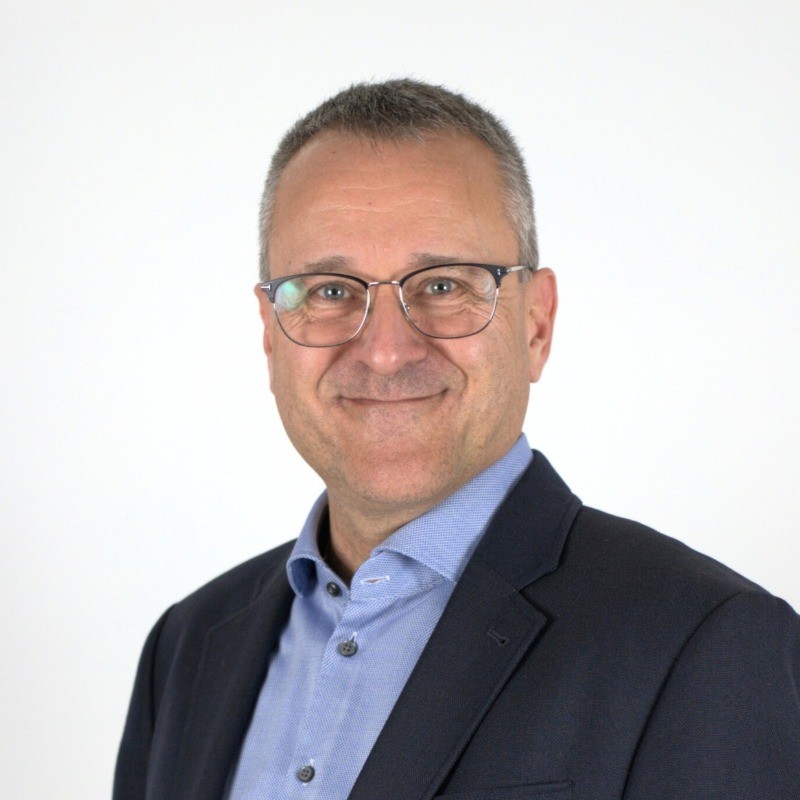
Peter Schadelbauer is the Senior VP & Treasurer at NielsenIQ, the world’s leading consumer intelligence company. With a background in both banking and corporate treasury, Peter has led transformation initiatives in companies of all sizes – from family-run firms to multinational organizations – bringing modern systems, centralization, and strategy to the treasury function.
Whether you’re building treasury operations from the ground up, leading digital transformation, or managing change in a traditional corporate culture, this episode is packed with insights. Peter’s story proves that with vision, collaboration, and persistence, even smaller organizations can achieve world-class treasury excellence.
What We Cover in This Episode:
- Peter’s career journey from banking apprentice to global treasurer
- Why he left banking to pursue a more strategic role in industry
- The reality check of moving from theory in banking to hands-on treasury in production companies
- Transitioning into treasury at Lindner Group and the evolution of a “banking department” into a full-fledged treasury function
- Step-by-step creation of an in-house bank to support global operations
- Winning the Adam Smith Award for Best Process Re-engineering Solution
- How to lead change and build buy-in within long-established company cultures
- Lessons from integrating treasury systems during major corporate mergers
- The role of technology in treasury – when to innovate and when to simplify
- Peter’s insights on artificial intelligence in treasury and why he’s cautious but optimistic
You can connect with Peter Schädelbauer on LinkedIn.
—
🎙️ Subscribe to the Treasury Career Corner podcast – Never miss an episode! Subscribe on your favourite platform:
CLICK HERE for 🎧Spotify Podcasts
CLICK HERE for 🍏Apple Podcasts
🎓 Exclusive discount on CTP & FPAC – Visit our AFP partner page to find out how much you can save: https://treasuryrecruitment.com/partners/afp/
💡 Earn CTP credits just by listening – Selected episodes of the Treasury Career Corner are AFP-accredited. Listen, take a short quiz, score 80% or more, and we’ll send you your free certificate. Filter by CTP Eligible at https://treasuryrecruitment.com/podcasts/
🌍 EuroFinance International Treasury Management – September 16th-18th 2026, Barcelona – The world’s largest treasury event. Save 10% with our exclusive discount code: MKTG/B/TRP10. Book here: https://treasuryrecruitment.com/partners/eurofinance/
👉 FIND OUT MORE HERE https://treasuryrecruitment.com/partners/
Mike, CEO, The Treasury Recruitment Company: So welcome to this week’s Treasury Career Corner podcast. We’re I interview treasury professionals about their treasury careers. Each and every week I talk to treasurers about how they’ve built their careers, where they are now, and where they see both themselves and the treasury profession. Going to next in this week’s show, I’m joined by Peter Schädelbauer.
Mike: Peter is the treasurer for NielsenIQ. Nielsen IQ are the world’s leading consumer intelligence company, delivering the most complete understanding of consumer buying behavior. And revealing new pathways to growth. They combined with GFK in 2023, bringing together two industry leaders. Uh, well, I’ll get Peter to explain a little bit more, but some of the figures are, they have operations, 95 countries representing 97% of the world’s GDP, as they say, NIQ delivered the full view.
Mike: But Peter, you can explain that later in the show. So over to you. I’m gonna get back to how you first started in treasury, and as you said, you are passionate about treasury. Is that how you first started your career, obviously in banking, then you came into industry over to you.
Peter, Senior VP & Treasurer at NielsenIQ: Thank you, Mike. First of all, it’s an honor to be in your podcast in the show.
Peter: Thank you. And I’m really looking forward to talking with you. And as I said, I really started my career in banking. I started as a bank apprentice, did my first years in bank group, trained where also did my studies during the bank time, and improved my knowledge and learned everything by heart in the banking area.
Peter: And for me, it was always a great time, a fun time. I liked it, but as you can see from my cv, or if you look on my LinkedIn profile, roughly about 10 years in the banking area, I moved to the industry, to the other side. Yeah. And you know, the banking area was always really nice place for me to work, and I really learned everything that I needed later also for my career.
Peter: But that was also a dramatic change in the banking area. McKinsey stepped in that was more like you have to power sell things. It’s no longer about really. Building up the best relationship with a customer. It was really about every big targets to sell things. And this was, for me, the main reason why I said, this is no longer what I wanted to do.
Peter: There should be something else. And as I was working also with corporates during my banking career, for example, I was able to finance startups, small business companies. Going through these things. It was always for me, very interesting to work closely together with people on building the business case, getting the financing done and all the other stuff.
Peter: And so this was my start in the area of finance and that was always good to do it. And it was also a good start.
Mike: Yeah. And then you, as you say, you then transitioned what moved into treasury a bit later with Linda Group and things like that. Talk us through. How you did that transition from the banking side and then discovered treasury, or, I knew that you knew about treasury, but OBTU
Peter: Yeah.
Peter: Was working for different companies. Uh. First one was after my banking time was Cammi a production company. They do, for example, regulators and closures of for showers and so on. It was a really interesting thing and the first big thing difference was for me, when you sit in the bank and you talk about three years business plan, cash and liquidity planning and other thing, you always imagine and think every company has these things, but reality shows that not every company has this.
Peter: Really implemented. We mostly do it because we have to do it for the bank for yearly negotiations with the bank and so on. And so this was the first difference. In reality, if you sit in the company, it’s different. Yeah. You really have to work hard. You have to work on a few topics to get all these things done, and this was a good lecture for me to see.
Peter: Things are not as easy as you might expect if you have a view only from one side. And that was for me, the first step where I said, wow, that’s different. But on the other side, it was interesting. And if I think about a time working for a company that really has production focus, it’s so different.
Peter: Normally you talk about the cash conversion cycle and the easy theory. People always tell, oh, it’s not so complicated. You buy some goats, you produce something, you sell it. But to plan a production site. I was really involved with the teams and how much work it is to do an SAP or the planning for next week so that the people really create the best output for the company, especially if you have special constructions of things to do.
Peter: And this was fascinating for me to see. There’s much more behind, and this was also when, for me, the main reason why I always wanted to understand things for me, you know, also in treasury, if I understand the business or company. Cash conversion cycle, the seasonality and all the other stuffs, I can provide additional value to a company with my treasury team, and for me, treasury is, we are a business partner.
Peter: Business enabler. And that’s how I see it. And that’s why it was so fascinating to move from a banking area to the industry. And these were the first lesson learned. Of course, there’s much more and there are more things that I had to learn. But it was a first step into the new world, and for me it was fascinating and especially now as I’m always driven, somehow I want to learn new things.
Peter: I want to create something. I want to build something up. And so it was always for me, a great opportunity to really work on new things. And seeking new challenges.
Mike: And you’ve got that sort of, some people go into different things, chemicals and different areas. You, you like the construction and the sort of, talk us through those.
Mike: ’cause I think it’s an interesting that your stuff that really exists sort of thing and now, now we, as your careers evolve sort of thing. Talk us through the next couple of moves.
Peter: Yeah. So one of the biggest moves was an example, and this was really my big step into treasury, was. Working for Linner Group.
Peter: I started here in the Treasury department. And,
Mike: and who were they? Who were they for the listeners that don’t know. Sorry. Who were Lin Group? Yeah. For say our US listeners. They may have never heard of
Peter: them. So Linner Group is a family owned company in, in Germany. In our regional, very famous company, and the interesting thing, they have everything from raised floors, ceilings, and other stuff.
Peter: The good thing is in these companies, they have on one side their own production sites, their own r and d. They produce a lot of products that they bring to a construction site. In the company. We have a lot of people who do all these things. They go, for example, the productions construction side. They build up all the things.
Peter: They create everything. This was really fascinating and really family based company founded by Mr. Lindner, the former CEOA. Great man. I learned. Working together with him, he really built a company by scratch and now it’s really a huge company with over 5,000 people working for his company worldwide. And yeah, it’s really a global player.
Mike: When you got there, what was treasury? ’cause I know that there wasn’t much of a treasury and then you centralized it. How did you go through that? And, you know, again, if someone is in a similar situation, they’ve, they’ve just landed and they’re like, oh, hang on, we don’t really have a treasury.
Peter: First thought was that the company was growing.
Peter: Company was going into more and more countries, more and more different areas, and if you do worldwide business, you see there’s more need for a centralized treasury or for treasury functionalities. So I think part of this was company growing and going into new business areas. The other thing was when I started, it was a banking department, what was called the banking department.
Peter: The main focus was on collecting the bank account statements, get the cash liquidity overview, and do things like bank warranty management and other things. Over the years, it was really like going into more treasury relevant topics. One big step was, for example, implementing a treasury management system.
Peter: We started with Bellin at this time, now Cooper Treasury, and if you start to implement a treasury management system, it’s already going through different processes in the company. Looking through, what do we really do? What is important? And with the treasury management system, we were able, for example, to centralize a few things, to have a central view on cash, starting with the cash and liquidity planning, doing all the treasury based transactions and other stuff in a centralized system, but also enter bank guarantees, loans, intercompany loans, and so on into a centralized platform.
Peter: And last but not least, I always tell people things like netting, intercompany netting. Are also relevant for companies that are growing worldwide. And the other big thing was in this group and him, very thankful for the family who supported this, was the idea of building up an in-house bank, which is normally, I would say, not necessary for every company.
Peter: For me, it was a huge project and also for the team, and we really worked hard and we had the idea of a vision of in-House Bank, how it can work, and it was really limited. It was Valin Finance, GMBH Limited. So this company is still existing today and we centralized everything in this company, the internal external financing, a lot of other things.
Peter: And this was really very special. And for me, you know. What was really relevant was in 2012, the Adam Smith Award, the highly commended best process re-engineering solution, and this is a day I can still remember going with two team members to London getting the award. And for me the fascinating thing was.
Peter: We were on this day in London with companies like Microsoft, Toyotas all the big players, and Valinda group for me was always a very important company to work with, but compared to the size of the other companies, we were more a small company. But to get this achievement, to get this award was also for me, the clear sign that it’s not about the size of a company you work for, it’s about the things that you create.
Peter: And I believe that everyone in treasury has the power and the ability to create something that is outstanding. Yeah. And I always encourage everybody think out of the box, be innovative. Don’t accept the As is status. It’s all about what could you do? And the most important thing is people always ask me, Peter, would you like to create another in-house bank?
Peter: And they say, no, that’s not possible because it has to fit to a company. And I think that’s an interesting thing in treasury for me, it’s not like, yeah, you have one standard approach and you can do it for every company. I think every company is different. You have a different culture, you have different people, you have different business models.
Peter: First of all, I think you have to understand what the company is doing for what are the priorities and what the company wants to achieve. And then you have to think about the best way to implement something. And to be honest, years later, when I did for master payment, we implemented a credit and risk management tool was completely different company, but here the focus was completely different.
Peter: And that’s why I say go your own way. Fine. What really helps the company believe in it and try to implement something that’s maybe outstanding.
Mike: And what about that, as you say, you were within a family owned company, there were, there’s sometimes a tension if you are, you know, I’ve talked about sell, not tell, and then you have to tell people about doing things.
Mike: How did you get over that tension, if you like, with maybe people that had worked for a company many years? Why do we need to do it like that? How were you able to do it?
Peter: Yeah, it’s, you know, also in every company, if you change things, it’s never easy. Here. I always tell you have to treat people with respect and you have to be more like a diplomat.
Peter: You need policies, you need guidance and other things. You have to build something up. But on the other side, if you only tell people from tomorrow on, you have to do it that way. It’ll not work in the way as you expect. And so I think for me, it was also important. First of all, sit together with people.
Peter: Talk to them, talk about the ideas, but also get their perspective. For me, sometimes people say if you talk with too many people, it’s a waste of time. It’s never, because if you bring 10 people together in a company from different departments and areas, everyone has different, a different view. Complete different experience, but together, maybe idea that’s already good can be shaped into a great idea.
Peter: And so it’s all about involving people thinking or asking them to think with you, work on these things together. And that’s how I always did it. And in the end, it’s never easy. But I can still remember when we did, for example, the implementation of intercompany netting. Mr. Bellen was there, and Mr. Schl from Cooper.
Peter: And we did it in one day and we’ve invited a lot of people. Sitting together in one room and did the first netting run live together with them. And so the difference was immediate. It was like the first one said, oh, I’m successful. We have everything in the system. I’ve now done very consolation. And then I was, wow, you did it already.
Peter: And wow, it’s great. And it’s not so complicated as I thought. And I think you always have to create positive energy. That’s what I really believe. And if people can see, okay, that’s a new process. There are objections. But if people see it’s a benefit for me, maybe it also makes things easier for me in the future.
Peter: And especially when people say, see within the company, you can always a little bit do some tricking, I would say in the group because they say, oh, I pay my intercompany invoice, this is late. It’s like I do some internal funding without requesting an intercompany loan. If you have an intercompany knitting tool, you have it in the system, you know you have to pay it next week, full stop.
Peter: But on the other side, you know that you also receive the money from all the others on that day, and then in the end, it’s a win-win situation.
Mike: Yeah,
Peter: and this is what you have to figure out step by step. It’s the same if you want to sell something or if you want to build something new. You have to find, identify what is the pain point, and if you can solve.
Peter: Some of these pain points, people will be more supportive. And that’s why I say, you know, it’s working together, talking about the idea, creating positive energy and finding the best way to move forward.
Mike: Excellent. And then, well, you did a couple of roles, but then I wanted to also talk, you went on the technology side and that’s where you and I first ever met and things like that.
Mike: So can you talk us through that? Because obviously you’ve just touched on that you did technology there and implemented it, but then you went the other side, you went to the product side. What was, how come that came about?
Peter: Yeah, so one thing is it’s also based on my past When I was young, you know, one of the first things I did, I saved all my money.
Peter: I was working as a paper boy bringing a newspaper to people, and I saved all the money and bought my first computer. I was 12 years old. It was Atari 600 Excel, and this was my world starting with a computer, and I really trained myself in basic and assembler and did a lot. And today I still could do some HTML coding.
Peter: So if you want to work on a website, I could at least understand the code.
Mike: Yeah,
Peter: I was always fascinated about modern technology. I’m not only a user, I always wanted to understand things in a deep way, and it’s the same with Cooper Treasury. I have several Cooper Treasury implementations and the last one, and we did it all on our own.
Peter: So I have experience. I trained my team. We did 90% of implementation completely on our own, and that’s why I have, I would say, really a good understanding of technology, of systems and processes, and therefore there was one. They a call from Hansi Walker at that time that we were looking for a product manager for the payment system.
Peter: And so I had some interesting discussions and I was really thinking about, oh, is this really a right move to move from treasury to a technology side? But it wasn’t. It was for me, really a great time. And Hansi worker support has been a great way. We were really able to work on the payment solution on the Han Worker Finance with Suite and all the other things, and.
Peter: Bringing in perspective from a real treasury operations to a software company talking about the product. What functionalities are good, what are not as expected? Where can you improve a system? Was for me, a very fascinating thing. One of the first things, you know, I was, I think in homework for some time.
Peter: Then we had a project, challenging project, and I was going with the project team to a customer, and after that one day, the customer said, Peter. Yeah, this is great, and you supported this and you explained to me, and I believe now that this will work, and so I saw it was a right step. It was really fascinating to do this and work on the software.
Peter: I would say side. On the other side, you know, it’s also different. You also underestimate things. As I said, with banking area, when we move from a bank to industry, you see things are different. Yeah. And here’s the same. If you want to develop a software, you also have to plan resources. You have to plan how many people do you have?
Peter: If you example, you know you have 10 functionalities, that would be great for the customer, but you can only implement five in time. And on the other side, you have to do some hot fixes. You have to work on. Bug and other things. It’s really that on one side you have the idea what could be the best system on the other side.
Peter: You have to find a way to do it step by step and find the right approach.
Mike: Yeah,
Peter: and also here, you know, I think I have now a better understanding when people today sometimes say, oh, the software does not work as expected, or here functionalities. That’s good, and people should be constructive. They should give guidance and they should ask maybe for implementation of new things.
Peter: But on the other side, I think we all have to be aware. All the resources are limited where, and that not everything can be implemented or implemented in time. And so it’s always, yeah, the right balance that you have to find. And last but not least, you see now with all the evolving technology worldwide, but also in the banking era area, you know, new bank account statement formats, new XML formats, account formats, pain formats, and so on.
Peter: Every company has to consistently. Implement new functionalities in the payment factory and other things. And this is also a huge challenge and I think it should never be underestimated how complex these processes are. And that’s why I said you always should work on the common view. You should always try to understand your business partner common ground.
Mike: Yeah.
Peter: And then you can together find. Good solutions.
Mike: Bring us then a bit more up to date. ’cause we’ve got then GFK and Nielsen and they came together and everything else. Can you talk through though, you know that that role if you like, and who are the companies, first of all, ’cause again, I know them but, and you and I do, but for our listeners.
Peter: Yeah. So Chief k Berg is a very well known company in Germany. Long tradition, over 100 years it was market in consumer research in this area and GFK has many brands. Media measurement and other things, and yeah, I started many years working for Chief K. It was more or less not planned at this time. It was my time when I was working as a treasury freelancer and I had a project working for Chief K.
Peter: And after a few months, I would’ve moved to the next project, but then there was a change on the GFK side. Former treasurer decided to do something different, and then I had a discussion with a new joining CFO laws and he asked me to step in as the head of treasury for GFK KK all stepped in as private equity owner and GFK was always a very.
Peter: I would say great company, but I think the challenge was for this group that over many years they really did grow rapid and bought a lot of companies and it was never completely ly consolidated. And so the challenge was really to bring back GFK on track building, I would say a cash positive business model.
Peter: Deleverage. I was going through a lot of things, financing, refinancing. And the most important thing for me was that the things worked out because GFK was after several years, again, a very, I would say, profitable company. And in the end, if you have a good company, people might be interested. And there was a beginning.
Peter: There were discussions between NIQ and GFK. And as everybody can see, if you look into the internet, Google or whatever, you can see that there was the acquisition. From NIQ, so GFK was acquired by the NIQ group to build one combined company that can cover even more worldwide. Combined, the group has over $4 billion revenue worldwide, as you said, mark in over 90 countries, and we offer a holistic view.
Peter: Consumer and other areas. For me, this was a great opportunity to work for the combined company. It was also an honor to be appointed as a treasurer for the combined company. This is now nearly two and a half years ago. It was a long journey.
Mike: And when you did that merger and things, obviously there was some legacy systems and you’re bolting it all together.
Mike: You talked about doing that already before at GFK and then you’ve, you’ve been thrown that challenge again. Uh, what did you keep? What did you say? Right? We’re not gonna, we’re gonna streamline out of us or what Again, for someone listening today, if they’re in a similar situation, you know, what’s your mantra if you like?
Peter: Yeah. We are completely right. Combining two companies, we have a challenge that you have different systems. You might not have the same ERP system. You might have different treasury systems, and so you always have to decide fast how to move on in all finance areas, but also in treasury. And what we did in treasury, for example, is Chief K has already implemented Cooper Treasury.
Peter: We decided also to roll out Cooper Treasury on the NIQ side. And this is something we did in a few months. And we use the system, for example, to collect all bank account statements worldwide. And to have cash visibility. On the other side, we also had other systems and processes on the NIQ side, and we were going through different systems and processes and decided, okay, this system seems to be the best one for this solution in the end.
Peter: And to be honest, you know, it’s a huge challenge. And you have also limited resources. Yeah. So you have to work on the big pain points first. Still, at least in treasury, we still have processes that are not completely harmonized or aligned. Today. If I would say something different, it would not be honest.
Peter: But on the other side, we have really made great progress. We have one systems, you know, we work with Bloomberg for all the FX hedges in trading on the chief case side. In the past we had 360. Which you do no longer use, and it’s simply about finding the best solution, the best approach, and then go through this challenge step by step.
Peter: And the most important thing is, as we discussed earlier, cash is important. Yeah. And it’s always about cash, especially for private equity owned company. Cashflow conversion is a high priority, and you have to create positive cashflow. And to do this, you need simply a rolling cashflow forecast. And for me, the best base was always 13 weeks rolling cashflow forecast, and the best case done biweekly or at least once a month.
Peter: And this is something that you can combine with other forecast, like one year forecast, two years, and so on. But on the other side, you always have to know exactly how cash will look like in the next. Weeks and months, and then you have to work on the best process. But on the other side you have to work on dividends and royalties and other ideas really optimize.
Peter: Yeah. The worldwide cash and liquidity team, and these are the challenges and the things that every treasury has to work on.
Mike: And any pieces of advice, again, for the listeners that when they’re in a similar situation, they’ve, they’ve been, you know, told, Hey, you’ve gotta implement this and you get the global cash flow work.
Mike: How do we do this? Any tips.
Peter: Yeah. First of all, always do step by step. That’s number one, because people always dream of, oh, I want to have a high sophisticated, fresher system in one year that has all in this will never work. The other thing is sometimes Mike, and this is something that’s not my nature because I want to things in the best way.
Peter: On the other side, sometimes you have to define what could be a step one, step two, step three, what’s the MVP? The minimal viable product. And what we do, we work in many projects with sprints. We have a project overview, we have a timetable, we have everything, but we define, for example, a biweekly sprint, a weekly sprint, or a monthly sprint where we say, okay, these are the steps that we want to work on.
Peter: And then we have regular meetings and discuss, okay, we’ve achieved with step and debt, and this was faster, as low as expected when we adopt to the plan. And also here, I always tell people, try open fail early. Risk it. And the most important thing for me is sometimes you have to push a button, even if you say, oh, this is now 70 or 80% of what I wanted to achieve the rest.
Peter: Yeah. And I always tell people, why are you worried? We have 70 or 80% improvement with a better process. We save time, money, you can focus on other things. Why not work with more efficiency instead of. Trying to achieve 100% and never implement it. Yeah. And I think that’s the way how we have to do it. It’s not about telling people do bad work or produce bad quality.
Peter: We always need good quality.
Mike: Yeah.
Peter: But on the other side, I see so many times that projects are failing because people have far too high targets and they’re not realistic. The other thing is, last but not least, every project is challenging. And sometimes your phase where you say, wow, in two weeks we have a deadline, we have to fix it.
Peter: And when it can happen that you work with a team day and night to meet the deadline. And it’s also part of reality. Sometimes it’s extra work and hard work and dedication from the team.
Mike: You get through it. And then you and I, we talked before that we go to a lot of conferences and you see lots of different topics and there are different things that are lots of different sessions.
Mike: Should we say there are ones that you, you’re probably queuing for the door. What are the areas, if you like, in your mind, that you think are most important in the moment? Would you say that people need to be thinking about?
Peter: You mean for treasury or in general? Uh.
Mike: Yeah. Yeah. Just what’s top of mind for you?
Mike: I was talking to a couple of people last week and we did our London session, and there was a lot of talk, everyone was talking about ai, but people were saying, well, hang on, gimme some practical use cases. At the moment we’re not there. So yes, it’s something I need to keep an eye on, but I don’t need to worry about it yet.
Mike: They say be aware of it, but no, there’s nothing we can implement yet. So I mean, what about you?
Peter: Yeah, but I feel, for example, I still dream of systems and processes that allow me and my team, and especially people like the cash managers to have a management by exception system. It’s more like, you know how to put it, people in treasury, you know, I’ve never seen a treasury department.
Peter: They have too many treasurers. They’re always limited on our resources. So I always want to give people the best way to work and to make best use of a resource. And if, for example, cash manager uses 80% of his days working in an Excel spreadsheet to collect cash data and having 10 or 20% of a day to really work on optimizing cash and liquidity.
Peter: Optimize interest. This is stupid for me. It should be the other way around. My dream is still to have a more or less a dashboard where the treasurer or the cash management warning logs in and sees, oh, all bank accounts statements were collected successful. Here’s one thing I have to check, because here’s a bank account statement missing here.
Peter: Balance is not correct and this or that. The basic things should be in the system. Also, the worldwide cash position, all the other thing, and we already started to work with BI reports. We have our own created BI reports for a cash overview for other things. They work really well. And if we talk about huge data, everybody has to process data and we sometimes talk about thousands of data sets in cash and liquidity planning.
Peter: Here. I think machine and artificial intelligence can help support, but in the end, it’s also a human being. And sometimes I say I have to decide things out of stomach. Sounds weird. But on the other side, if you understand the business with seasonality and if you have a things, you sometimes have a feeling always might be right or wrong.
Peter: And I think the human factor is always very important. Everybody at the moment is filled with artificial intelligence. And this will bring, for me, artificial intelligence is a good tool to support.
Mike: Yeah,
Peter: to help me in some areas, but I would say treasury is very complex. And to give you one idea, the moment we have implementation of TISA payment.
Peter: Factory project, a worldwide payment factory, and in the beginning I would say, oh, it’s easy to connect a lot of banks and a lot of different payment types. In the end, it’s very complex because every company, every country has regulations. Sometimes you have to provide some documentation with a payment file.
Peter: What you in Germany or Europe normally would not do. And so the devil is in the detail. You have to work in the small, small things to really make it happen. For me, it’s a corporation. I would like to optimize the team, the structure, the workload by tools that support us. As I said, management by exception, better overview, a really cash liquidity overview.
Peter: And I also see potential in the cashflow forecasting tool that artificial intelligence and machine learning could already prepare something that you go through. But in the end, I think you need the human factor to take the final decisions. And you know, as a deep dive, you see people at the moment also talk with artificial intelligence, with hallucinations, and that sometimes a certain amount of information is simply wrong.
Peter: And therefore, I think we have to be careful and we will need more of these tools. But I agree, Mike, I did not see a single use case today where I really say, wow, this is something I would like immediately. To implement in my department, and this functionality could help me to, yeah, reduce my workforce by one or two people.
Peter: For me, it’s always the other way around. I want to find the best tools, processes, and systems to support my team to work in the best way. And why? Because I think treasury can add additional value to a company. If treasurers optimize cash liquidity, have a valid forecast, if they support business decisions, reduce, borrow, optimize, borrow.
Peter: This counts for every company. Treasury brings in additional value and therefore I think that’s an important thing. Here. I still see limitations by systems, tools, and processes, but it’s a hot topic. I totally agree, mark.
Mike: Yeah. And then with yourself, you’ve been a treasurer for many years now. If you were reflecting back and someone is stepping into their first, you know the word deputy treasurer, right?
Mike: You’re the treasurer now. Here’s the keys to the cupboard and everything else. What advice are you gonna give to them? What do you think that they should be thinking about?
Peter: Yeah. First of all, I can always recommend people that treasury is a fascinating area to step in. The other thing is it’s of course challenging.
Peter: There are many things, and for me, the hard thing is as I’m somebody who is always looking for challenges, I’m not a treasury administrator. And on treasury are also different people. And I don’t want to say that one way is right or the other way is better because you need, for example, great people in the back office who really work hard to check all the quality, to check all the results.
Peter: But these people might not be the ones who want to implement new systems or processes. So I think first of all, it’s a mix and we need in treasury people from every area. So means on the one side, the people who want to work in front office. Directly trade with banks to have X hedges and other stuff on the other side, you need also all the other people who, for example, enter the trades in the system, check the quality work on reports.
Peter: And so I think there’s a broad range of career opportunities. And what I always preferred in my career, I’ve trained a lot of people and I’m really happy that many of them have a successful career in treasury, are now also head of treasury or lead a small team. I think it’s really about passion. I think you have to find something that you really like.
Peter: And for me, I know Cooper Ian always said with slogan, I love treasury. It sounds hot, but it is. So,
Mike: yeah. Yeah.
Peter: Either you love it or not. If you hate it, maybe it’s not wise to move into treasury. What I can tell people, it’s different if you go, for example, into accounting, the controllership and other areas.
Peter: I think you have a better view what might be your career. Over the years in treasury, everything can happen. Maybe you start as cash miniature and a few years later you see, oh, hedging is much more what I want to do, and you will be more in front office or the other way around. The most important thing for me was learn as much as you can.
Peter: Try to really use every piece of information that you can get. Try to understand the processes. Same for me. I learned what it means to work in a bank, but still I could do some postings in SAP. And I say I always wanted to understand every single process. And even now today, I can no longer sit and enter data in the Cooper Treasury, but in theory I could still do it.
Peter: And that’s important for me because I have a better understanding how much work it is for my team or what challenges we might see. And that’s why I say always. Treat people with respect, learn hard, learn a lot. Yeah. And you can find your way, but the most important thing is either you like it, I can recommend do everything, go into treasury.
Peter: But if you say, that’s not my way, it’s not a problem. There’s so many other opportunities in finance on companies.
Mike: And so we are gonna, as we wrap up, we’ll put your LinkedIn details in the show notes. Any other final pieces of advice for people or any final words?
Peter: Yeah. One final word for me is don’t be afraid of failure.
Peter: I sometimes learn more from failure than from success. And for me, the secret of life and of every successful careers, you have to stand up one more time when you fall. And that’s my advice to all people. And I know it’s not always easy. Everybody of us has sometimes good or bad days. It’s not always the same.
Peter: And for me, the main advice is do it. Do it every day. Do it again, and one day it’ll happen and you will find your way. I think that’s the most important thing in life.
Mike: Great words. Thank you very much and looking forward to seeing you a conference very soon.
Peter: Yeah, Mike, thank you very much. Talk soon. Thank you.
- Centralization matters: A growing company needs a centralized treasury to manage risk, cash, and visibility effectively.
- In-house banks can be transformative: But only if they are tailored to the company’s size, needs, and structure.
- Awards follow impact: Recognition like the Adam Smith Award isn’t about size – it’s about innovation and measurable results.
- People are key to change: Leading treasury transformation requires respectful, collaborative change management.
- Don’t chase perfection: Implement good systems step by step; a 70–80% solution now is better than 100% never.
- Use tech with intention: Software should support your team, not overcomplicate your workflow.
- Be curious: Constant learning and understanding your business deeply is what separates good treasurers from great ones.
🎧 Earn CTP & FPAC Credits by Listening to the Podcast
Whether you’re at the gym, on your commute, or walking the dog – you can now make your podcast time count toward your professional development.
We’re thrilled to share that Treasury Career Corner podcast episodes now qualify for CTP and FPAC recertification credits through the AFP’s Independent Study category.
How It Works:
- Listen to a Treasury Career Corner podcast episode
- Complete the short multiple-choice quiz
- Score 80%+ to pass
- Submit your credits to AFP as part of your recertification record
➡️ Credits earned per episode length:
- 30 mins = 0.6 credits
- 45 mins = 0.9 credits
- 60 mins = 1.2 credits
No filler. Just real treasury conversations covering leadership, strategy, risk, technology, and team building.
🧠 Quick Facts:
- 📝 Quizzes contain 6–10 multiple-choice questions
- 🎯 You need 80%+ to pass
- ✍️ Quiz submissions are reviewed manually
- 📋 We must then VERIFY you are a CTP treasury professional to help prevent automated or non-genuine submissions
- ✅ Once verified, we mark your quiz and send CTP credit confirmations every Friday
- 📨 If you need results sooner? Then email mike@treasuryrecruitment.com and we’ll try to prioritise the marking of your latest quiz
NOTE: In line with AFP compliance requirements, no more than two quizzes may be completed per day.
