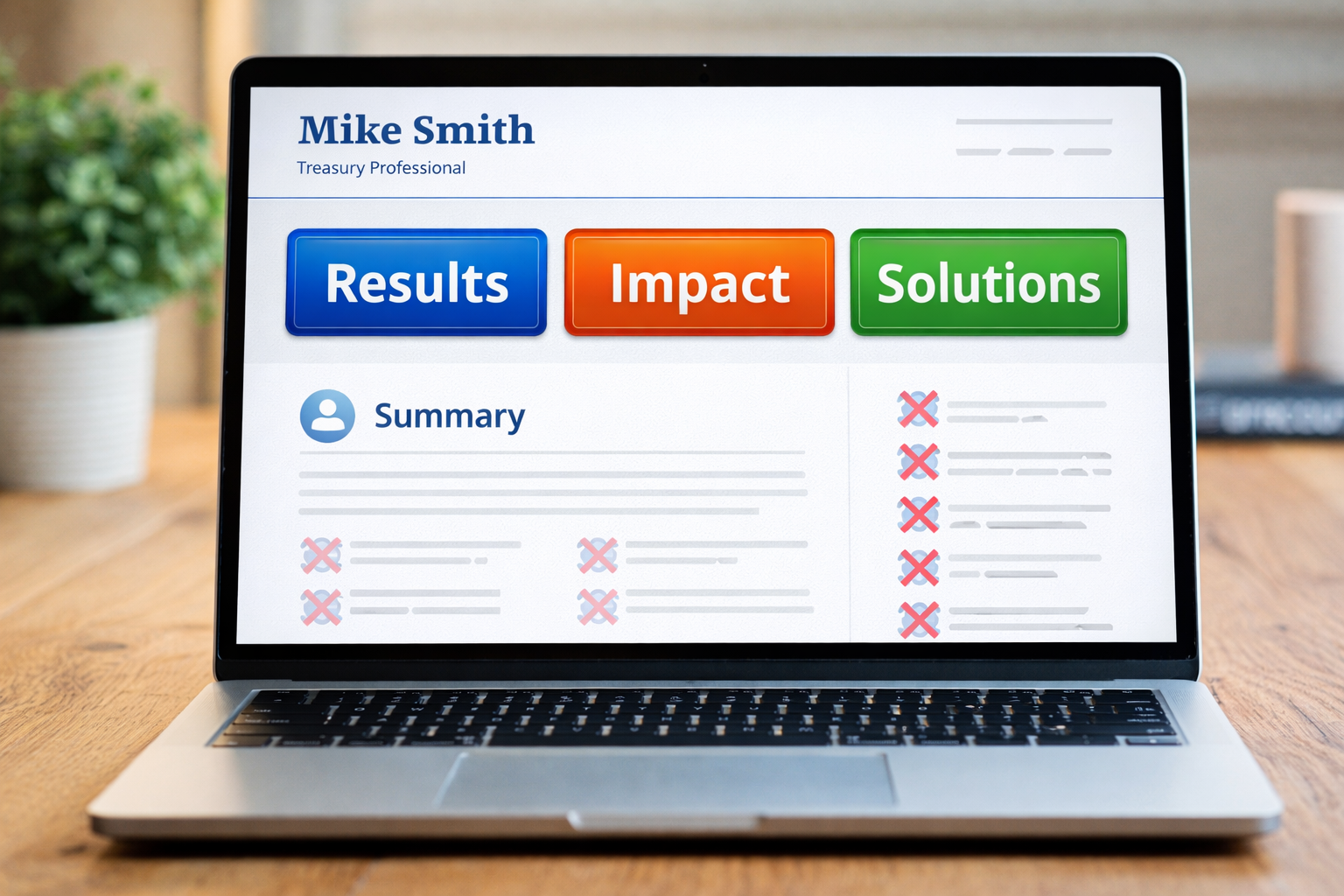
I was reviewing a LinkedIn profile for a senior treasury professional. I knew they had a strong career, were well respected internally, and had good experience across several large organisations.
And yet, they were getting very little inbound interest.
So, what’s going on?
Well, when I looked through the profile, I realised it was exactly what I see time and time again…
It read like a CV.
Chronological, accurate, and sensible – but not compelling.
LinkedIn is not an ‘online-version’ of your CV or resume!
It’s a sales page for you and your “brand”. And I’m sorry to break it to you… whether you like it or not, now everyone has a “brand”, and if you don’t take charge of it then you are risking that others will do it for you.
So, when someone arrives on your profile, the question in their mind isn’t “What has this person done?”
It’s “Do I want a conversation with this person?” OR maybe it’s “What can this person do for me?”.
That distinction is where many senior treasury professionals lose visibility.
You can list all the duties and skills you like, but without context, they don’t know what you have achieved as a treasury professional.
You need to show where you actually made a difference.
Recruiters, hiring managers and even random HR generalists aren’t sitting around studying profiles line by line. They skim.
If they can’t immediately see how you could be a match for the role they are recruiting, then they move on straight away.
That’s why your profile is so important.
Now, if it feels like I could be talking about your LinkedIn profile here too, it’s probably time for an update.
So, let’s talk about the practical side of updating your profile:
If you change everything overnight, LinkedIn shouts about it.
Colleagues notice. Bosses notice. That’s not always what you want.
Making changes gradually over a few weeks keeps things discreet whilst improving how you’re positioned and will attract the attention you might want.
Simple things make a difference too…
A current photo. A banner that says something about your professional identity. A headline that explains the scope of your role rather than just the job title…
I came across an excellent checklist recently by Joe Lander which basically covers it all. It’s about reviewing every section of your profile when you start a new role – the kind of housekeeping many people skip, but it shapes first impressions long before a conversation happens.
Now, you might say: “But Mike, what if I’m not looking for a new role?”
Well, no problem… But what if a new role is looking for YOU?
The wider point is this:
Experience on its own doesn’t generate visibility.
If your profile reads like a static CV, you will be lost to the onward scroll.
Treasury professionals who attract steady inbound interest make their impact clear and easy to grasp.
They show the scale of what they’ve handled and the problems they’ve solved, so that when someone skims their profile, the relevance is obvious within seconds.
That’s often the difference between being respected internally and being visible to the wider market.
Best regards,
Mike
P.S. Is your LinkedIn profile due an update? Here’s a summary of what to do:
- Your profile photo should be recent
- Get a banner that says something about YOU
- Add a headline that actually explains your role
- Spread these updates out over a few weeks
- Don’t just list your responsibilities; add context to show where you made a difference