
Returning to Treasury Leadership – Why Jens Rejoined Trelleborg
What makes a seasoned treasury professional return to where it all began?
In this episode, Jens Billberg reveals why he rejoined Trelleborg Group as Group Treasurer after years away, and how his career – from back office trainee to treasury leader offers a roadmap for rising treasury professionals.
Listen on:



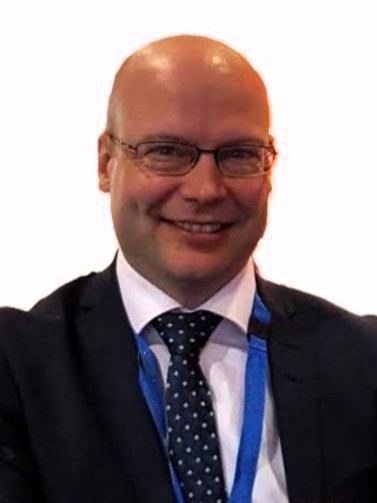
Featuring

About this episode
Jens Billberg is the Group Treasurer and VP Treasury at Trelleborg Group, a global leader in engineered polymer solutions.
With over two decades in corporate treasury, consulting, and international leadership, Jens brings deep insight into building treasury functions, managing risk globally, and leveraging technology to enhance operations.
Main topics discussed:
- Jens’ accidental entry into treasury and early back office experience
- Transitioning from back office to trading and risk management roles
- The transformation of Trelleborg’s business and treasury function over two decades
- Challenges and lessons from implementing global cash structures in China and India
- Key differences between corporate treasury and consulting roles
- Building a treasury hub in Luxembourg from scratch
- Embracing digitization, robotics, and system automation in treasury
- Rejoining Trelleborg: motivations, leadership mindset, and organizational strategy
- Advice for young treasury professionals and career path reflections
- How Trelleborg’s local-for-local model helped weather trade wars and COVID-19
You can connect with Jens Billberg on LinkedIn.
—
🎙️ Subscribe to the Treasury Career Corner podcast – Never miss an episode! Subscribe on your favourite platform:
CLICK HERE for 🎧Spotify Podcasts
CLICK HERE for 🍏Apple Podcasts
🎓 Exclusive discount on CTP & FPAC – Visit our AFP partner page to find out how much you can save: https://treasuryrecruitment.com/partners/afp/
💡 Earn CTP credits just by listening – Selected episodes of the Treasury Career Corner are AFP-accredited. Listen, take a short quiz, score 80% or more, and we’ll send you your free certificate. Filter by CTP Eligible at https://treasuryrecruitment.com/podcasts/
🌍 EuroFinance International Treasury Management – September 16th-18th 2026, Barcelona – The world’s largest treasury event. Save 10% with our exclusive discount code: MKTG/B/TRP10. Book here: https://treasuryrecruitment.com/partners/eurofinance/
👉 FIND OUT MORE HERE https://treasuryrecruitment.com/partners/
Mike Richards, CEO, The Treasury Recruitment Company: Welcome to this week’s Treasury Career Corner podcast, where I interview treasury professionals about their treasury careers. Each and every week, I’ll talk to treasurers about how they build their careers, where they are now, where they see both themselves and the treasury profession. Going to next, let’s get on with the show.
Mike Richards: In this week’s show, I’m joined by Jens Berg, the group treasurer, VP Treasury at Trailer Borg. Group Burg is a world leader in engineered polymer solutions that protect critical applications in demanding environments. Reliability of industrial equipment is insured and secure key infrastructure, like water networks, ports, energy facilities, and that they contribute to a low carbon sustainable future.
Mike Richards: Three main business areas, trailer Bo Industrial Solutions, ceiling Solutions and Medical Solutions. Company’s actually been going 120 years since 1905. The company’s actually been listed on the stock exchange since 1964 on Nasdaq, Stockholm Large Cap. So enough of that about the company. I want to get into Jen’s experience and his career.
Mike Richards: Jens, if you would take us back to the first start for you and then how you discovered the world of Treasury. Over to you, sir.
Jens Billberg, Group Treasurer (VP Treasury), Trelleborg Group: Yes. Thank you for inviting me to this podcast March. I’m happy to participate and give a little bit of my background for sure. Well, so I was a little bit by accident. You can say that.
Jens Billberg: I started, obviously, I have a background in my university studies related to business administration and also with a little bit focus of financing. But I started off with rebo, which was my first real job was more related in the operating business where I was more. In the controlling area, and I was exposed them to various parts of the group.
Jens Billberg: But also during that first year as a trainee, I was sent to the treasury function, which was based in Stockholm. I lived in the southern part of Sweden at that point in time, Alman. But I went up for a month to do a small project at the treasury team, and I liked it very much so I went
Mike Richards: back then to uh, can you tell us who Trelleborg were then and how they maybe evolved as well?
Mike Richards: What as a company, I, I gave a little bit of an explanation about the company.
Jens Billberg: Yeah. I’m absolute because say in the past, in the eighties, travel was a conglomerate involved in a lot of different industries. I would say also a large part was within the mining industry, was holding companies. When I started the year 2000 was in a process of going into more the polymer business or more the rubber industry to just purely focus on that.
Jens Billberg: We. At that point in time with large focus also on the automotive side, highend polymer solutions. But, uh, a little bit more there. You could really see, I would say amongst the years I’ve been with Travel Board, that it has really changed. I mean, we really moved up to the valley chain, really all the niches where we operate now.
Jens Billberg: That’s really one of the main changes when it comes to the size of the company. It’s more or less stayed about the same. Uh, I mean, we have. We have made a lot of mergers and acquisitions during these 20 years. It’s always been with sales of about 30 to 45 billion Swedish Corona, and now we are in that range again, but with, with a complete different,
Mike Richards: so then when you came back from your studies, you started off in the back of a good place to start within treasury as well.
Mike Richards: What was that like for you?
Jens Billberg: I would say the back office is really like the backbone of the treasury function. Everything through the back office and you get a. You get a good overview. It’s also the engine in the treasury. It’s the final destination for all the payments, the confirmations of all the deals made.
Jens Billberg: So that’s a very good place to start to move onwards within the treasury.
Mike Richards: And then you started that and got your back office experience. What then came next?
Jens Billberg: Then after a couple of years, I was moving on then to the front office for the trading desk. Then obviously I got more involved in deal execution working.
Jens Billberg: Then we also involved more in liquidity management and also had another type of discussion with operating business and all the subsidiaries on a global basis discussing currency exposures. I don’t think that, uh. Could also be trade final solutions in the daily sort, more project based part of the business that we have within Trello board.
Jens Billberg: Uh, and also will given a trading mandate. So you can also take your own positions in the currency and interest rate markets. And by doing that, I think you also get a real good feel for. Risk management and also get the feeling of managing large position that you could need to upload in the buckets
Mike Richards: and then you were given wider remit sort of thing.
Mike Richards: Was that simply because you understood the function then and they said, ’cause then you were doing a lot of dealing, but they said, right, we want you to look after more of the cash element of things. What was that like for you as that sort of, did that give you a different view, would you say?
Jens Billberg: Yeah, I try not to do just deal execution, but also try to understand the difficulties that the subsidiary encountered in that daily business related to treasury.
Jens Billberg: Find ways to make their lives easier when it comes to currency management and all those related, and also building a tighter relationship between treasury being more staff function, but being more like a service function for the operating business.
Mike Richards: You say about the business, the, a lot of the listeners, they get to handle a lot of international things.
Mike Richards: So you were doing implementations across Europe, Eastern Europe, so in Poland, then China and India. What was that like for you with those diverse regions sort of thing? Uh, what were some of the challenges you maybe with the structuring? ’cause I know that when I’ve spoken to people in the past about India, for instance, they’ve had to have, you know, a number of different bank accounts.
Mike Richards: You have to have a local account, you have to have a local one for tax as well. And it’s a real challenge if you like. So what was that like for you?
Jens Billberg: I can agree with those. I mean, setting up cash structures in those countries, sometimes it’s not even possible. Take your country like India, there is. That was a certain way of setting up cash pulling.
Jens Billberg: That was also depending on the legal structure, but obviously, I mean, working with our relationship banks, being global banks, maybe a little bit Nordic, European based, they cannot really service. All the needs locally. Then for all the subsidiaries in countries like China and India, you need to have certain banks do just take out cash, for example, using your basic accounts in China or to make in certain regions certain statutory payments, like salaries, social security payments to use local banks, but combine that with your relationship banks and also with banks where you can build cash pooling structures, and then you just have to ensure that the liquidity at all pointless really.
Jens Billberg: Placed in those cash pools and the money is just transferred to the other council when really needed. You still try to focus all the transactions to your relationship acts, but also work alongside the local banks to fulfill all the needs for the local subsidiaries.
Mike Richards: And then you’d work for a number of years at the group and you decided to then make a move into consulting.
Mike Richards: What happened? Describe that for us if you would, and why? Point of time I’ve been with,
Jens Billberg: uh, for 11 years. Because happy in my role with trail boards like the company, but I just would like to see something else. I had a discussion with this consultant agency for a couple of years. They’ve been interested to employ me in the past as well, but now that was a good opportunity.
Jens Billberg: There was such a position open and also that I could manage business unit related to treasury management and corporate final, and then also. Before that I haven’t had any direct reports, but now was also managing a small group of people. So I thought this was a good next step for me to broaden my view to get a better understanding what other companies are doing, but also working versus financial institutions.
Jens Billberg: And also broaden myself not just to work within treasury, but also into. Rather operating things like working capital management could also be turnaround occasions for small retail businesses. Interesting timing, and I think my learning curve also jumped up quite significantly. Yeah, very quickly, what was the worst you saw?
Jens Billberg: What was the best you saw? Yeah, I think that maybe some of the smaller companies that have tried to grow into becoming a little bit more international, that they missed a lot regarding relief. Uh. Having, uh, deficient risk management, and I’m just not talking about financial risk management, but also how to, to secure the supply chain and, and also how to take to take risk.
Jens Billberg: Uh, also with the borrow and the lending funds, one retailer was really close to bankruptcy. That was interesting also to the big, big part of reshaping that business as well and help them. So say start. And also, I. Cost base has grown a lot within those companies as well. Too much luxury, maybe that was really not needed and that’s what was hurting them.
Mike Richards: When you say luxury, what do you mean? In terms of the products or in terms of they had too many systems or what do you mean? Could be that
Jens Billberg: they have really the best systems in place or really small businesses, and also it could be additional, a little bit more considered luxury things that shouldn’t really be be part of that type of business.
Jens Billberg: Then I actually, I. Talking to a former colleague of mine that was working for another large Swedish and multinational company, and they were setting up a treasury hub down in Luxembourg, and he wonder if I was interested and if that role would fit my background very well. So I jumped on that challenge.
Jens Billberg: Also, good to live abroad for them years, also get that exposure and also with a new company. I also like being a consultant. You learned a. It’s also good where you can take your own initiatives and, and not be trying to sell your services somehow and try to convince people why they should. This was nice to be back in the corporate treasury world.
Jens Billberg: I think I missed that even though it was just a short term period. I was working as a consultant. It sounded like a very good opportunity to set up something from scratch. Uh, new company, new country. So I thought that was a very exciting challenge for the listeners. Who did you join? Yeah, no, it was, uh, part of the, uh.
Mike Richards: So who are they? The internal bank function. You and I both know them, so this is for some of our internationalists who might not know the company. So what was the setup of treasury and why was it set up in Luxembourg as well?
Jens Billberg: Another one, uh, main treasury in m Sweden. This from scratch, and the plan was done also to build up this company and also to employ certain other parts.
Jens Billberg: I employed one person as well, and from the beginning we using a lot of external service providers. After a couple of years, we really did all the processes and the branding set up as well in Luxembourg. So the office group. So when I left again, after five years there, seven people in the office. Um, similar to Trello board, it’s, uh, much larger than Trello board, but uh, still the same business model.
Jens Billberg: A lot of decentralization, a lot of subsidiary on a global basis, so that’s also a extremely good company and well run company.
Mike Richards: When you are there, you know, what’s it like being in Luxembourg? I know you are working for an audit company and things like that. When you are then, do you know, how do you make sure that you.
Mike Richards: You’re basing their different jurisdiction, if you like. So did that change your approach to governance compliance, or was it more of the same, or what was it like?
Jens Billberg: Yeah, absolutely. I mean, much more focused. I mean, at this point in time, I became a managing director of one of the entities and also part of boards for the other companies.
Jens Billberg: So a lot of corporate formalities that has to be followed up. Quite a lot of administration and local report, which was new to me, but I had a good colleague who was. Been working within Luxembourg for many years in the past. So he also had a good experience in that and that was very helpful in many instances.
Jens Billberg: I would say. The downside was maybe that you were a little bit like a satellite. You were a little bit isolated in Luxembourg. Even though you had close contact to group fresh in in Sweden, there was still some time too. You still felt maybe a little bit alone from time to time. Yes, I would say.
Mike Richards: How do you, yeah.
Mike Richards: If someone’s in that situation and they’ve got a team in Luxembourg and they’re listening today and they’re thinking, oh, we’ve got a Luxembourg team, how do you make them feel more part of the group? No, I think it’s important
Jens Billberg: also to use maybe, I mean, Luxembourg is a very well played in Europe, obviously.
Jens Billberg: Yeah. And like I have a lot of companies, Germany, Belgium. France, which is very close by, so it could to give an additional responsibility to use them Regional Treasury Center to meet the local operations in all of those countries. I would say that would also beneficial since you’re sitting close by, but also to make everyone a little bit more involved in the business.
Jens Billberg: Yeah. And then with that. I got a call from CFO at Trail Boy at that point in time he said there was an open position, it’s a good treasure and that he got a a tip regarding me and he was wondering if I was interested. To my side, maybe a little bit harder for the family, but two children as well, but. At that point in time, I lived five years in Luxembourg and liked it very much, but I think it was a good time to move back.
Jens Billberg: I was commuting down for one year on a weekly basis. Yeah. But then we moved back because I would say little bit like a dream world for me being the group treasurer for 12, where I was. School in treasury. So for me it was really, um, a easy choice to, to say yes to. Uh,
Mike Richards: well, you say it’s a easy choice. I know you and I talked about this before.
Mike Richards: You are going back and you kept good relationships with them, but now you’ve gone in before you were sort of one of the team, now you’re the leader of the team and. You lead a team of sort of nine, stroke, 10, you know, how has your leadership style changed or what was it like to go in, like I was one of the guys and one of you guys.
Mike Richards: Yeah. That’s a little
Jens Billberg: bit strange, but that was some of the people that have been there for a long time and extremely skilled person. So obviously I tried to. Make everyone still feel involved. Didn’t do too much changes in the beginning, so it was more like to get confidence as well that I was not here to change everything from day one, but rather to do more.
Jens Billberg: Strategic thinking, setting up long-term goals and also in which direction we would like to work and go different areas. I think after a couple of years that’s been a little bit of turnaround of people as well within the group, but also thought as a good point in time because uh, I think the group would like to see some change.
Jens Billberg: I took it back maybe to some of the, I will say more. Like it used to be in the old days as a trail board. I never felt like anyone disliked that. I started, spent 11 years of my previous career there, and I think I tried to always been a good worker doing my best to get you kept good
Mike Richards: relationships and things.
Mike Richards: You started by, you know, uh, trading and FX and fixed income to then. Overseeing the risk management. How have you and the function of the group treasurer changed? When you maybe look back over it when you were first there at Trailor, how was it different? Was it more the systems or what else? I.
Jens Billberg: Yeah, I would say there’s a number of changes.
Jens Billberg: Obviously much more optimization today. Just take simple things like currency dealing and now you’re using trading platforms instead of calling a number of banks to request quotes, et cetera. Much better systems as well, much more administration, because I mean previously there much about K-Y-C-A-M-L reporting.
Jens Billberg: It’s much more compliant at the same time. The workload still about the same, but it has changed. Now it’s much more admin court as well that you, and much more compliant, uh, that you have to put, put effort into to, uh, as well.
Mike Richards: And would you say technologies help with that at all, or is it still lagging
Jens Billberg: behind?
Jens Billberg: I would say a lot of technology has helped. I think we’ve been. Quite early on as well, just to adapting when I started. You can say we got a little bit of a challenge by the CFO and not just talking about Treasury now, but really the full CFO organizations that start to use robotics for the younger people in my group as well.
Jens Billberg: Certain things, I mean. To fully automate those. That has helped us. And then since then we have able to changed treasure systems and a lot of the technology or the functionality within the robotics processes could then be something lifted onto this new treasury system instead.
Mike Richards: And when you say about robotics, what do you mean by that sort of thing?
Mike Richards: Can you explain what that is machine learning wise, or what are you thinking about?
Jens Billberg: Yeah. I would say now age, AI and digitization, really the buzzword. I don’t think it’s, I mean, it’s not really artificial intelligence, it’s more about machine learning, robotics, it’s more about. Giving instructions. For example, we have just used it never to accumulate or input any data in our system, but rather to extract data and then compile that into reports.
Jens Billberg: We also used it to import certain bank balances into our treasury system. We have also used it to do certain checks and to ensure that we have daily uploads of effects and interest rates in the treasury systems. Things that, um, help us in the book closing process. Save time and say that, uh, all the data in the system is, is, is fine.
Jens Billberg: So it’s not about really it, I would say a lot about giving automated instruction to a certain software and that in the robotics, but now it’s moved on a little bit more, being more like. A different way of automating most of those
Mike Richards: career. And you, as we said earlier, you went away from trial, Borg then came back and you did some consultancy.
Mike Richards: Is that what you think people should be able to do that they should be able to, you know, or is there anything you would approach differently if you were looking back over your career, what would you say? I.
Jens Billberg: Yeah, I think that’s a person. I’m rather curious. So when there is a good challenge, I try to jump on that and somehow that builds a exposure.
Jens Billberg: Maybe it doesn’t feel right every point in time, but then looking back, I think it’s all about building a wide experience. I. That is helpful. I mean, you get into different type of, I mean also looking at the treasury, it’s not pure final thing of pure risk management. Sometimes you have to work with the operation as well and then understand their challenges, so having a broader base of experience.
Jens Billberg: Or various topics. I think that that is helpful. But then if I take the optimal way or, yeah, that’s hard to take as well. I mean, sometimes it’s also about being a little bit lucky. For example, just before the financial crisis, we also have a change or treasure at the same point in time. Some of my senior colleagues left.
Jens Billberg: That was good for me because that opened up your, your possibilities for me. Be more senior in my role. Uh, I think the most important thing is to be curious. Have the interest to learn and also to understand things, show that interest, and also give maybe feedback to your managers how you think things could
Mike Richards: be.
Mike Richards: Yeah, you, for yourself. You obviously started out right in the back office, you know? Right. So back office controllership and then. You’ve eventually got to the number one position of the treasurer and things like that. What advice would you give to someone? You know, sometimes there might be new starters in treasury going, oh, I’m not sure about going into that area.
Mike Richards: I’d rather be in the front office where the action is. How would you answer that? I.
Jens Billberg: I, I would say for younger listeners, for younger treasury professionals, I think it’s important also to have a little bit more long-term view. I can see some of the younger people today are very eager just to change positions very quickly.
Jens Billberg: Uh, a senior role or a treasurer role. But I think it’s important also to have a long-term view to see also how you can. Build your internal database of treasury knowledge. You don’t have to work just within that role, but also to, if there is some type of project maybe that you could be involved that you raise your hand and say, okay, I wanna be part of this.
Jens Billberg: And also that you, when you say that, you will actually deliver on that as well. Yeah. And I think if you’re doing a good work and doing a number of say. I think then afterwards you will be rewarded somehow. I mean, with a more senior role added responsibilities, et. So I think it goes hand in hand. Treasury functions normally.
Jens Billberg: Huge. I mean, we’re talking maybe five to 15 people normally, and you have largest treasuries. Obviously it’s not easy to change positions quickly, but I think it’s important to, as a manager as well, that when open positions arise to or ablement reward younger people that are angry and have made a good job to, to give them the, uh.
Jens Billberg: That responsibility and, and give them that opportunity as well.
Mike Richards: I just wanted to ask, obviously this current, there’s lots of things happening. We’ve got trade wars, we’ve got tariffs, we’ve got then treasury trying to cope with it all as well. What would you say, how are you dealing with it, particularly given the company background and everything else?
Mike Richards: Do, are you guys affected by it or how do you deal with it as a treasurer?
Jens Billberg: Yeah, not, I would say obviously, I mean it’s building, uh, a lot of insecurity in the market when you don’t really know the rules of the game, right? So the global trade, so everyone is affected, uh, looking at trailer bar and the direct effects.
Jens Billberg: I think there are rather limited. We work on a local, for local approach, taking China. What we produce in China, we mainly sell in China. The same goes for the us. We have 25 factories in the us. Serving the local need we have there looking at bu we have almost a hundred production facilities, which is quite a few, considering our turnover strategy wanna be close to the customer, be perceived as the local company in those markets we operate.
Jens Billberg: So, and then COVID came. You can really see that we had. Compared to others, much less effect on our supply chain because they were not really global, but rather regional. So very limited effect. And then our setup was seen as a strength. And the same goes now in terms of trade wars and tarts. That is seen as a strengths.
Jens Billberg: So we can see that that direct effects of the tariffs will be be limited, but obviously as many of our customers are in the. It create also some hesitant to maybe take so that that will be some indirect effect. Depends, let’s say on how the, how our customers and our customers suppliers are affected.
Jens Billberg: That will be the indirect effect. But I think we try to do everything according to our model and not change too much. I mean, obviously there are certain things that maybe we. Export from Europe to Canada. But we have a logistics center in the US and although we send it to the US and to be sent to Canada, obviously we’ll do those changes and send it directly to Canada.
Jens Billberg: And we have mapped all the flows also within the group, both external and internal flows. So some adjustments and maybe certain things how we, uh. Where we produce them and also if we so say, sell them, assemble it or not. So we assemble them in the us, et cetera. So a lot of fine tuning, I would say. And from.
Jens Billberg: Operation point of view from treasury. I mean, looking at the first weeks in April, there was obviously a lot of stress in the market. We try to be a little bit quick also to add on maybe some additional final thing just to ensure that we will not be any, this, let’s say, issues of issuing new commercial papers, et cetera.
Jens Billberg: So I think there is certain view. I would say it’s not the financial crisis now, so to rather. I would say, I would say not too stressed about the, the banking sector is very strong as well, so no issues of getting new financing or increased credit lines. At this point in time. I think we’re quite in a good seat, but obviously, I mean, business growth goes down.
Jens Billberg: Generally we will be affected as well. No one is really immune to these type of things.
Mike Richards: Our podcast is sponsored by I-C-D-I-C-D are an independent platform, trusted by thousands of treasury professionals worldwide to manage short term investments. One. Global Treasurer recently told me it was one of the smartest technology decisions they’ve made.
Mike Richards: No license fees, rapid setup and tangible returns. If you are looking for a smarter, simpler way to manage your liquidity, then head to find out more at our partners page, treasury recruitment.com/partners, and find out much more. Let’s get back to the episode. We, you’ve got resilience, haven’t you? You’re planning for it and there’s, you know, when it all kicked off and it all started, I was talking to treasurers.
Mike Richards: This is when you earn your money. This is when you show your bank, this is when treasures rise above it is like when it’s plain sailing people, sometimes the spotlight comes off treasury, but when it’s like. Okay, we’ve got a trade war. Here we go. Indeed. Yeah. Well look, we’re gonna put your LinkedIn details in the show notes so that people can connect to you, and I know that they will want to after this.
Mike Richards: What advice would you give maybe to someone whose earlier stages of their career you did that move where you went from a back office to the role now of treasurer at the same company or in and out a couple of times, and or for other treasurers that may be going through similar challenges as you are.
Mike Richards: What would you say?
Jens Billberg: That’s an advice. Yeah. Maybe back to what I said earlier, to have more, maybe a little bit more like a long-term view to focus on what you do today and you try to do the best out of that. And then I think as long as you’re doing that well, things end up well and then sometimes, you know, you call it luck or Yeah.
Jens Billberg: Certain, an incident that, that maybe, uh. Change really your career. And I also think as long as you enjoy your daily work as well and continue to do it, if you don’t like the place where you work or the things that you do, maybe try to find something out large part of your life. Yeah, I think it’s always important to enjoy your work, your colleagues, the company that you work for, and also that you feel appreciated where you are.
Jens Billberg: So say given responsibilities and also being so, say, looked after in,
Mike Richards: in
Jens Billberg: every aspect.
Mike Richards: Love it. Great wrap up. Thank you very much, Ys amazing to chat to you Sarah. And yeah, as you say, it is funny the harder you work, the lucky you seem to get. Looking forward to seeing you at a conference soon. Thank you very much for sharing today.
Mike Richards: Thank you, Mike. Yeah, great. Thanks. Thank you. Thanks.
Mike Richards: Today’s episode of the Treasury Career Corner was brought to you with the support of our partners ICD. If you are looking for a smarter way to manage your short-term investments, ICDs independent portal gives you access to a full range of investment products, integrated analytics, and a simple centralized platform built specifically for treasury.
Mike Richards: If you head over to treasury recruitment.com/partners, you can learn more and we’ll be able to connect you with the right person ICD for both you and your business. Many thanks for listening to the show and thanks for your continued support.
- Start in the back office: It builds a strong foundation for future treasury roles.
- Build global adaptability: Structuring cash and treasury systems in emerging markets requires flexibility and local partnerships.
- Consulting broadens perspective: Working across industries can sharpen strategic thinking and risk management.
- Tech is an enabler, not a replacement: Robotics and automation simplify repetitive tasks but require thoughtful implementation.
- Leadership is about evolution: Returning to a previous company in a new role can spark strategic growth – for both the individual and the organization.
- Be curious and patient: Long-term focus and a willingness to learn lead to lasting success in treasury careers.
🎧 Earn CTP & FPAC Credits by Listening to the Podcast
Whether you’re at the gym, on your commute, or walking the dog – you can now make your podcast time count toward your professional development.
We’re thrilled to share that Treasury Career Corner podcast episodes now qualify for CTP and FPAC recertification credits through the AFP’s Independent Study category.
How It Works:
- Listen to a Treasury Career Corner podcast episode
- Complete the short multiple-choice quiz
- Score 80%+ to pass
- Submit your credits to AFP as part of your recertification record
➡️ Credits earned per episode length:
- 30 mins = 0.6 credits
- 45 mins = 0.9 credits
- 60 mins = 1.2 credits
No filler. Just real treasury conversations covering leadership, strategy, risk, technology, and team building.
🧠 Quick Facts:
- 📝 Quizzes contain 6–10 multiple-choice questions
- 🎯 You need 80%+ to pass
- ✍️ Quiz submissions are reviewed manually
- 📋 We must then VERIFY you are a CTP treasury professional to help prevent automated or non-genuine submissions
- ✅ Once verified, we mark your quiz and send CTP credit confirmations every Friday
- 📨 If you need results sooner? Then email mike@treasuryrecruitment.com and we’ll try to prioritise the marking of your latest quiz
NOTE: In line with AFP compliance requirements, no more than two quizzes may be completed per day.
