
Why AI Will Challenge Treasury Professionals Who Fail to Adapt | Treasury Careers Podcast
AI is reshaping how treasury professionals analyse information, manage workloads and make decisions.
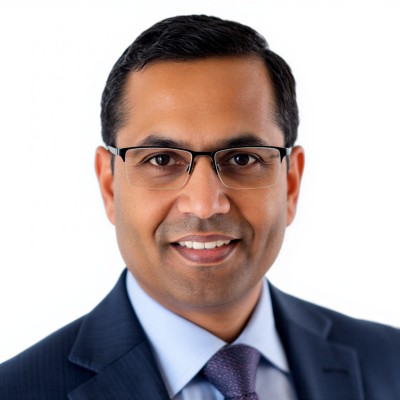
In this episode, Manoj Panda, Vice President and Treasurer at Bausch + Lomb, draws on more than 20 years of global finance and treasury leadership experience to explain why the greatest risk may not be AI replacing treasury professionals, but AI-enabled colleagues outperforming those who fail to adapt.
Listen on:



Featuring

About this episode
Manoj Panda has extensive experience leading capital markets, IPO execution, debt financing, FX risk management and global treasury operations for Fortune 500 and public companies. In his current role as Vice President and Treasurer at Bausch + Lomb he oversees key areas including capital structure, cash management and financial risk management.
Throughout the conversation, Manoj reflects on how experience across risk management, capital markets and treasury operations helped him build the breadth required for senior leadership. He also explains why understanding the business behind the numbers is essential when managing complex financing transactions and communicating with investors, rating agencies and senior stakeholders.
The episode explores how treasurers can become trusted advisers by identifying problems early, presenting practical solutions and building strong relationships across the organisation. Manoj also shares how AI can improve productivity, accelerate decision-making and reduce data constraints, while emphasising that human judgement, technical expertise and the ability to ask the right questions will remain critical.
What We Cover in This Episode:
- How rotations across finance and treasury can strengthen long-term career development
- The value of combining capital markets experience with treasury operations
- How financing transactions differ across investment-grade and lower-rated businesses
- Why treasurers need a detailed understanding of business and cash-flow drivers
- How stakeholder management changes when moving into a treasury leadership role
- Why presenting solutions helps treasurers become trusted advisers to the CFO
- How hiring, empowering and connecting global teams improves performance
- The opportunities and risks AI presents for treasury professionals
You can connect with Manoj Panda on LinkedIn.
—
🎙️ Subscribe to the Treasury Career Corner podcast – Never miss an episode! Subscribe on your favourite platform:
CLICK HERE for 🎧Spotify Podcasts
CLICK HERE for 🍏Apple Podcasts
🎓 Exclusive discount on CTP & FPAC – Visit our AFP partner page to find out how much you can save: https://treasuryrecruitment.com/partners/afp/
💡 Earn CTP credits just by listening – Selected episodes of the Treasury Career Corner are AFP-accredited. Listen, take a short quiz, score 80% or more, and we’ll send you your free certificate. Filter by CTP Eligible at https://treasuryrecruitment.com/podcasts/
🌍 EuroFinance International Treasury Management – September 16th-18th 2026, Barcelona – The world’s largest treasury event. Save 10% with our exclusive discount code: MKTG/B/TRP10. Book here: https://treasuryrecruitment.com/partners/eurofinance/
👉 FIND OUT MORE HERE https://treasuryrecruitment.com/partners/
Mike, CEO, The Treasury Recruitment Company: [00:00:00] welcome to this week’s Treasury Career Corner podcast. We interview treasury professionals about their treasury careers. Each and every week talk to treasurers about how they built their careers, where they are now, and where they see both themselves and the treasury profession. Going to next in this week’s show, delighted to be joined by Manoj Panda, the Vice President Treasurer of Bausch + Lomb, founded in 1853.
Bausch + Lomb are a leading global eye health organisation that’s dedicated to protecting and enhancing the gift of site for millions of people around the world. From the moment of birth right the way through every phase of the life. They’ve got a comprehensive portfolio of products ranging everything from contact lenses to prescription products, over the counter options, surgical devices, the lot.
But I’m gonna get a manoj to explain to us a little bit further in the show about the group and things. But we’re gonna go back to the beginning of his career and talk about how it first started in treasury. Some of the challenges you sees along the coming along the way. Manoj, over to you.
How did it all begin? Over to you sir.
Manoj, Vice President and Treasurer at Bausch + Lomb: Thanks Mike. I’m really honoured to be on the [00:01:00] podcast. Thanks for giving me the opportunity, first of all to speak here and giving me a platform to share my story. So I really appreciate the opportunity here. Mike, to answer your question, going back how I started early days, I started my career in technology and, banking systems, my undergrad, and then by training I was a electrical engineer, but slowly I transitioned myself to finance.
And then at some point I went to grad school to do my MBA. And that kind of gave me a unique perspective looking at some of the systems experience and how stuff work in the backend as well as looking at the, on the front side of how the users and the clients interact. And that kind of gave me the platform to go back to reassess my career options.
So while I was doing my MBA, and then that’s the point I decided to go launch my career into corporate finance. As I look back, definitely going back to school gave me the platform and I was able to, while I was at school, I was able to do an internship in the corporate [00:02:00] finance risk space. So that definitely gave me a good option to launch my career post MBA into corporate finance world.
So just again, that’s all happened probably pre-final crisis. I was in school there interesting times, or rather I would say good times pre-financial crisis. So right after that I joined Constellation Energy after my MBA. Again, this was, if you recall, the mid two thousands. Everything was booming, the markets were booming, commodities desk was all booming.
So I joined at the right time, had a good opportunity to front row seat. If I say on the risk management side how stuff is traded, electricity is traded almost like a free commodity here in US. And Constellation Energy at that point was a big kind of enterprise with a lot of varied interest in the electricity space as well as the natural gas space, as well as a little bit more into the commodity space, which again, it was very interesting for me to learn post my MBA.
And then within that I was able to switch my career from risk management to treasury. So all [00:03:00] within the way the company was organised, it’s probably within the corporate finance domain, gave me a kind of a good, a full house view of looking at the risk systems, the risk, what do you call controls within the company, and then coming back to treasury and then how do you take the risk and translate that to liquidity measures.
And then that gave me a good platform.
Mike: And as you say, you were starting with Constellation Energy. It was a good grounding, if you like, for that breadth of corporate finance experience. But for those of our international listeners, maybe they don’t know Constellation quite so much. Who were they at the time and.
What was it like for you in terms of building out your career? ’cause obviously you say it was a great way to do it. Got someone listening today, they went well, why was it so good? Who were they, if you like?
Manoj: Sure. Great question Mike. Yeah, constellation Energy and the time that I joined was the kind of a big commodity trading platform.
Had a joint venture with Goldman Sachs at that point of time to trade electricity and natural gas and few other [00:04:00] commodities within that space. And then it also owned a utility company within the Baltimore, Washington DC area, pg, which again, it’s all still surviving right now, but that’s was the interest.
Big company with a lot of opportunities there. And then when I joined them I was part of kind of a rotation programme. I think somewhat fortunate enough to, when you join a large enterprise, you when you have the rotation opportunities, you are able to look at, stay in the same company, but look at different areas, different groups, and almost expand your network per se and expand your understanding.
You’re looking at the risk management styles the type of people that you interact at different, then you go to corporate treasury, then the folks that are, have different skillset, but having a rotation if I may say give you a free pass to look at, working with different groups, asked different questions within a very short period of time.
So that kind of was my early start there. And then giving that opportunity, I was able to broaden my skillset within the [00:05:00] risk management and what do you call the treasury space. And then while I was there, interesting times in 2008, nine frame, the financial crisis unfolded right in front of me.
And having in a commodity trading company gives you not only the front seat, it’s almost like it’s so much scary as you look back. I look 20 plus years now, but at the same time, you get a lot of learnings. What you learn probably within few months is almost what you call what you would have normally learned in a year because your outcome in the market is very compressed.
Things stuff start happening as, if you recall probably the August 20, 22,000, that’s when kind of the commodity kind of boom bust cycle happened. Lehman brother collapsed. A lot of things happened in the market in a very short period of time. And when you were at what I would call post MBA at my entry level, you look at all the data, you look at what’s happening in the market and you look how the leadership is reacting to it.
You get those clues. [00:06:00] Again, these are, what do you call stressful times? You could be working in a career that no crisis happens, so you really haven’t learned the crisis management. But for me, the one is that I look at, looking back now, is I was able to look at a crisis in a short period of time and then also at my level, the biggest learning for me was to how react and how not to react, both from the leadership team that are probably the C-suite, the risks officers, the treasurer, and the CFO.
Just looking at them, how they’re reacting to the data because nobody has the playbook. None of them had the playbook, nobody knew how to react. But that kind of almost end of that, it tells you who are the winners or the losers from a leadership style point of view, from a data analysis point of view.
And also connecting the dots between what happens within your company and what is happening at a very rapid pace outside the company.
Mike: these are your early days and I know that. That was good for you as a foundation, if you like, for grounding. Then you [00:07:00] moved on and you joined Tyco. I know at the time you and I have talked about this, Tyco went through a number of changes.
What was Tyco like then and what was the shape of them? ’cause I know it, it changed sort of thing and there were then spinoffs and different things. So it, bring us up to, or tell us the snapshot of Ty Tyco then, and then bring us up today.
Manoj: Absolutely, Mike. So yeah, I think couple years after Constellation again, just a good opportunity in Tyco.
That’s probably early 2010 when I joined Tyco. And at that point, Tyco and International had what you call completed few rounds of spinoffs already. The transformation journey that Tyco took in the middle of 2000 has already happened. Few Tyco electronics and Covidian were already spun off, but the industrial conglomerate was still there.
And that’s the Tyco International that I joined again, within that period of time, Tyco still has varied interest in security, fire and a kind of a nod of varied interest all around the globe. And then in my time also, there was a number of separations, spin ups. [00:08:00] Ultimately, by the time kind of four or five years down the line, Tyco was separated into three different companies.
But within that journey for me was looking at capital allocation opportunities, looking at asset sales. So looking at understanding from a, again, within the treasury team, how we are looking at asset sale, how to integrate a acquisition. So everything happened within that period of time, as Trico was distinctly looking at three segments within Tyco.
And then all those three segments has different capital allocation priorities,
Mike: right?
Manoj: So when you are in the treasury group, you understand how the capital allocation is decided at the board level. Then that translate to a execution at the treasury team level. Then you go to the market, talk to the bankers, understand a, company of.
X investment grade profile or a high investment grade profile or a low investment profile. How does that interact or how the treasury team executes that capital allocation that the board has outlined [00:09:00] and take it to kind of the finish line. That means executing on transaction raising capital, and then on the backend side as well, not only other, the capital allocation, I had the good opportunity to rotate within that treasury group within Tyco, which is big enough to look at the foreign currency risk management.
So if you have how do you put the policies in place for a foreign currency risk management, how do you put the banking policies in place for all the different spin ups, which has different geographic attributes. Some of them are highly global. So then you’ve got a different kind of rules of the road versus if one of our business at that point was a DT, which is pretty domestic.
So you clearly not as complex from banking point of view. So you understand and appreciate and then don’t want to overcomplicate if things can be simple. Make it simple. So that’s a good learning that I had from a banking side, from a foreign currency risk management and from a capital allocation I raising bonds or any kind of capital raising within the marketplace.
So [00:10:00] all happened within that space.
In Tyco I had the opportunity to get into a few of the transactions where the company was separating into three separate businesses. And then looking from a treasury point of view at that point, gave me a good opportunity to look at the separation, how to separate again, looking at the three frameworks here, like one being the capital allocation framework one is operational framework, but there is an extensive amount of work that needed to happen in order to separate. And believe it or not, this is three large global businesses, like with business interests , all over the world, so then you are looking at banking structure, the cash pooling structure. And then at the same time, on top of everything, you got the capital allocation, What kind of credit rating, you want to aspire for in the three businesses.
They are all separate. So definitely a good overview of that, and I was able to, lead one of those businesses, Tyco Flow Control, all the treasury-related work, getting the rating. Ultimately, by the time, the separation happened, that entity was sold to another enterprise.
That separation never happened, but [00:11:00] clearly gave me the opportunity to do the work, understand the framework, a good view of what needed to happen. And then I ultimately stayed with the industrial part of Tyco. I did few more stints on capital market and FX, and then that prepared me really well to take some of the next step as I moved from call it a manager director level to a assistant treasurer level assistant so after that.
Mike: Yeah. And before we get into that assistant treasurer, It’s an interesting one. I do a weekly newsletter, and one of the weekly newsletters I said was about you don’t have to have capital markets experience to be a global treasurer. It’s very useful, but some treasurers come to me and say, “Oh, I’ve got to have capital markets. I’ve got to get it. I haven’t got it along the way.” But you’d actually come from that, history. You know, do you find that’s different to some of your peers, or where’s the balance, if you like?
Manoj: I think it definitely makes sense to have a few of those experience. Is it absolutely essential? I would think probably, again, depending on what kind of treasurer roles. If you were [00:12:00] going into let’s say a treasurer role with a heavy capital market requirement. It definitely would be helpful to have that experience there. But, I’ll give you a good example. So when I was interviewing for Tyco, I had heavy capital market experience by the time I came in.
And then, end of my interview , I was interviewing with the assistant treasurer, and then she asked me, “You have done all the capital market. I do have a good position on the capital market position that we’re interviewing for, but at the same time, I have slightly senior position on my treasury operation where we look at everything, from a separation point of view because all the transactions are lining up.
Do you want to do that?” I, said, “Sign me up for that.” . Because again, I’ve done capital markets, so then I did that. When I joined, I kind of was able to join as a manager level doing a little bit of operation, funding FX, which were slightly different than capital market. But Tyco was big enough that I was able to dive into that area. And I definitely look back to that experience very positively. One, it gave me a good rotation into a [00:13:00] different area of treasury that ultimately helped me the next time, the leadership was forming a treasury team. My profile stood out with somebody who has done a capital market, who had done the treasury operation, so I was able to kind of put it together.
Mike: Yeah, so again, as you say, it also, that could have counted against you in a way in later roles if you just had capital markets, you don’t have the breadth. As you say, you’d then come at it from a capital markets standpoint to go into operations, and seeing how it all fits together, the piece of the jigsaw sort of thing.
Manoj: Absolutely think I continue to probably do similar role changes throughout my career. Yeah. I think post Tyco, I think when I went to, Advance Six it was a general purpose assistant treasurer role. I did everything. It’s a small team, so I was doing capital market
Mike: Who are Advance Six?
If you like- Yeah … Advance Six, I don’t know them. Who are they?
Manoj: So Honeywell spinoff. The name is probably not well-known, but it’s a mostly focused on reagents and chemicals business. When I joined the team, it was pretty much ground’s up.
Everything was, a sort of transition from Honeywell to Advance Six. We [00:14:00] didn’t have any team. I literally had to build everything from scratch. But at the same time during the day I would do a little bit of cash management, and then in the afternoon I would make some bank calls on capital market activities.
So doing all purpose work, but again, small team, but at the same time gave me a good roundabout experience setting everything from scratch. So yeah so that definitely helps having a rotational experience. And then when I moved to Quest, it was purely capital market, issuing bonds no particular inclination on the operations side, but that allowed me to, again, expand a little bit on high investment grade capital market transactions and bond transactions.
Mike: As you say, you made the move to Quest Diagnostics. How were they different? ‘Cause you’ve got, as you say, you’ve got Tyco industrial, and then you’ve got, chemicals, and then you’ve got Quest. Can you talk us through the industries, how you’ve seen them differ as well, and what they gave you?
Manoj: Yeah, sure, I think the Tyco was the most kind of international business, very global with a lot of structures all over the world, including US and [00:15:00] predominantly all of Europe and Asia Pacific. So it gives a good roundabout view of everything that happens in the operational world. Capital market, as you it’s still US-driven in the sense most companies generally tend to have a bulk of their cap structure, done in US debt markets. A bit of issuance in Europe for sure, but at the same time, the bulk of the capital structure was still predominantly based in US. When I moved to Edvantix, Again, it was not, kind of a large corporation. It was in the smaller space, so it was mostly in the bank market in US.
So again, a different perspective, and it was a predominantly US-based business. So that was somewhat of a narrow focus, but gave me a good understanding of day-to-day cash management and bringing in some efficiencies, managing, call it a two billion dollar business with literally a handful of individuals.
Two or three We were able to manage it very nicely. And put in what you call the building blocks for the company to succeed in future. Then Quest was, again, another very US-driven, geographic point of view, only in US, with a very [00:16:00] little of international business, at that point of time. I haven’t followed up what they’re doing right now, but predominantly US and a high credit kind of capital market, activity mostly based in US. ,
So I think that definitely gives you good roundabout perspective. A different credit spectrum also is important , for my career. , Tyco obviously highly rated, so same as Quest.
Advanced Six was not a publicly rated, so mostly on the bank market. Then I moved to Bows Health, which was again a lower credit rating, but they gave me good understanding of different type of transaction that you want to do. , I think as you probably have talked to all these different treasurers, , accessing capital market for a kind of a triple A, double A type of credit versus a kind of a single B, , it’s a very different dynamics altogether. The amount of work. The investor base is different. The risk appetite is different. And then, the cash planning that supports those type of debt rates is very different.
Mike: Let’s pause you there. So let’s ask, what is the difference? Is it that you’re, , going cap in [00:17:00] hand to the banks and saying, “Please support us,” or, trying, “Please help us. Please help us.” Or how are you presenting it though? ‘Cause we’re gonna get that more into your current role and things, but how is it different? Before you’ve gone in there, double A, triple A, look at us, it’s easy. Now you’re in a quite different environment. How does it change or if you’re a treasury professional listening today, how should you be prepared for that change?
Manoj: Sure. I think it’s definitely much more deeper understanding of the business- that I found somewhat fascinating. Even in my treasurer seat, I have to really understand the good part of my business because when you are doing launching some of the capital market transactions, , you’re interacting with the investors.
, So me and my CFO, we need to have very good understanding of very different facets of the business. What is the driver? Because the debt investor on this side ask very kind of pointed questions to you. why is this happening? Why this segment is not performing? Or what is your outlook for this particular segment?
So that definitely then the overall process tend to be longer, so [00:18:00] you’re in the market for, , days and weeks. , So , what do you call, drag the pain a little bit longer versus- Yeah … the investment grade, You’re not, you’re oversubscribed on- … logo decision at 7:00 AM.
Mike: Yeah. You’re oversubscribed- And then by- … on that and less on the others. Yeah.
Manoj: yeah, you do get oversubscribed, but you need to put in a little bit of extra work there. So for a typical IGs, once you are going to the market early in the morning, by midday, , by afternoon you are, we’re generally . Fully, exiting the market. So less market risk. Obviously, the highly liquid market as- you imagine the IG market. The high, yield or kind of the loan Loan market is slightly different. You launch a transaction, you definitely have call it a week or two to go through the transaction.
So more diligence. You engage with the investor much more diligently, probably have group calls or one-on-one calls throughout that period. So that definitely gives you, a good understanding of the business because you need to be prepared to, almost sell , the pros and cons- of your business in front of this audience, probably it’s for the next 10 days.
I found that a good learning [00:19:00] experience. At the same time, good understanding of the business. And then, you almost understand the business in and out. You understand the cash flows in and out, all the drivers, very deep into it.
Whereas probably at a high credit institution, you can probably talk at the highest level and the market understands enough, the risk appetite is enough that you can get away with- the transaction, whereas, in a credit situation, in a single B, double B, it tends to be very exhaustive efforts to get there. Ultimately-
Mike: You need to know everything under the bonnet . You really need to understand that
Manoj: And also one, important facet is the covenant package. So the covenant package for a double B, triple B type of credit is different, so the debt investor they go through more diligence just to make sure the risk capital that they’re deploying has all the bells and whistles on the other side.
So I, would probably look at it. I’ve done a number of transactions over a period of time , in the high grade space, in the different credit space. I would think probably… I’m a marathon runner as you can see, a , few medals, on the [00:20:00] back. As you look at it, you’re going to, as a treasurer, you’re going to do a bunch of transactions where some of the transaction are your easy miles.
You will have every stakeholders happy in the sense, the CFO is happy, the CEO is happy, the board members will be happy, and then the rating agency, and even the bankers. . Everybody will be happy. There will be few but, , you do will get few transactions which are your sort of mile 20 type of transactions.
You are running against the wind. The market still has some challenges, but you need to get something to the other side So definitely there’ll be circumstances are different, so you still need to get to the finish line.
Sometimes you need to prioritize what is your, sort of biggest pet peeve.
Mike: Yeah.
Manoj: Is it pricing? Is it getting to the other side, getting to , the refinance transaction? Whatever is your aim, you want to focus on that and get to the other side And then manage that execution. , Clearly the stakeholder- management, as I talked about, is a key one who are on the highest level. Sometimes if you’re raising money for an [00:21:00] M&A transaction, you definitely want to see another other side. Pricing is important, but not the most important. If you’re doing a refinancing, pricing is absolutely important because it’s an optional transaction, there is a bit of flexibility, so you want to channel your, priorities based on that.
Mike: And with yourself, if you can maybe talk us through, so Bausch Health in 2019 when you joined, and then it became Bausch + Lomb and there’s different things with that transition.
so you went from assistant treasurer, and I know this is something you and I talked about before, to becoming the treasurer and the different expectations. But can you maybe give us a quick life cycle of the company since you’ve been there, just as you’ve just described there, because you might do it to investors. How has it evolved to now? And then let’s do the same , drill down on your career and how it’s evolved, in the group.
Manoj: I think transitioning from assistant treasurer to treasurer as, you mentioned, so I joined Bausch Health as the assistant treasurer, and then a few years down the line, the decision was made to separate the Bausch + Lomb [00:22:00] business.
And as part of that separation, , there was a new management team was formed. And then, so I was a-
Mike: what were the two businesses, or what, how, did
Manoj: – So one is Bausch + Lomb, which is the eye care business- and the remaining part of Bausch Health, which is a, pharmaceutical business- that is still there. So once Bausch + Lomb… So we went through a extensive IPO process probably in the, after the announcement was made in 2021. New management teams are formed and then, the new Bausch + Lomb, CFO chose me , as the treasurer. , And then after that I supported , the IPO process, kind of everything that needs to happen, and we went to market and we did the IPO in, early summer of 2022.
Mike: So you’re an incumbent then. How did you put yourself in the driving seat to get that role? Was it just a natural thing, they just walked in and gave you the job?
Manoj: I wish it was that simple. But, adding again, definitely, going through the process, I think when I joined Bausch Health, as assistant treasurer definitely a lot of work did happen.
The CFO at that point of time, definitely saw some of the work that is being done, and then, went through the same hiring process that any company would [00:23:00] do. I would imagine there were some internal, some external candidates, then pool of that. I was able to make the cut, and then, ultimately was announced as the treasurer for, Bausch + Lomb.
Mike: Now, when you and I talked, it was a great conversation because we really got into how you’d become a trusted advisor internally,
We’ve talked a lot about the external stakeholders there and going to the markets and a lot of capital markets. But one of the key things you’ve talked about is how earn that trust internally.
Talk about the, tough times and the, challenging times and when you’ve got the good news. And it’s easier to maybe to go with a good news story, but how you manage and coach people when it’s a more challenging time within the markets. Would you describe that for the listeners?
Because I thought it was a great when we did our pre-call and stuff.
Manoj: In a longer career, you’re going to, probably one of the key things that I, particularly after I took the leadership role of a treasurer, the number one Sort of priority was the stakeholder management.
If you look at it, every treasurer would have to have some level of technical [00:24:00] skills, and, that’s the table stakes. Everybody got that.
Mike: Yeah.
Manoj: But the stakeholder management is probably one of the key one, which is different, what I found out, in my role when– once I stepped into the treasurer role.
So managing the different stakeholders , at a different level. Your engagement with the board or the audit committee is at a different level. Your engagement, , w-with the rating agency is at a different level. And the expectations are different. And your engagement with, let’s say, your banking partners, at the highest level is at a different level.
A-and then probably the most close one is your engagement with your CFO.
Mike: Yeah.
Manoj: Because You want to be a trusted advisor to the CFO. That means you will always have when you take a problem, to the CFO, you always call it deliberate. Here are , the few things that have happened, and here are the outcome.
Here are the two or three solutions that we have. I think that probably is a good step, and I coach my team, almost in a similar fashion. Folks that are on my team look, when you manage a business a-at the treasurer on, in a longer life cycle, you’re going to have ups and downs.
Be it a [00:25:00] business situation there’ll be some positive news, and, it’s good problem if you have good cash flow. Yeah. Good problem to have. How do you deploy that? If you have some challenges in the business , in small part of the business, you want to understand that, get that early warning, and then come up with probably what are the proactive measures?
What can we do? So generally, I tend to see that when you talk to your CFO, you generally give good or bad news. I, think that’s definitely good communication is the key. But at the same time, giving the optionality, because you always want to think about, “Okay, what would my CFO think if I bring in a problem without a solution?” That’s a time-wasted conversation. Generally , don’t need to have it.
Mike: Yeah.
Manoj: But at the same time, if you come back with, “Okay, here is the problem. Here is the problem that we identified, and here are the three ways we can mitigate it,” you do have a preference. And that kind of changes the tone. Over a period, if you do long enough for those kind of conversation, then you build that trust.
Mike: Yeah.
Manoj: then you build that trust. In some cases you find a problem and inform the [00:26:00] stakeholder, “So here is the solution that we’re going through.”
And in some cases- there will be something in the follow-up in the back end that, look, we have implemented the steps to make sure that this particular challenge is mitigated. So those are probably what I would call the key stakeholder management that I learned, definitely has helped me to build my career and, get that trust from, from my immediate leadership.
Mike: And how has your leadership style evolved over the years as you’ve managed these, certainly the scale. You’ve managed larger global responsibilities. How has, how have you changed maybe as a person and maybe as a leader?
what’s changed with you and with the team and things?
Manoj: Sure. I think, people management, what I would call, definitely have evolved, as I’ve grown from a, at a manager level doing all the work, and a director level kind of overseeing- a lot of work. And then, in my current leadership when, you’re overseeing somewhat of a medium-sized team.
And then I think a good amount of time that I have spent, last year is hiring the right talent.
Mike: Right.
Manoj: Hiring the right talent is probably [00:27:00] the key, investment that I, have made in the team. Then, having the right technical skills is, important. But at the same time, having the right fit into the team, with the right attitude, right level of curiosity, to learn more.
All those aspects, , definitely is worth to develop. And once you have the right team- I generally tend to tell my team, “Okay, here is a problem statement. I don’t have the solution.” You are the, for example, the lead on my cash management team probably has the best answer to a cash management challenge.
I don’t have that. I have to have the trust on that team to come up with the best solution. The same on the FX side. The lead on my FX, most likely knows in and out of every, exposure, every kind of trap that we have within our business, and he or she has the best answer, and I don’t.
I probably can, give him,or her a challenge, “Okay,here is the problem When you have the right talent, you will get the right solution.
I definitely have made some changes within my team just to bring in the right talent and let them [00:28:00] execute, because the best kind of outcome I have seen is if you have a highly motivated, individual and you give him all the tools, him or her all the tools that needed to do their job, generally the outcome comes really well.
Mike: And with yourself, you’ve obviously worked across different regions. you managed teams and things across North America, Europe, Asia. Do you see cultural difference that affect, the way you’ve coached those guys or led them and communication? That I had Mike, from Computershare, and he talked about the different ways, when he was Asia, you go out for a meal.
You know, that’s a key thing. In the UK, you go to the pub sometimes. Not all the time, and it’s just… But, that was one of the ways he said, you’ve got to meet your team where they’re at, not where you think, He just said different people wanna do different things, and it’s not just a hard and fast rule.
It changes according to different groups. With yourself, what, have you found?
Manoj: Sure. No, absolutely. I think, obviously, you always want to account for the cultural differences- [00:29:00] Yeah … when you’re managing a global team. H- how business gets done , in Asia Pacific versus in Europe and versus US is very different, and including LATAM is very different.
So what I’ve found probably a good way to blend into that is having to meet the team definitely once in few months. And if I’m have the opportunity to travel, across the culture, what I’ve found, and if you are in the same room, communication becomes much easier. And after that, even if you do- do a team meeting on Zoom.
so the definitely that helps afterwards. So I, make it a point to probably meet my team, be it, overseas travel once every few months. I particularly, make the point to go and meet them. And then having that, what do you call it, team-building exercise over a dinner or over a lunch or wherever is appropriate, it definitely goes a long way.
I think I definitely convince, sometimes my boss it’s worthwhile to make that investment. I know it costs time and money to make those trips, but it is always worthwhile to make that investment in the team. And then I also [00:30:00] do the other way around, and sometimes I encourage folks to travel to the headquarter location where we are, to meet not only, as treasury team works with cross-functional across the organization, within the finance team, within so many other different teams, with the supply chain team.
So we want to make sure, , particularly key leaders within the team have the opportunity , to meet the A-And then that makes their life easier, going forward because they’re the one taking the decisions in the local time zone, so ha-having a connectivity with the right leaders within the company helps them.
So I, I definitely think every global company should be looking at bit of investment in, , either call it offsite or some quarterly team meetings. That definitely helps communications go both ways. It should not probably give the assumption that, look, you’re getting the direction from a headquarter, execute it, versus you go and deliver the news, be it good or bad, and be part of that ownership.
Here is what we’re going to do in this region. Here are the tools that you guys have. Yeah. And tell me what else can I bring in or what are the [00:31:00] resources that we’re missing that I can help you to get to where our kind of the company goal or every company has. For example, my treasury team has goals in terms of the cash flows or all the risk management framework.
Here is what the goals are. Here is are the tools that we have. How can we achieve this?
Mike: And obviously of the tools. Technology at the moment has evolved massively, and we’re getting lots of… I was recently in Vegas for Kyriba Live, but actually I, said to my panel there. Ben Seal, who’s, was on the panel, was great, and he said, “That’s a really good question.” Because I said, ” What changes are generally positive for you guys, and what’s been overhyped? You guys are having to listen through the noise.” And as Ben said, “Mike, that’s a really good question.”
I went, “I know. I’ve done these a few times and I’ve asked these questions.” But then we did the… I did the UK Treasurers’ Conference last week, and it was exactly the same that you guys are having, At one stage it was blockchain. You guys would, every conference you showed up at it was like someone was coming and telling you about the blockchain pamphlet, and you’re having to read.
[00:32:00] You go, “Oh, God, really? Does this apply to me?” Now it’s technology, AI, and everything else. But there are some differences. There was a lot of people talking about it implementing their work on a personal level, but then how that then bleeds through into treasury. The jury was out in certain cases.
How… What is it with you guys or with yourself?
Manoj: Sure. No, I think, Mike, if you look at it treasury transformation or the technology transformation has been happening probably for the last 15, 20 years. Yeah. Obviously, we have gone from the old way of treasury management to, cloud-based technologies, and then there’s always a talk about blockchain that happened few years back. There’s the stable coins, Yeah … that are still… We’re still talking- about those. And obviously, I know it’s about for half an hour now we have been talking. We haven’t talked about AI, so we have to talk about AI. Come on. We’ve got to do it now. , I’m sorry. Yeah. We’ve got to…
Mike: , it’s mandatory now.
Manoj: if I look at it, I think- AI definitely gives all of us what I call a transformation opportunity for us to look at our career. A-and that’s the way I have framed it with, with the team, and that’s the way at least we, within Bausch + Lomb, we have framed it [00:33:00] to within the management team.
Look, i-it’s a transformation opportunity. Probably almost what if I may call it once in generation type of opportunity for us to take our kind of individual efficiencies to the next stage. But at the same time, the more exciting part is taking kind of the team performance to the next stage. As we’re probably , in the early stages of understanding how AI impacts our business.
So one thing, is pretty, clear, is, the AI is, at least in the current understanding of how technology is definitely the intelligence as, a commodity i-is probably going to stay. And the more investments and the more, modeling improvement that are happening.
So that means at some point, intelligence will become a commodity. We can, definitely get… So some of the skill level that we used to look for probably can be available with a chat prompt, and as long as you know how to what ask the right question, it’ll be available. But at the same time, I, do feel, we still need the expertise to understand the right questions, understand, exactly what to ask.
Because if you look at [00:34:00] it, we are in, still in IKEA business. We continue to want to be in that business. And in my treasurer role, I want to make sure the team is delivering all, that our business needs from a cap structure point of view, from a cash management point of view, from a risk management point of view.
We need to deliver those attributes. And can AI help? Absolutely. And we’re already seeing some early signs there. Individual performance level, absolutely. We’re able to do things much faster. Probably I have a few agents that are reading my 10-Q before- … I used to spend a few hours, a few days rather, and now I’m doing it probably 20 minutes.
Give me a summary. What are the treasury aspects? Yes. Does it save me time? Absolutely. It hasn’t Again, it’s not super transformative yet, but it has saved a bunch of time. And, imagine that time saving happens probably, in my context, 13,000 folks in, Bausch + Lomb and the treasury team.
In-individually, we’re all gaining some efficiencies, but I think the more exciting part is when we put a new [00:35:00] probably a process, i.e. a cash flow forecasting, and then touch some of the, AI enablement within that, and that’s where the excitement part, comes in. Because if you look at it, last 20 years probably in the treasury, every, treasurer will tell you that we had some constraint on technology because I had 20 number of ERP systems, this data doesn’t talk to that data.
So there are so many constraints. I think what is exciting for me is that, some of those constraints are probably going to go away, because I really don’t want to care even if the data doesn’t talk. I’ll have probably AI layer manage some of those. And the excitement part is even if the data is in two different kind of areas, you can build something on AI on top of creates a level playing field all of us. so less constraint, so that means faster output. So yeah, definitely for a small specialized team like treasury and tax, I can see a lot of kind of, good ways to transform missional type of opportunities coming up in our way, and less constrained by the data.
Because, look, we’re [00:36:00] going to have all the challenges, a number of ERP systems, some kind of 1980s technologies probably exist in most companies. But at the same time, having a AI layer will make sure all those are transformed. Or at least a level playing field will evolve.
Mike: And one of the things that, we had on the panel last week, Victoria Underwood from Imperial, she was…
made a great point. She said, she’s been using different tools, and it came up with some foreign exchange things. You look at these swaps. And then she looked at it and, if she’d taken it at surface level, she could, yeah, push those through. But they were wrong, and she actually said, “Look, this is…”
And, then I chipped in with, once she talked about it, because it was a great point, that she, had to have the intelligence, she had to have the treasury brain behind it. And I’d see a lot of people saying, “Oh, the brain’s at the center of this.” But there’s this AI, artificial, and there’s actually RI, real intelligence, and that actually comes from the person.
Because they said these are still tools at the moment. They’re not taking it over. It’s like how we use them, exactly as you described there, which is… it’s very exciting, [00:37:00] but it’s, Yeah, sounds like it’s… It sounds like that if you embrace that, that’s gonna help you be a better treasurer in the future.
Is that w- the way you’re seeing it?
Manoj: A- absolutely. I think a better treasurer, faster decision-making. I think one of the probably a key headline risk that, Mike, is that a lot of folks are probably somewhat threatened by AI. “Look-”
“…
Manoj: Is AI going to take my job?” I think what I advise to my team is, it’s the other way around.
Your colleague who is well-trained in AI is going to be a challenge to you- Yeah … versus you not embracing AI. Because AI, look at our careers, who have worked long enough in the late ’90s kind of- You walk in as a new employee, you still have a computer. In some cases you did not have a computer at your desk- yeah
you used to have a file folder. clearly AI is going to have a transformation opportunities. As you start working, you have all your tools, you have a intelligent, call it a co-pilot or cloud system-
Mike: Yeah …
Manoj: that can read your emails, that can… As I’m driving these days, I get a kind of top five things that, [00:38:00] that’s pending my review.
Yeah. by the time I come in, I know, okay, here are the five folks that I must reply because they’re waiting, because that’s my agent has told me that.
Mike: Yeah.
Manoj: How, cool is that versus I have to still go through, dig through emails and then understand that. But look, it definitely helps me. the work of future, we’re slowly embracing that. We’re slowly getting into that phase where, what’s supposed to be a science fiction is probably looks very possible in our day-to-day life. , You can get some of the agents to do some of the work, draft some of your email. It’s almost having a glorified personal assistant. But again, going back to your point, we still need to do the checks and balances. We need to still understand, what is your intent is still happening because as the AI models are, still models, they- do a good job when they are given good directions.
Mike: you and I have spent 20-plus years each in, , treasury and finance leadership, and we’ve done this.
And what excites you about… Obviously, this is an exciting new development. What else excites you, or what other things do you think that, if [00:39:00] you’re out there and you’re listening today and think, you should be thinking about this,” or what else is coming along do you think that is, y- you’re focusing on?
Manoj: Yeah, and I think within the, probably the treasury space, one is probably the technology transformation, is there. But at the same time, think for where personally I think exciting thing for me how transformation AI could be in the next few years. Imagine- what has happened in the last, call it within a year. Transformation has been phenomenal. , But if you fast-forward a few years down the line, I think there’s a lot of potential. But again, the companies that embrace AI in full scale probably will see bigger benefits. So I, think we’ll probably have a pack of winners and losers at some point.
It’s definitely exciting to be part of that journey as I look at my career, not only, , looking back, also looking forward, call it okay, I don’t know how many years I have, but it’s kind of- … definitely exciting that I’ll be part of that journey. Whatever it is, I definitely have a open mind to change and transform.
[00:40:00] But when I look back for kind of the last 20 years and look at the next 10 years, I think the next 10 years looks more exciting because the amount of the scale of change that has happened- the type of tools that are already ready to kind of- help us to do our work. so the future looks bright and pretty exciting.
Mike: So you’ve… and, you touched on it brilliantly there actually about the experiences you’ve had over your career. What do you think treasury professionals now should be seeking out? you’ve had as, we talked earlier, capital markets. You’ve had lots of different, then you’ve broadened it, you’ve done lots of different things, and then you’ve stepped up in terms of role.
this was, the fact that what experience do you think those earlier in their career should be seeking out, do you think? And, maybe even you tell your team, “Look, guys, you should need to be doing this,” or need to be networking. What other things do you think people should be doing?
Manoj: Sure.
Absolutely. I think if I look at from a, somebody who’s entering the treasury or the finance career early, having few rotation into different areas, be treasury, call it within FP&A, within that rotation for the first few [00:41:00] years, it definitely gives you good appreciation of the business and, good, roundabout view as you launch your career to call it the middle career.
For me, definitely having few of the rotations in the early part of the career, that allowed me, again, to get to that decision sooner. Look, treasury is a career that I want to pursue, and then ultimately I was lucky enough to find my path and get to the treasurer seat.
I definitely encourage folks in my team as well as, folks that are entering the workforce right now, get as much rotation within the first probably, that first five to 10 years gives you a good view, and good learning. And, be open to that change management there. because clearly, a treasury analyst’s day-to-day responsibility is going to be different than call it your FP&A a kind of accounting type of analyst. But at the same time, if somebody does those, all three or a similar type of, you will have a good appreciation of as you go higher, whichever way, whether you become a finance director or a treasury director, you would have better appreciation of all the task, [00:42:00] all the areas that support your business, all the areas that you receive the data, and then gives you a roundabout view as you launch your career to the next stage.
Mike: Next level. Brilliant. we’re gonna put your LinkedIn details in the show notes so people can connect to you, and I know that it’ll light up in there and things like that. But, what are your, takeaways, maybe for those further on in their career or just in general takeaways from today’s show that you think, people should be thinking about as they’re sitting there with their coffee and, in their office and things.
What do you think they should be thinking about?
Manoj: The few things I, , look at again, as a treasurer, I, definitely think the, one of the key areas, , that I have focused in the last few years has been the appropriate stakeholder management.
Mike: Okay.
Manoj: Understanding, , the challenges of, the time and understanding, deep into the business definitely helped me to, frame some of the questions if, i- particularly if you have a challenge, you want to understand where it is coming from, and then who are the stakeholders and what are their priorities.
Usually you will find the solution faster.
Mike: Yeah.
Manoj: And again, somebody who is, early in their [00:43:00] career, again, it’s probably the stakeholder management is less important, but having that kind of broad roundabout skill is, it’s much more important, understanding all the tools. And then, in the world of AI, I think the more we embrace change, I think we’ll have probably a kind of a, what do you call, a more exciting longer career.
Mike: Yeah, more fun. You’ve been amazing, sir. Thank you very much and looking forward to connecting with you very soon, when I’m next over in New York as well. So thank you very much for today and some great advice there and takeaways for everyone. Thank you.
- Build career breadth. Experience across different areas of finance and treasury creates a stronger foundation for leadership.
- Understand the wider business. Treasurers need to know what drives performance, cash flow and risk—not only the technical details of a transaction.
- Bring solutions to stakeholders. Clearly outlining the problem, available options and recommended action helps build trust with senior leadership.
- Empower specialist teams. Strong leaders define the challenge, provide the right resources and trust their experts to deliver the best solution.
- Use AI with judgement. AI can accelerate research, reporting and decision-making, but treasury professionals must still validate the output.
- Adapt before you fall behind. The professionals who learn to use AI effectively will be better placed to succeed as treasury continues to evolve.
🎧 Earn CTP & FPAC Credits by Listening to the Podcast
Whether you’re at the gym, on your commute, or walking the dog – you can now make your podcast time count toward your professional development.
We’re thrilled to share that Treasury Career Corner podcast episodes now qualify for CTP and FPAC recertification credits through the AFP’s Independent Study category.
How It Works:
- Listen to a Treasury Career Corner podcast episode
- Complete the short multiple-choice quiz
- Score 80%+ to pass
- Submit your credits to AFP as part of your recertification record
➡️ Credits earned per episode length:
- 30 mins = 0.6 credits
- 45 mins = 0.9 credits
- 60 mins = 1.2 credits
No filler. Just real treasury conversations covering leadership, strategy, risk, technology, and team building.
🧠 Quick Facts:
- 📝 Quizzes contain 6–10 multiple-choice questions
- 🎯 You need 80%+ to pass
- ✍️ Quiz submissions are reviewed manually
- 📋 We must then VERIFY you are a CTP treasury professional to help prevent automated or non-genuine submissions
- ✅ Once verified, we mark your quiz and send CTP credit confirmations every Friday
- 📨 If you need results sooner? Then email mike@treasuryrecruitment.com and we’ll try to prioritise the marking of your latest quiz
NOTE: In line with AFP compliance requirements, no more than two quizzes may be completed per day.
