
How Treasury Leaders Build Trust Beyond the Finance Function | Treasury Careers Podcast
How can treasury leaders build trust, influence decisions, and demonstrate their value beyond the finance function?
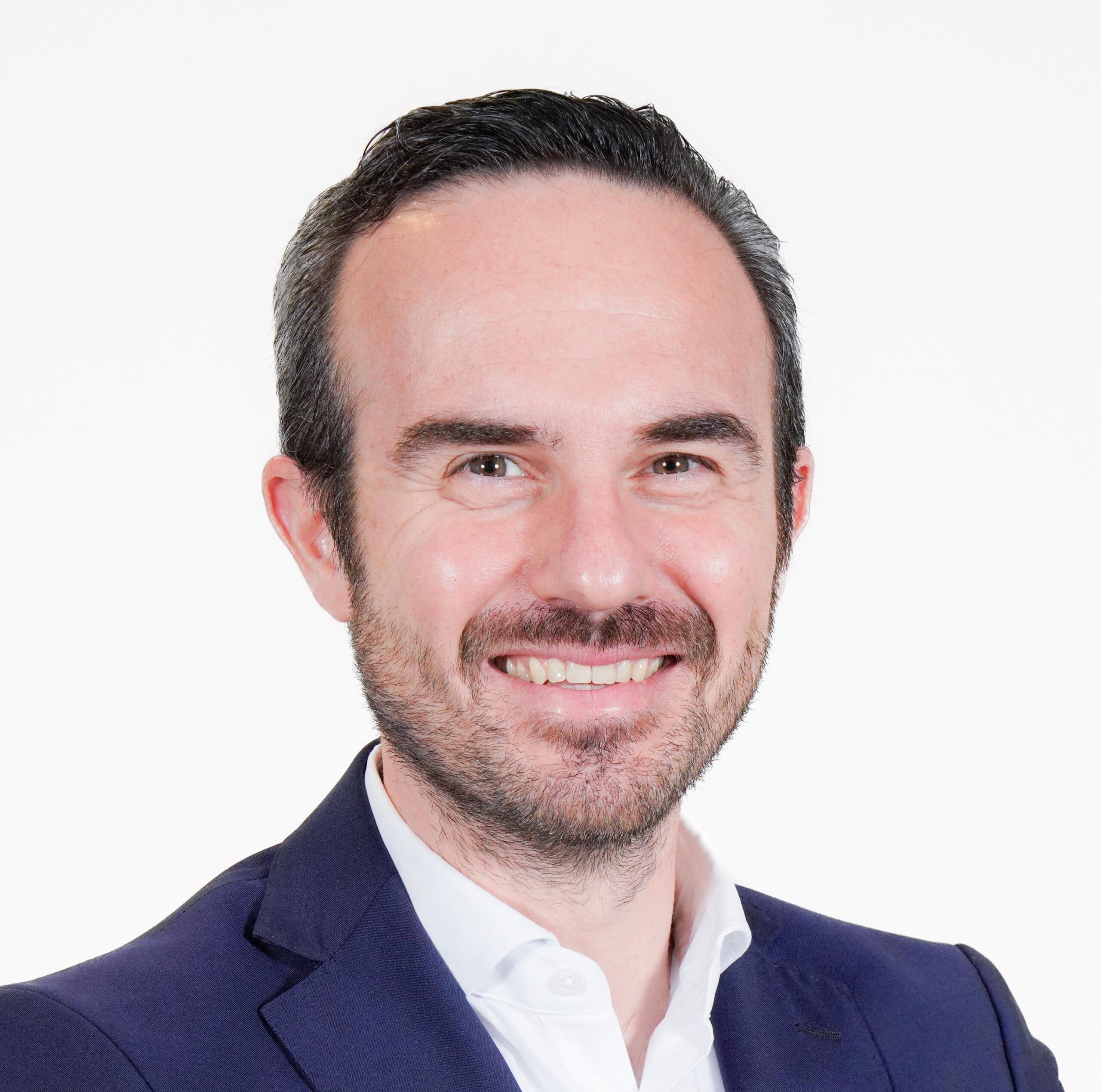
In this episode of the Treasury Career Corner podcast, Mike is joined by Domenico De Maio, Group Head of Treasury & Tax at Helsinn Group, a global pharmaceutical company focused on improving the quality of life of patients with cancer and chronic diseases.
Listen on:


Featuring

About this episode
With over 21 years of treasury experience in Switzerland, Domenico De Maio shares how the treasury profession has evolved from a largely operational function into a more strategic business partner.
Drawing on his experience leading a lean treasury team, he explains why building relationships, communicating effectively, and earning trust across the organisation are essential to making treasury more influential.
The conversation also explores the importance of taking ownership of your career, embracing new responsibilities, and staying curious as technology and AI continue to shape the treasury profession.
Main Topics Discussed:
- How treasury leaders can build trust and influence colleagues beyond the finance function.
- Why treasury has evolved from an operational function into a strategic business partner.
- How stronger collaboration across departments can improve the cash conversion cycle.
- The importance of prioritisation and resourcefulness when leading lean treasury teams.
- How taking on tax and additional responsibilities can support treasury career development.
- The potential impact of AI and technology on treasury operations and finance transformation.
- Why networking, professional visibility, and meaningful relationships matter in treasury.
- How curiosity, initiative, and new opportunities can shape a successful treasury career.
You can connect with Domenico De Maio on LinkedIn.
—
🤝 Treasury Executive Exchange, Chicago – May 25th-26th 2027 – Join leading treasurers from across the US and internationally for two days of small roundtables, honest conversations and practical discussions, in partnership with the AFP: https://www.financialprofessionals.org/events/meetings/treasury-executive-exchange
🎓 Exclusive CTP & FPAC discounts – Find out how much you can save: https://treasuryrecruitment.com/partners/afp/
💡 Earn CTP credits by listening – Selected episodes are AFP-accredited. Listen, take the quiz and earn your certificate: https://treasuryrecruitment.com/podcasts/
🌍 Treasury Career Corner LIVE 2027 – Join us at events across London, New York, the Netherlands, Houston, Chicago and Dublin: https://treasuryrecruitment.com/events/
🎙️ Subscribe to the Treasury Career Corner podcast – Never miss an episode:
CLICK HERE for 🎧 Spotify Podcasts
CLICK HERE for 🍏 Apple Podcasts
Mike, CEO, The Treasury Recruitment Company: So welcome to this week’s Treasury Career Corner Podcast. We interview treasury professionals about their treasury careers. Each and every week I talk to treasurers about how they built their careers, where they are now, and where they see both themselves and the treasury profession going to next.
In this week’s show, I’m joined by Domenico Di Maio, the group head of treasury and tax at Helsinn Group. Helsinn are a global pharmaceutical company and a leader in supportive care focused on improving the health and quality of life of patients with cancer and chronic diseases. At Helsinn, they have been improving the daily lives of patients for over 50 years, applying a holistic approach to quality in order to maintain the highest standards, deliver world-class innovative products that improve patients’ quality of life, simply speaking.
Nico, I’ve done you the intro there, but I want to find out about your career to date, how you first started in finance, you discovered the world of treasury, and then we’ll talk about some of the challenges in the world of treasury as well. Over to you, sir.
Hello, Mike. Yeah. Thank you so much for inviting me. Pleasure. I understand that this podcast or this show, as you call it is about learning about treasurers’ careers. So I will start telling you about mine. Yeah. Now if you don’t mind, or if you allow me- Please … uh, before I start, uh, I would like to timestamp the moment.
Uh, so as we record, we are in October 20, 26. Yeah. And I am 47 years old, with 21 years’ career in treasury. That happened, , completely in Switzerland. , I wanted to give some context in case this this recording will be listened to in , some years from
Domenico De Maio (Nico), Group Head of Treasury & Tax, Helsinn Group: Now, I was born and raised in Naples in Southern Italy, not in Florida. . The secondary school that I attended, was a technical secondary school focused in accounting and business. So that’s where I got my first exposure to the world of finance, I then moved from Naples to Milan to attend business administration, a business administration bachelor’s degree at Bocconi University. That
was another stepping stone into the world of finance business. So it was a great experience from an academic perspective, but I would say also from a personal perspective or dimension, because it was the first time I would live away from home by myself.
So it was an important milestone in me growing up as a person, while I was still studying at Bocconi,
Nico: I completed a summer internship at PWC.
Mike: Yeah.
Nico: Which I think back then was branded as PricewaterhouseCoopers. And that was in knowledge management, so not the typical internship you would have at PWC.
Mike: Yeah.
Mike: what’s knowledge management? What’s that?
Nico: What’s knowledge management or what used to be because we are talking about a long time ago.
Nico: It was the internal function that had the purpose to organize the company’s, the firm’s knowledge make it available across, the organization. So it had been established, not, long before I had this summer internship, and basically my, my role was to, survey how much people in the operations, were appreciating, the function.
Nico: So I, I sent out, I sent out, a survey. I got the responses. I analyzed those. So that was my summer internship at PWC, to which I returned after I graduated, and this time was officially for an IT auditor position. But in reality we worked on something completely different because at that time the Sarbanes-Oxley regulation in the US had been recently enacted after the, the Enron scandal, I think.
Nico: And so the Italian subsidiaries of US corporations had to go through the Sarbanes-Oxley, requirements. and w- we supported those clients i- in that respect. So those two experiences, were, quite meaningful to me first of all because they led me to realize that I wouldn’t see my future in a professional services firm.
Mike: And what, and why was that? Was it just because it wasn’t focused on the function or… you just realized it wasn’t for you, or what was the situation?
Nico: , I think the way the firm was organized the type of work it made me think that I would have been happier or more satisfied at a corporate. And also there was another element to it. I thought, I wanted to find, my, personal financial independence from day one.
Nico: So I came to a point where I was about to just move to London and with no plans, and maybe, I don’t know, accept a job in the hospitality industry and then see if I could rejoin the, the finance or the corporate a corporate job. But then that was a time when I found, an ad, a job ad, I think if I recall correctly, through the Bocconi University placement service which was for my first job in treasury- Mm
Nico: at Ilapak in Switzerland.
Mike: What was Ilapak and, you know, a move to Switzerland from Italy as well, obviously, you know, big things to do. What was it like? Talk us through.
Nico: Yes. Ilapak is a company which back then was privately owned.
Nico: today is part of a listed group named IMA or IMA- IMA. I think they are listed in Milan. About my, my choice yeah, actually, for the first two years, I didn’t move to Switzerland. I started to work in Switzerland, but I kept living in Italy. and I was a, as they are called, a cross-border worker.
Nico: It was quite an experience because, okay, basically it was the start of my international career although i- in a, let’s say still familiar environment because as the company is, or is or was, headquartered in Lugano, which as you might know, is in Switzerland, but it is in the Italian-speaking part of it.
Nico: … But still there was the international element of it because Ilapak is even though it’s a mid-size, mid-cap organization, it was, what someone define a pocket multinational with a kind of global presence. … And then the, the other important aspect was that I started my career in treasury.
Nico: Yeah. and I started it, with someone who I think you know Giacomo Orlandi.
Mike: Yeah.
Nico: So an experienced treasurer even though i- it was still quite young, but with a lot of experience. And to date, I recall one anecdote that’s … of something that happened during the, one of the interviews for the job So because, , as you have a- asked other interviewees in this podcast, uh, was like “Did you know about treasury before you started work- to work in treasury?”
Nico: No. quite frankly, I didn’t know. A- again, we’re talking about, 20, 21 years ago. We’re talking about 2005, and of course I did some research before showing up for the interview. I wanted to understand, what treasury was about a- and the position was actually for tax and treasury assistant or something like that.
Nico: But I immediately understood what treasury meant because Giacomo while we were having the interview, he asked me if I knew what high finance or, as the interview was undertaken for the most part in Italian, he asked me, “Do you know what alta finanza is, or high finance or, if you will Wall Street’s-
Nico: Finances?” I said, “Yes, I, I think I know.” He said in treasury we are talking about just the opposite.” he said in Italian, “Bassa finanza,” which low finance, wouldn’t make, sense to you, but perhaps one would say Main Street finance.
Nico: And that really stayed with me, and also because he said, in treasury, we have to roll up our sleeves.
Nico: It’s completely hand-on, hands-on. It’s very practical.” And that’s- It’s- … I mean, after 21 years still stayed with me, so I think, it was- He was right … the best way for me- Yeah … to understand what treasury is about.
Mike: So you’re sort of saying there, so as he put it, you had Wall Street, which is all the trading whereas instead, yours was about actually looking after the company and doing the financing?
Nico: Yes. Yeah. But also, for example, ma- making sure that the company has sufficient liquidity to pay the salaries or, And one of the teachings that Giacomo gave me is maybe by now an overused sentence, which is cash is king.
Mike: Yeah.
Nico: So he taught me that, for example a profitable company can go bankrupt but a loss-making company can stay alive if it has enough cash or sufficient liquidity to meet its obligations.
Mike: So you were there a great training ground for you in treasury.
Mike: What was treasury like in, as you say, a number of years ago? More manual, from some of the, guests I’ve had on before, but a good training ground, would you say?
Nico: , Initially, when I joined the company as a tax and treasury assistant manager, and Giacomo was the group tax and treasury manager. I learned a lot, a- and I was lucky that Giacomo w- was there.
Nico: He taught me a lot. But then somewhere, sometime along the way, so in those six years I stayed at Ilapak, I was promoted to group treasurer, and I explicitly asked to take the tax bit out of the title, and I became group CFO. So then I had to walk on my feet. I had to be- Yeah … I, I was basically alone.
Nico: Yes, he was there to support, but, I took over responsibilities and, that was also another way of learning. now it’s, it’s fashionable, to say the only way to learn is by failure, whi- which I find it true in a way. So you have to make mistakes. Fortunately, w- we are for as much as important it can be to avoid financial losses to companies, we are not, surgeons, we are not engineers sometimes m- mistakes can be made- Yeah
Nico: if you will.
Mike: Yes- But hopefully the… But, but you have to avoid them i- impacting the bottom line. You can make mistakes along the way, but you’ve gotta be careful, you know, the scope of them.
Nico: Of course. Uh, you want to mitigate the risks, which is another of the various responsibility of a treasurers,
Mike: I know that early on in your career, you were developing systems and improvements, relatively early stage, if you like. What was that like in, you know, in the earlier stages of your career?
Nico: My recollection is that even though we were a lean treasury team initially two and then just me we would rely quite, substantially on technology, of course, the technology available back then. And I remember that, when I had joined Ilapak a notional cash pooling, was already in place.
Nico: Instead I implemented a TMS. And I recall now that we also had developed a custom solution to, to monitor a- and to an extent approve payment terms for orders.
Nico: So I would say that we were quite technological savvy back then and, Honestly, if I jump back to our age I know that there have been huge improvements in technologies, but from a, a mid-cap perspective, I think there hasn’t been a revolution.
Nico: Yeah. Now, the role has evolved as, treasury has come from a more operational and technical function to a more strategic one.
Nico: That is something that I’ve seen in these years.
Mike: So an interesting one, you went from packaging into pharmaceuticals, and you’d joined at Helsinn back in 2011. Could you talk about the evolution of that?
Mike: Just talk about it was, what it was like when you walked in day one through to, 15 years later.
Nico: Then after six years at ILAPAK I decided to, say, change, and, I landed at, Helsinn, which as you said, is a pharmaceutical company.
Nico: So completely different industry. I think one of the advantage of the treasury career is that you can move across industries.
Nico: Then we can develop this farther. I replaced my predecessor, and when I joined the, the company, Helsinn the group treasury department or function was a, a one-person, show.
Nico: This is something that over the years has changed. So from my perspective my idea was, first of all, I had to quickly learn the economics of the industry, which as I explain to people who are not familiar with the pharmaceutical industry perhaps within in- in industrial… among industrial companies, it doesn’t really make di- a huge difference if the company manufactures a laptop or let’s say shoes or…
Nico: Okay, there are some differences, but more or less the economics are quite similar.
Nico: For pharmaceutical it’s completely a world apart because- Why?
Mike: In what way? What do you mean?
Nico: I- in the way that in order for a pharmaceutical company to develop a- and bring to the market a drug it takes several years, let’s say to use a round figure, could take 10 years.
Nico: It’s a, a very difficult route.
Nico: Full of risks. And you might very well get to the final stage. You are ready, let’s say you have applied to the regulatory authority for the approval, and then for some reasons you don’t get the, the approval by them, by it, and then you have lost, resilience.
Nico: So it’s to an extent a very risky business, by all means different to other industrial businesses. So I wanted to quick- quickly learn and how I wanted, as I, had already developed some experience I wanted to bring something new and positive to the organization I had joined.
Mike: And then with that, you say that, but how had it… Talk me through the sort of development. you said you came in as a sole contributor. There was growth and everything else. Talk us through that.
Nico: Yes. After some years I realized that for my responsibilities and the depth and the type of service level that I was requested, I had not sufficient capability in the sense I needed some help, some support.
Nico: So from the organizational, perspective, it evolved in this way. So 2011, one person, 2015, two persons, 2027 it will become three person. And we are the group treasury and tax, department. This tax addition came in 2024, from January 2024, so it was an addition for both, let’s say, my job title, my…
Nico: and for the department. And this is interesting because this came out of an idea that I had at, EuroFinance 2023, when we also met, you and I.
Nico: And then when I went back home, I said you know what? Maybe I will just propose to my manager, who is the CFO I take on responsibility for tax.” And so I propose it to him, and it worked out.
Mike: I had Rob from, Neal Brands on the show, and he came from a tax background and we talked a lot about tax and treasury working hand-in-hand.
Mike: Why do you think that was such a positive thing?
Nico: There are definitely some synergies and I’m thinking about intra-group financing and thinking about dividends. But also- That was a way for me to develop beyond treasury. There was a way for me to take on more responsibilities which is one path that I’ve decided to to take.
Nico: So, I think that, While People would desire to, to grow and to, have a good career. In a way they should be architects of their own careers. So they should be proactive propositive, but at the same time, they should also be open to a little bit of serendipity.
Nico: So there should be a, a proper balance between proposing but also, Being able to grasp the chances and the occasion and the alignment of planets that, sometimes happen.
Nico: That was another, aspect of my 15 years at Elseon. Definitely something that I’ve seen is that again, over these 15 years there has been an evolution of the role of treasury within the company.
Nico: And today I really feel like, okay, I will use an expression like sitting at the table. I really think that the, suggestions, the advice that is expected of me is relevant to the company.
Mike: Yeah.
Nico: on the other side, I think that, being at the crossroad of treasury and tax I’m able to contribute with insights to the success of the company.
Mike: And you’ve talked about that, being inside, but how have you built those relationships? How have you built those relationships with people outside of treasury? In the nicest way, they don’t care about treasury.
Mike: You know, they’ve got their own day jobs to do. How have you convinced them that treasury could be a good partner to them and the business?
Nico: I will use one word w- which it seems has become one common trait. The word is the human factor which I realize, has become fundamental to me.
Nico: Mm. So how did I convince? First of all, it helps the fact that we are a mid-cap organization all of the other functions, are just one door away. Or if they are not, one door away, they are one team calls team call, teams call away because we currently have presence in Ireland, in the US, and in China.
Nico: So of course in a mid-cap organization it is much easier because at least this is the way I perceive it, you are less of a, a cog in the mechanism, but also it depends on how inclined you are to to talk to people, to be open- … to establish trust because being a treasurer I think requires to be able and eventually influence people outside of finance and outside of treasury of course, being able eventually to influence them through trust because you cannot do that through formal authority.
Nico: Yeah. You simply don’t have it.
Mike: And you’ve got l- sort of a very, as you talked about there, some of the team, you’ve got a lean treasury team. How has that sort of shaped the way you work and maintain priorities and things like that?
Nico: I think if you have a lean team you need to become more resourceful.
Nico: It helps or it forces you to prioritize-
Nico: What really matters to make the most of, out of what you have. But again it also goes back to the human factor because when you have limited resources you need to make the most out of the resources you have, which are human resources.
Nico: So your team, your lean team.
Nico: But also y- you need to rely upon the other people working outside of finance and who as you said have their own priorities, their own urgencies, their own stuff to do.
Mike: Okay. So how do you get them on side or what, how do you get the best out of them?
Nico: I can refer to this program that we have launched last year that is about the improvement of the cash conversion cycle.
Nico: First, I think you need to establish and develop trust.
Mike: Yeah, just, yeah, just if someone’s listening today and they’re going, “Well, this is all very well. He’s the treasurer,” but also it’s, like, how do you… we always talk about…
Mike: We were just talking there about business partnering, but how do you actually make that happen when someone doesn’t really care about treasury?
Nico: First you should explain what we do because this is not a given. I would say that most people don’t have a clue about what treasury does unless you start creating, raising awareness.
Nico: So that’s, the starting point. they should start knowing, what you do.
Mike: Yes.
Nico: Secondly they should come to realize and should, they should be convinced about it that you’re not the sheriff, that you are there to support them. Yeah. And that eventually if they help us, they help treasury to improve the cash conversion cycle, eventually it is much better also for them.
Nico: Because we have a much healthier organization.
Mike: And then as part of that we’ve also, you and I, we’ve both been at EuroFinance and the conferences recently. You’ve seen the profession change and evolve. Can you talk to that about how, those changes and seeing the skills evolve as well?
Nico: As I’ve already mentioned, the overall pattern is that while still remaining very practical because I think that’s a trait that is still true as of today, but it went, from being a very, a quite technical and operational to being much more strategic. That’s definitely how it has evolved.
Nico: Now, if we take into the picture also the broader evolutions that are impacting and affecting the business world, but also our everyday’s life, and of course I’m referring to AI. Definitely the main uses that come to my mind, and I’m thinking about a mid-size, a mid-cap organization like ours, it can
Nico: Beyond the personal improvements- Yeah … for me, those are a given. But within treasury, definitely it can help, with documentation review, with controls, with fraud prevention. Let’s see how it can help with ca- improving cash flow forecasting. Those changes, we are currently leaving them.
Nico: I’m just monitoring these and trying to, to take, uh, quick moves and to adapt.
Mike: Just wanted to ask, but you, you and I have both been at these conferences.
Mike: Are there any… You know, when I spoke to Julia recently on the podcast, she said she’d yet to see an actual, you know, a actual case study of AI coming in, taking this problem, solving this problem, here’s the outcome, and it really make a real impact. She can see it in the future, but not at the moment.
Mike: She’s not seen that. Have you seen that, or where do you think we’re up to in that cycle?
Nico: I think generally speaking we can already see some use cases not just in huge organizations. And that’s also what’s in the futureI will, take care of, because I’m in advanced discussion with the company and, I could, take on an additional remit in finance transformation.
Nico: So maybe I’m anticipating one of your next questions, It will be my time for, for me not to simply complain about some of the downsides of technology-
Mike: Yeah …
Nico: but to proactively propose improvements. Because the way I see finance transformation, it is not just about technology, it is about processes and most importantly about people.
Nico: And then I know that you’ve me- mentioned that having networking opportunities has a great value to you. How have those relationships helped you?
Mike: Because then I know that you’ve got the initiative as well to get, treasury professionals together. Why is that so powerful for you, would you say?
Nico: It all goes back to the human factor. By doing networking or by simply being, not shy, being open, starting a conversation I think the magic happens.
Nico: Mm. only being open to people, both professionally and outside of the professional landscape I have the proof that magic things happen. You realize that there are connections that if you are silent, you can never find out about them.
Nico: Now you have LinkedIn and you can see that you have X number of connections, that person is a second to you, is a third, is a first. But before LinkedIn, how could you find out whether y- you had common acquaintances or you had friends in common? Only by talking- Yeah … you would have found, found out.
Nico: About LinkedIn so we met in 2023 i- in Barcelona at EuroFinance.
Nico: And, I still remember vividly that you were quite surprised that back then I didn’t have any LinkedIn profile.
Mike: We’ve corrected it. Don’t worry, we’ve got one now, and yeah, we’ll put it in later on.
Nico: For you it was bizarre.
Nico: So it took a while because we were talking, I think, in September 2023, but by January 2025, I eventually set up my LinkedIn profile. So I have to publicly thank you for nudging me.
Mike: I think the key thing is, is about visibility as well. It’s like you guys in treasury, you do a great job of what you do, but actually without making it visible because you’re so busy doing the day job, you know, people say, “Well, I’m not looking for a job.”
Mike: I say, “It’s not about that.” what if your network, and it’s a professional network, it’s, it’s your way of presenting yourself within that network, and you do a great job of it, and you’ve talked about being more visible and, you know. So people now come to you, “Will you speak at our event?
Mike: What’s that given you? Because some people, again, listening, we had Antonios on the, podcast recently. He w- he was doing his first session at EuroFinance. I was giving him some tips about some of the things I’ve learnt about speaking. You know, I didn’t enjoy it myself. I, I still struggle sometimes but, getting out there, it helps the business and things.
Mike: For you, what do, what do, what does it g- provide for you?
Nico: I have to say that the visibility is something quite new I didn’t specifically look for it.
Nico: , It was serendipitous in a way. The other thing I would like to share with you is that visibility should not be an end in itself, it should be a means to something.
Nico: So the way I see visibility is as a means to contribute to the community with something valuable.
Nico: Because if you have to be visible just for the sake , of being visible I really don’t see any purpose in that.
Nico: So that, that’s the way I, I see it. And this thought has been on my mind for quite a while, I would say for more than one year now.
Nico: But I acted on it only recently. I felt there was a sort of gap in the community of corporate treasurers within the Italian-speaking part of Switzerland because I- I’ve been a member of the Italian Association of Corporate Treasurers basically since I start working in corporate treasury, which coincidentally has always been in Switzerland.
Nico: , And more recently I thought to myself, I think w- we are not so numerous in the Italian-speaking part of Switzerland, which by the wayin two cantonsAnd, so I said, “I think we should find a way , to get connected, and to create a network so eventually I took the plunge in recent weeks and I started this WhatsApp group, and, I’m happy with how, this was born. There were the first presentations. I launched, a first poll. and Let’s see how this evolves.
Mike: You know, someone listening today and they’re in the early years of their career, obviously one of the things you’re gonna say is get a LinkedIn profile, you know? It doesn’t have… You know, that’s a good thing to do.
Mike: Like, it means you can connect with people, is a useful tool. It’s not the only tool because then, , virtually connecting’s great, but actually real connection and actually meeting people, just as you’ve talked about, is even more powerful. But what experiences would you , encourage those guys to sort of take part in or, if they’re in the more junior part of their career?
Nico: I particularly enjoyed, one of your recent, posts, or clips-
Nico: That was about a treasury analyst should not fear about talking to a treasurer, but also the opposite should happen.
Nico: That really resonates with me. In general even shy people… And I think, uh, I would originally define myself, as a shy person or also about the, the public speaking.
Nico: I really had to go, outside of my comfort zone to be a first time speaker at EuroFinance in September. But I would first suggest don’t be afraid.
Nico: Go and talk to people. Start conversations and then the magic will happens. Yeah … other suggestion I would give them is to be curious.
Nico: I know this is something that curiosity normally is innate.
Nico: , Is w- within people, but I think you can also develop it.
Nico: So be curious About everything. I think we are so fortunate to live at a time where really there is no limit on how you can satisfy your curiosity.
Nico: Everything, knowledge is at the fingertip. So be curious be propositive, and also try being an architect of your career, but also of your life.
Nico: At the same time, be open to, serendipity and be ready to grasp an occasion when it comes your way. Keep your eyes open, to be able to identify these occasions, these chances you have.
Mike: Yeah. I mean, it’s great advice, and we’re not far from wrap up and things, but just as you reflect back and, you know, just most recently obviously we touched on AI and technology a little bit there and things, but is there anything else that you think treasurers need to be thinking about in this rapidly changing time, any particular areas,
Mike: what areas do you think that treasurers need to think about?
Nico: As I said, treasury has evolved from being mostly technical to being more strategic. I would say invest more in your strategic skillset as well as invest in the effective communication skills.
Nico: This all goes back to being able to promote and being visible, but why, promoting yourself or treasury is very relevant because if even within the organization people don’t have a clue about what treasury does-
Nico: how can you contribute to the success of the company? So my suggestion would be invest in your communication and persuasion in a positive way skills, influencing skills
Mike: And if we put your LinkedIn details in the show notes, which we will, and I think you’ve given some closing words. Any particular, other closing thoughts?
Nico: Yes. Be open to people. do not be afraid of starting a conversation. And you will see that magic will happen.
Mike: Love it. You’ve been an absolute star, Nico. Thank you very much for all your advice, and look forward to seeing you at conference very soon.
Nico: And you, and you, Mike.
Nico: Yeah. Thank you so much for having me. I appreciated the conversation a lot.
Mike: Pleasure. Thank you, sir.
Nico: Thank you. Bye.
- Build trust: Influence colleagues through relationships, not authority.
- Show treasury’s value: Help others understand how treasury supports the business.
- Develop strategic skills: Strengthen communication, persuasion, and influencing abilities.
- Own your career: Proactively seek new responsibilities and opportunities.
- Prioritise effectively: Make the most of lean teams and limited resources.
- Embrace technology: Explore AI and process improvements in treasury.
- Build your network: Start conversations and create meaningful connections.
🎧 Earn CTP & FPAC Credits by Listening to the Podcast
Whether you’re at the gym, on your commute, or walking the dog – you can now make your podcast time count toward your professional development.
We’re thrilled to share that Treasury Career Corner podcast episodes now qualify for CTP and FPAC recertification credits through the AFP’s Independent Study category.
How It Works:
- Listen to a Treasury Career Corner podcast episode
- Complete the short multiple-choice quiz
- Score 80%+ to pass
- Submit your credits to AFP as part of your recertification record
➡️ Credits earned per episode length:
- 30 mins = 0.6 credits
- 45 mins = 0.9 credits
- 60 mins = 1.2 credits
No filler. Just real treasury conversations covering leadership, strategy, risk, technology, and team building.
🧠 Quick Facts:
- 📝 Quizzes contain 6–10 multiple-choice questions
- 🎯 You need 80%+ to pass
- ✍️ Quiz submissions are reviewed manually
- 📋 We must then VERIFY you are a CTP treasury professional to help prevent automated or non-genuine submissions
- ✅ Once verified, we mark your quiz and send CTP credit confirmations every Friday
- 📨 If you need results sooner? Then email mike@treasuryrecruitment.com and we’ll try to prioritise the marking of your latest quiz
NOTE: In line with AFP compliance requirements, no more than two quizzes may be completed per day.
