
Why You Need to Understand Treasury Before You Rely on AI | Treasury Careers Podcast
AI is transforming treasury, but can you really trust the technology if you don’t understand the fundamentals behind it?
As treasury teams embrace AI, automation, and new technologies, having a strong foundation in treasury has never been more important. From understanding financial models to making decisions with incomplete information, knowing how things work remains essential, even as technology changes how the work gets done.
Listen on:


Featuring

About this episode
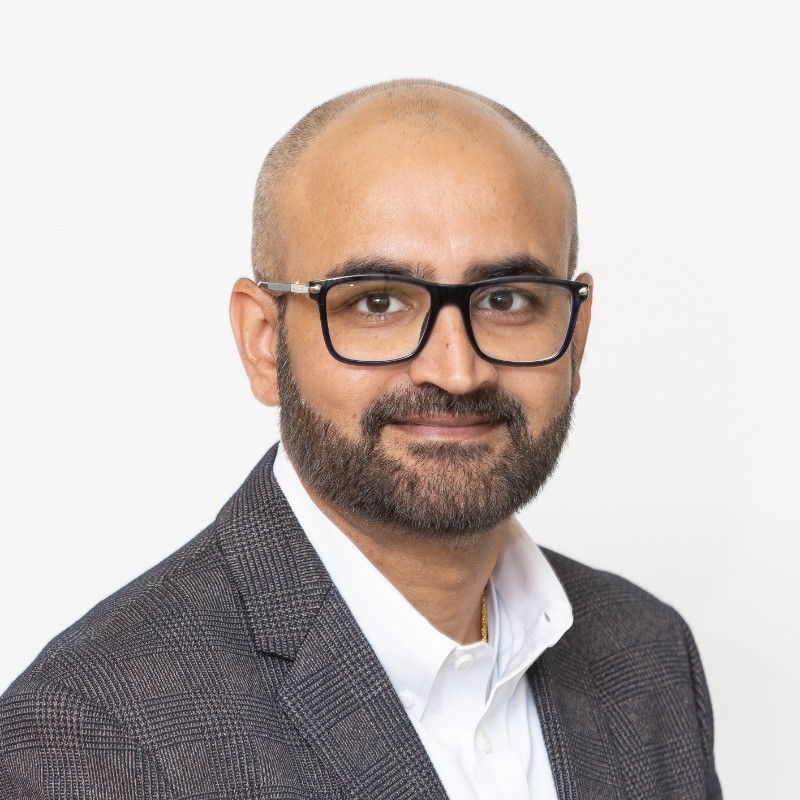
In this episode Mike is joined by Ashish Saraogi, VP Treasurer at Solstice Advanced Materials, a leading specialty materials company.
Ashish shares his experience of building a treasury function from scratch following Solstice’s separation from Honeywell, including establishing banking relationships, implementing treasury infrastructure, and building a global team.
He also explores how AI is helping smaller treasury teams develop financial models and improve efficiency, why treasury professionals must understand the underlying processes before relying on technology, and how adaptability, continuous learning, and a willingness to embrace uncomfortable challenges are becoming increasingly important for treasury professionals.
Main Topics Discussed:
- Building treasury from scratch: Establishing banking relationships, systems, and a global team.
- Using AI in treasury: Developing financial models and improving efficiency with smaller teams.
- Mastering the fundamentals: Why understanding treasury processes matters before relying on AI.
- Capital markets experience: Managing debt, investments, interest rates, and financial risk.
- Decision-making under uncertainty: Making informed decisions without having all the answers.
- The future of treasury: Exploring AI, digital currencies, and evolving payment technologies.
- Building effective treasury teams: Combining financial knowledge with technological expertise.
- Continuous learning: Embracing challenges, adaptability, and career development.
You can connect with Ashish Saraogi on LinkedIn.
—
🤝 Treasury Executive Exchange, Chicago – May 25th-26th 2027 – Join leading treasurers from across the US and internationally for two days of small roundtables, honest conversations and practical discussions, in partnership with the AFP: https://www.financialprofessionals.org/events/meetings/treasury-executive-exchange
🎓 Exclusive CTP & FPAC discounts – Find out how much you can save: https://treasuryrecruitment.com/partners/afp/
💡 Earn CTP credits by listening – Selected episodes are AFP-accredited. Listen, take the quiz and earn your certificate: https://treasuryrecruitment.com/podcasts/
🌍 Treasury Career Corner LIVE 2027 – Join us at events across London, New York, the Netherlands, Houston, Chicago and Dublin: https://treasuryrecruitment.com/events/
🎙️ Subscribe to the Treasury Career Corner podcast – Never miss an episode:
CLICK HERE for 🎧 Spotify Podcasts
CLICK HERE for 🍏 Apple Podcasts
Mike Richards, CEO, The Treasury Recruitment Company: So welcome to this week’s Treasury Career Corner podcast, where I interview treasury professionals about their treasury careers.
Mike: Each and every week, I talk to treasurers about how they built their careers, where they are now, and where they see both themselves and the treasury profession going to next. In this week’s show, I’m joined by Ashish Saraogi, the VP Treasurer at Solstice Advanced Materials. Solstice Advanced Materials is a leading specialty materials company that advances science to achieve smarter outcomes with high-performance solutions across refrigerants, semiconductor materials, protective fibers, healthcare packaging, and much, much more.
Mike: But I’m gonna get Ashish to explain a little bit more about the company later in the show. what I want to do is go back to his earlier career, how he first then discovered… he then discovered, finance, he went through finance, then discovered treasury. Ashish, enough from me. Over to you, sir.
Mike: How did it first all start for you?
Ashish Saraogi, VP, Treasurer, Solstice Advanced Materials: I came to the United States about 24 years no- or 25 years now. It was 2001, August of 2001, just a month before September 11th- Oh, wow … and everything, you know- Stopped … changed, I guess- Yeah … in terms of, America and the world.
Ashish: but I came here to do my master’s in information systems. I was an engineer by background, but I was always interested in IT. and straight after that I got a, a job through on campus with ConAgra Foods. so went to Omaha, started working there, and then after six years of spending time in IT audit, I moved to Bristol-Myers Squibb.
Mike: But before you did that, just Hang on, I just want to ask, IT audit, it’s a very different background sort of thing. you’d- you’d done that straight from your degree. Did you think… did you have a professional goal? did you think treasury might be in there, or was it completely off the radar at that time?
Ashish: No, treasury absolutely not. I never, thought about actually being in finance, let alone in treasury. I was more, being from an engineering background, I was more, technically, technologically, oriented. So I didn’t really think about finance per se. But when I went into… honestly even going into IT audit was more of, this is the job that is in front of me.
Ashish: Should I take it or should I wait to get into like a software engineering, you know- career path? So what was offered was like, okay, I- I can get this job, I can get my foot in the door, and I can start working in the IT, sector. So I got that opportunity, but then, as I went through a- and working in audit, I started to realize the value that audit really created.
Ashish: First of all, for your own personal thing, you learn, a lot. You see a lot of different things in the company, like when you’re in audit, and you learn a lot very quickly, right? So you go into, let’s say a systems audit, yeah, and you’re looking at applications and how that work, but even in that application space you have to understand the business process that it is supporting.
Mike: Yeah.
Ashish: And so that actually made me really- Understand the companies, the businesses, the business processes, and how it all worked together, right? So I found that really interesting, so I stuck with audit. and then when I started with Business-Minded Squib, again, started in IT audit, but then I started to look into more business process, relationships, vendors, fin- finance audits.
Ashish: So I tried to diversify at least from a work ex perspective, not doing just one thing, but also, getting other experiences.
Mike: And when you joined BMS at the time, how big were they compared to now? because that was, a number of years ago sort of thing.
Ashish: Yeah, when, I joined BMS, I think we had about $6 billion of overall debt on the balance sheet for the most part, right? And, we had a few products. Plavix was one of our major, I think it was, like, 30% of our sales was in that product.
Ashish: and then over the years, we went through a patent cliff where we had to, basically Plavix went off patent, and we had to re- introduce new products. And patent, Plavix got replaced by Eliquis, which is a much superior product. so in, in the pharma space, it’s like this life cycle, right? You go through the R&D phase, you identify a, a medicine that is going to change people’s lives, right?
Ashish: And then you go through, the commercial phase where the product is in patent, you’re earning a lot, right? And then it goes off pa- patent, and then you lose out on those revenues.
Mike: Yeah.
Ashish: But it, this is the constant revenue cycle where you have to continue to innovate and find new medicines for your patients.
Mike: So how did that then… As you said, you’d done all this time in IT audit, and then this natural move from IT audit into cash management. How did it come about?
Ashish: Again, it was actually audit that helped me make that transition.
Ashish: because I was trying to take on a lot of different… And I was challenging myself, so even if I had only an IT background and an engineering background, I was working and doing a lot of business and finance audits as well.
Ashish: And one of the things that I was also leading for Bristol-Myers Squibb was something called the CFO Awards Program, which was, like, an annual thing where we used to identify projects or finance projects, if you will, that all the rest of the organization, the commercial, R&D, treasury, accounting, controllership, all of those teams used to work on certain process improvements or, you know, risk management projects for the company.
Ashish: And we used to showcase that in front of the fin- finance leadership team- Yeah … and vote to, vote on, the top three projects for the year. So I was leading that from an audit standpoint, and that required me to interact with a lot of senior executives, finance executives in Bristol-Myers Squibb.
Ashish: And the treasurer had a liking towards me, like he thought he saw the, value I had created with this award as well as the other project I had led for him in the past. And, I got into like he, a mentor-mentee, relationship with him. And I asked him, “Jeff, I was always interested in joining treasury.
Ashish: I’m very much interested in capital markets.” like right from the beginning. even though I was working in IT, I had this inclination about businesses and, understanding how the capital market space works. I asked him like, “What should I do? I want-” Yeah. “… to get into treasury. how do I make that transition?”
Ashish: He said, “Ashish, if you go get an MBA, I might consider you for a treasury role.” So that’s what I did. I went, back to school while I was still working- Yeah … of course, at Bristol-Myers Squibb, and, the company sponsored me to go through that program. and after my MBA, I went back to Jeff, and I was like, “Jeff, you asked me to get an MBA.”
Mike: Here it is.
Ashish: Yeah. here it is. I’m now ready. and he gave me my first role, and I started in cash management. I was responsible for, managing the US cash forecast and US liquidity, as my first job.
Mike: Your biggest challenge walking into that role coming from, the, the head space?
Mike: You, yes, you got the MBA, but now you’re in a practical cash management treasury role.
Ashish: I think the biggest challenge for me was, at least from an IT audit or audit to actually in the business, was in audit I was literally looking at things that have already happened- the decisions that were already made, right?
Ashish: And making sure that did they address all the risks. did, or did we put the company at risk in some ways in not following the process. So it was mostly, checking the doer rather than being the doer. Yeah. so that was my biggest challenge is now I was going to be the doer.
Mike: Now you were the doer. You’re the doer, ex-doer and everything else.
Ashish: and the biggest thing was to make decisions or business decisions with, with not having all the answers, if you will, right? Because y- you have to first… Let’s, as an example, if I have to make a decision of how much money I need to leave in the bank, right?
Ashish: I know for something, like I would know from the start of the day these are the transactions I’m expecting, but what I would not know if there’s something that happens, late in the day, like some sort of an emergency payment. Yeah. So things like, you have these half-baked information where you have to make a call about how much money you leave and how much money you would invest, just as a…
Ashish: So those sort of decisions and, that, you have to make and, you kinda get… On the audit side, you kinda come back with, “Oh, why did you make that decision? That didn’t… in hindsight, that didn’t make… It didn’t sound right,” or, “Did… You should have done this versus that,” right? Versus in this case, it was like, okay, I have to make a decision based on what is available or the information that’s available.
Ashish: Much. Yeah, how much.
Mike: Yeah. How
Ashish: I had to learn an entire new language, right? being in IT and now I was in finance. I had to learn the finance language, and, dealing with the, core finance teams. That was also a big challenge.
Mike: And so you then went cash management to capital markets, and then treasury operations.
Mike: Talk us through those. Z- Say, you’ve had many years, with Bristol Myers Squibb, but, that was obviously, you had those audit, that sort of foundation of audit stuff. Now you’ve learned this new language in finance. Now you’re… how did you learn, or what happened next?
Ashish: actually you brought up something that I, should have mentioned earlier as well.
Ashish: I see myself as a constant learner, right? And, one of the flaws, if you will, is like I get bored quickly. So I’m always looking for something new to do.
Mike: Yeah.
Ashish: So when I started with the, cash management piece and I was managing US liquidity, Bissumai Squibb in 2019 announced the acquisition of Celgene, right?
Ashish: Which was one of the largest transactions I think in pharma since then, right? Yeah. Enormous, yeah. As ever. and that gave me an opportunity to work very closely with the treasurer on a daily basis because we were going into the debt market, and I think that time raising about 30, 36 billion dollars of new capital because it was a debt plus equity deal.
Ashish: it required us to know exactly how much cash we would have, available for the de- for the deal at close, right? So I had to really forecast all the cash that I would have globally, right? Plus all the cash I would have in the US to make all of the deal closing payments. So it was working very closely with the capital markets team as well as with the treasurer, on a regular basis.
Ashish: and that got me the, the next role where, Jeff had an opening in the capital markets space where he was like, you’ve done a really good job on managing cash and liquidity and investments. I want you to take that next step into capital markets,” where I would then be responsible for the investments as well as managing that debt portfolio.
Mike: And with that- y- thinking about it, again, giving advice to the people listening, what’s key about that? Because a lot of people, you know, and I did a newsletter about it a while ago, that capital markets, if you can get it, is great. But you don’t have to have it in order to progress your treasury career.
Mike: There are different steps and things like that. But this is a great one to fill in. what did it give you, and what did you enjoy about it?
Ashish: If you want to be a treasurer, you need to go through capital markets.
Ashish: It is a core, I think, requirement for the job, at least in my opinion. because, you’re not just d- managing cash and debt, it’s also you’re looking at risk management, you’re looking at FX, you’re, you’re looking at ways to manage your interest expense, increase your interest, income. So there are things like that you have to understand, right?
Ashish: So I would say capital markets is going to be key if you want to be treasurer someday, a- and getting that experience. And, that’s really what I liked about it is, the ability to, work closely with the business, work with the banks, understand what our risks are from a finance perspective, and how do I mitigate, the risk for the organization.
Mike: And you were in capital markets at an interesting, challenging time. A volatile time and things like that. We had COVID and everything else around that time. What, was that like? how did you stay calm and, not have sleepless nights?
Ashish: Oh, I had a lot of sleepless nights. It was a new job.
Ashish: I had very little experience, right? And, the fact that we all had to be remote, right? For a year and a half while I was in that role, at least to start off with. so a lot of learning on my own, right? was one of the things that I had to do. Going through previous transactions, what was executed, how they did that, what decisions were made.
Ashish: Coming up with, just my own personal goals of this is what I need to do today or this week, right? this week I’m gonna sit down and understand our debt portfolio and what is… how much of it is floating, how much of it is fixed, what can I do to minimize my interest rate exposure, And the next week would be, okay, let’s look at FX. Let’s look at, what our currency exposures are. How do we mitigate those currency exposures, either through forwards or, and do we do balance sheet versus do we do cash flows? So I put myself into those w- weekly things to, help, educate myself and lay the foundation so I can do a better job in that role.
Mike: And you touched on there before about within cash management and things, making decisions when you haven’t got not all of the facts, but when you’ve got limited data and evidence of things. any lessons you learned w- when there isn’t a perfect answer?
Ashish: one of the things is to… if you have…
Ashish: you’re not always making decisions on your own, right? So it is, you’re working in a team-
Mike: Yeah …
Ashish: where you have identified certain things, you have recommendations, but then you take that up with your seniors who have a lot more experience to understand the organization a lot more than you do, or have insights into perhaps transactions that they, have been working on or would be coming in the future, which could have an implication to what you’re proposing, right?
Ashish: So it is a lot of okay, working in a team, keeping everybody updated on what you’re working on, and getting feedback and, learning from others.
Mike: Yeah.
Mike: But bring us up to date. what’s happened since, and Solstice and things like that. Just give us a quick sort of run through from there, because, yeah, Bristol Myers up to now.
Ashish: Yeah. capital markets and then, Sandra Ramos became treasurer. Jeff, retired. she then asked me to lead the pensions team, which is again, a different challenge altogether, a different… although there were learnings that I could take from cash management, from capital markets into the pensions role, but pensions is a whole different field.
Ashish: whole different investment, philosophy as well. you’re now looking at not just bonds and corporate, investing. You’re also looking at equities, right? And you’re looking at, what do you need to do to improve the funded status of your pension plans. and then, what type of investment decisions you would have to make to, make- Yeah
Ashish: to achieve your funded status. It’s a whole different world. Again, starting from s- I had a good baseline, at least from a capital markets perspective, but then sitting down with people who’ve done pensions before. I had a young team, but they, had some experience. So I was learning from them and then coming up with, “Okay, I have now this foundation.
Ashish: What else can we do to, improve, the balance sheet for, for BMS?” So we had this strategic direction that we would have to start de-risking some of the pension plans, at least in areas where we were not strategically aligned. So we started looking at, okay, how are ways that we could de-risk our pension plans and perhaps, get out of that business, especially since we are not going to be in those countries or in those businesses for a long period of time.
Ashish: So we started working on that. and then this opportunity came up with, Solstice where- I had done cash management, I had done capital markets, I had done the techno- technology transformation in the middle as well, where, I had done a lot of process auto- automation with my technical background and my treasury background.
Ashish: And then going into the pensions role, I felt like I had done a lot of different things in treasury. I was now ready for my next role.
Mike: Yeah.
Ashish: And that was basically getting To the assistant treasurer role in Solstice.
Mike: And who are Solstice for, the listeners that don’t know?
Ashish: at that time when I joined, it was part of Honeywell.
Ashish: So Honeywell was actually breaking into three separate companies, or they were, or, spinning off, into three separate companies.
Mike: Yeah.
Ashish: And Solstice was going to be the f- sp- first spinoff. So the challenge, what I’ve really found interesting was this was an opportunity for me with all the various different, experiences I had with BMS, was to move into this new organization and set up treasury from scratch.
Ashish: usually when you get into a treasury role, you get- we don’t usually have these sort of opportunities where, you’re setting up the whole function right from the beginning. And, and where you s- you could add real value is that you’ve seen what good looks like, and what is, best in class.
Mike: Yeah.
Ashish: But then you didn’t lay the foundation for it, right? you were there in the middle, you tried to execute it, and you got it there. But none of those foundational work was already done, so you didn’t have any contribution to that. So this was an opportunity for me to start and build that foundation so that we could then, make, move the organization.
Ashish: So that was the challenge and why I took up this role, with Solstice.
Mike: And, but when you got in there, people say that y- you’re not a startup. surely, you’ve got all this past legacy stuff. You’re a successful company. That’s why you’re spinning off and things. But what was that like for you walking in when…
Mike: ‘Cause sometimes they say, we use this system, but we now can’t use this system.” Or how does that, how does that feel?
Ashish: I would say we were a startup, right? We didn’t have a TMS. we had the legacy bank accounts- Yeah
Ashish: but then we were setting up new banking relationships. we had to set up our, our credit agreement, our, revolver. so all of that was pretty much new. The whole team had to be hired. We had, I think, two or three individuals that were Honeywell employees that decided to transition over to Solstice, but we had to establish the whole team as well, from cash management to capital markets.
Ashish: and then also create additional hubs. Yeah. So in EMEA, we had to hire a team there out of Ireland, as well as in, in Shanghai for managing our APAC businesses. I would say we were a s- a startup. We had some things that were available, at least for banking, a bank account and banking relationship standpoint.
Ashish: Yeah. But the rest of the treasury infrastructure had to be set up from scratch.
Mike: And so when you’re doing that, how do you influence it when you’re… guess you’re right up here, but you’re also wanting to recruit a team down there, that so, maybe some junior staff and things.
Mike: How, do you lead that?
Ashish: I, would say it was, definitely a challenge because a lot of things were moving, and it was moving quite fast, right?
Ashish: Because we had to support the business as soon as, you hit that day one.
Mike: Yeah.
Ashish: because business still runs, and there wasn’t a, an option for us to say, “Hey, we’ll wait two, three days,” before everything would… So business continues, and we had to work on setting up the infrastructure as well as hiring, the right individuals, in the company.
Mike: So looking back over that time, I want to talk about the future of treasury and things like that. Any difficult challenges that you’ve overcome, and any advice you’d give to people out there going, “Wow, that was, a challenge, but we got through it”?
Ashish: I think for us, at, least from a sources standpoint, it was on day one getting access to all of our banks, right? Because Honeywell was pretty much managing all of the cash as well as liquidity till the last day, right? For us to be set up to support the business the following day after spin, right?
Ashish: How would we go about doing that, keep creating that work plan. And, I would say, getting ownership of our debt structure. understanding our credit agreements, understanding the covenants that we have to then, comply with. and how do we support, the capital markets piece for, the executive teams.
Ashish: Like, how do we support our balance sheet? How do we support our FX? How do we support, providing liquidity where and when needed- Yeah … into rest of our businesses.
Mike: And you’ve… As you talked about earlier, you’ve got a different background with IT and audit and things like that. Do you find that means you look at treasury and some of the problems you face when you’re talking to your team members, do you look at it differently?
Ashish: W- when you say look at it differently, i- in what lens, Mike?
Mike: just more that y- you’ve got an… someone that’s come up treasury, they’ve come up treasury finance route, things like that.
Mike: But before we got to that, I’m thinking does that mean you look at it through a different lens, would you say?
Ashish: L-like every, what, The way I look at it is there is a problem, and I need to come, and we need to come up with a solution, right? And there are ways to come up with a solution. Either you go with what’s already been done, and what you can learn from your peers, like this is how they handled it.
Ashish: Or there could be ways where you can use tools such as AI and create a different, better, maybe perhaps a more efficient process. Or, you look at, okay, this is how your parent company did it. Maybe we lift and shift that and then think about transformation, on the other end of it. Yeah. So there was these things that we have to really…
Ashish: At least that’s how I think about it in terms of this is my problem, how do I come up with a solution? And these are some of the buckets I could put things in. Talk to my peers, what have they done? Use AI or use these tools that are available to me today and see if I can design something.
Ashish: Or, if it is not broken, perhaps lift and shift and then transform on the tail end, on the other end,
Mike: You mentioned AI technology. Obviously, it’s the forefront of everything. we, joke that any, any conference you go to, if you put AI at the end of it, the room fills up. what, are your thoughts?
Ashish: No, I feel AI is definitely going to be, It’s already a game changer, right? at least for us in Solstice, we’ve been using… because we are a small team- Yeah … it has actually really augmented, all the things that we have been able to achieve in the last, just a year now that we’ve been, a standalone business.
Ashish: actually it’s been less than. It’s still less than it was October of the, October 30th last year, so we still have, about 25 days left, for us to hit our anniversary. But AI helped us create a lot of our modeling capabilities. we had to create everything internally.
Ashish: So we had to create our own intrinsic value models. We had to create our own, earnings at risk models for FX and currency exposures. We had to set up our infrastructure, for, the whole TMS, because we didn’t get that. so, AI has helped us with a very small team still do all of those things and, create all those modeling capabilities really quickly and stand that up for the organization.
Mike: And you and I talked about digital currencies before and, I talked about the fact that we’d, and interviewed some treasurers that have been doing some education about it and things. Do you, that as a- another challenge for treasurers, another thing into the toolkit as it were?
Ashish: Crypto and digital currency I think would be the way of the future and how banking and payments would actually happen. and as, as treasurers and, people working in capital markets, we have to get familiar and comfortable with, with these products for the future. especially with stablecoin, or crypto if you will, or other digital currencies, it is going to transform, how payments are made in the future and how quickly they can be made across the globe.
Mike: Yeah.
Ashish: it’s going to transform the banking infrastructure. And of course things will evolve and we will, we’ll all have to, yeah, work accordingly, but I think that is going to be the way of the future.
Mike: And again, looking at that future and we’re going, what you and I will be at various conferences, whi- which of the sessions you’re thinking…
Mike: Just use, sessions or just topics that what el- what else do you think other treasurers should be, not thinking about, but they’re, what should they be preparing themselves for, or what are the other challenges that you see day to day?
Ashish: One of the challenges is finding, at least I feel, is finding the right people for your team, like with the right skill sets, right?
Ashish: It’s no longer just that you need to find somebody with… who is a treasury person or a finance person. I think you need to have somebody or find people who are not just comfortable on the finance side, but also comfortable working in technology. I think that’s where you’re going to have a lot of challenges because people who work in the technology space tend to stay in the tech space because that’s where they’ve been trained, they’re comfortable in that, and they can see that they can add value.
Ashish: And people who are in finance and accounting, they’ve been doing that really well, right? But I think for the future and how treasury organizations evolve, you would need to have people who are comfortable in both spaces.
Mike: But you made that shift. How would you… You’re, a veteran of that, if you like. So how would you g- give people advice about how do you get people to cross over that sort of, that bridge?
Ashish: it is hard, right? And, one of the things I guess, like I was telling, saying earlier is I feel like I’m a lifelong learner, right?
Ashish: And I, look at where things are, and I was just walking through Penn State University, and I was thinking about what… how could it be for me to be in a university environment today, and learning of all these new things that might be happening, at least in the tech space, and in the finance space with digital currencies and other, everything else, right?
Ashish: So y- it is hard, and you, would want people who, you know, who can live with uncertainty and live with ch- and are constantly looking to challenge themselves and, and are comfortable being uncomfortable.
Mike: Yeah.
Ashish: I love it. the… That’s how I would put it. it’s…
Ashish: You need… A- and I feel that’s how I was able to transition is it’s because I, could back myself. I knew if I was given, three to six months in any job, I would… could learn it, and I can do a good job in it, right? so that’s why when I’m looking to hire people, I look at not so much of their background, right?
Ashish: I look at places where they have actually gone above and beyond or have challenged themselves, right? Because, people have a tendency, and, a lot of times it’s like, “I’ve been doing this. I’ve been really… I’ve been… I know this job. I have made these relationships. I’m comfortable.
Ashish: The organization knows me. I know the company. why would I do anything else?”
Mike: Yes.
Ashish: And I, think for the future, the way of the future is that you have to be… You have to adapt, and you have to adapt really quickly.
Mike: Yeah.
Ashish: And you have to keep yourself in these uncomfortable situations because if you don’t, you’ll get stagnated, and you won’t be progressing.
Ashish: So it is required for your own growth, it is required for the company, and it is required for any treasury organization going forward.
Mike: Maybe I, wanna s- deep dive on that just a little bit. But how do you assess someone like that? You say you look back at their history, obviously, when you’re interviewing someone.
Mike: But how do you assess that if you’re interviewing someone or you’re as- you’re assessing people?
Ashish: Some of, the insight you could get in their resumes itself, right? Yeah. What has that candidate, he or she- Done … has done in their lifetime or, progressed. It could be that they could have been treasury professionals all their lives, but even being in treasury- Did they take on new things or did they just stick to, let’s say-
Ashish: for instance, I could have just stuck to being a cash management person managing US liquidity and forecasting, right? I could have just done that. but did that person take that knowledge and move it to something else within treasury itself? It doesn’t really matter that they have to do something else, but have they progressed and have they taken on new and new challenges?
Ashish: Did they find inefficiencies? Did they look at, technologies and tools? things like finance people are not very comfortable with, like working in tech or- Yeah … working in systems. So those sort of things you c- you can look at their resumes, and then of course, you, when you go through the interview process, you have to assess, i- in terms of their own experiences and their decision-making, why they made certain decisions.
Ashish: what was available to them in terms of information, and were they comfortable making those decisions without im- without having all the, Ts and dot it’s done, right? Did, with incomplete information, were they comfortable doing that? Yeah.
Mike: again, and, I thoroughly agree, and it’s one of the things that we talk about, people detail on, their resume where they’ve made an achievement and where…
Mike: not saying, “Hey, I’m flexible, I’m motivated.” Yeah, we s- we hear that. It’s like, “What have you achieved? Where have you moved the needle? Where have you made a difference?” That’s right. Those three things, So that, that’s one of the key things.
Ashish: And that’s, why I think, ta- and it’s evident in my own career progression, is like I’m always looking for that next thing.
Mike: Yeah.
Ashish: How do I… Because I know I would get stagnated and bored very quickly.
Mike: Yeah.
Ashish: If I’ve done it, I know I can do it, I can do something else now. Yeah. And I can transition this to somebody who could make it more efficient or manage it better.
Ashish: So I’m always looking for that next challenge.
Mike: Okay. We’re Gonna put your LinkedIn details in the show notes. But if someone’s listening to this today, they’re, they’re on their way to work, they’ve got coffee or they’re, they’re in the office and they’re just, What, takeaways at different levels? more junior team members maybe you’ve given to your junior guys, to the more senior, what, are the takeaways you’d give people?
Ashish: I, would say anybody’s career, it’s not linear, right? You have to be comfortable challenging yourself, right? Like we’ve been talking about, right? it is important to get technical expertise, right? Especially in this AI world where if you just rely on a tool, you could be wrong, right? So having a good technical…
Ashish: So, somebody who’s really junior, I would tell them do not use tools. Use or understand the process yourself first. Get that foundational, credibility or that learning, and then move into, using the tools to make things more efficient.
Ashish: And I… Because I had the background of what or how do we calculate dilution, if you will, for let’s say a stock grant, right? And if I tell the AI model, “Create me a share count,” “Read it out a share count model,” it’ll spit out a model, but how would I know that it is correct, and how does- Yeah
Ashish: and is it calculating, correctly? So that’s why you need to have that foundational base. and, and, I already talked about challenging yourself, but always look for, stretch assignments. Grow yourself, challenge yourself, into these, Other areas where you feel they may not be connected today- Yeah
Ashish: but in the future you would always find that whatever you learned in that job, you could really, you know- Totally … take it in this new role that you might have available to you.
Ashish: I, I’m a big believer in destiny, right? And, I think I’d said earlier in the podcast is I did not have a grand master plan to get to becoming, that, I would become a treasurer someday, right? Everything was like
Ashish: a stepping stone to the next thing, right?
Ashish: And it was always something more challenging and, you know, something that added to my overall… but then it would be disingenuous on my part to say that I did not have help. I had a lot of help. I had really good managers, and really good directors, and people, and peers who, really helped me through this, right?
Ashish: So you need people who could sponsor you. But of course, that also requires you to show that you have the capability to deliver, right? Yeah. So you have to lay that foundation, and that’s when people will start getting more comfortable with giving you more challenging, opportunities.
Mike: So it’s like an investment, and they invest in you, and you repay their investment, as it were.
Ashish: And that’s one of the leadership things that I had to learn myself as well, is, when- when I moved into, more of the people manager things from being a technical expert in certain things, it was like I needed to let go of the technical pieces, but be more, like, giving direction, and then helping others to do what I used to do, or create that skill set first before they can get into more managerial positions.
Ashish: So I think that- that, is- is also key. Yes, you need to have the technical skills, but you also need good sponsors and good managers who believe in you, and who are willing to take a risk with you.
Mike: Ashish, thank you very much for your time today. Been great show, and lovely to talk to you about your treasury care.
Mike: Thank you, sir.
Ashish: Yeah. Thank you, Mags.
Mike: Thank you.
Ashish: Bye.
- Master the basics first. Understand treasury processes before relying on AI-generated results.
- Use AI to enhance your expertise. Improve efficiency without replacing technical knowledge.
- Embrace uncertainty. Learn to make decisions with incomplete information.
- Develop diverse skills. Combine financial expertise with technological capabilities.
- Challenge yourself. Take on new responsibilities and step outside your comfort zone.
- Build strong relationships. Seek mentors and sponsors who support your development.
- Stay adaptable. Keep learning as treasury technology and practices evolve.
🎧 Earn CTP & FPAC Credits by Listening to the Podcast
Whether you’re at the gym, on your commute, or walking the dog – you can now make your podcast time count toward your professional development.
We’re thrilled to share that Treasury Career Corner podcast episodes now qualify for CTP and FPAC recertification credits through the AFP’s Independent Study category.
How It Works:
- Listen to a Treasury Career Corner podcast episode
- Complete the short multiple-choice quiz
- Score 80%+ to pass
- Submit your credits to AFP as part of your recertification record
➡️ Credits earned per episode length:
- 30 mins = 0.6 credits
- 45 mins = 0.9 credits
- 60 mins = 1.2 credits
No filler. Just real treasury conversations covering leadership, strategy, risk, technology, and team building.
🧠 Quick Facts:
- 📝 Quizzes contain 6–10 multiple-choice questions
- 🎯 You need 80%+ to pass
- ✍️ Quiz submissions are reviewed manually
- 📋 We must then VERIFY you are a CTP treasury professional to help prevent automated or non-genuine submissions
- ✅ Once verified, we mark your quiz and send CTP credit confirmations every Friday
- 📨 If you need results sooner? Then email mike@treasuryrecruitment.com and we’ll try to prioritise the marking of your latest quiz
NOTE: In line with AFP compliance requirements, no more than two quizzes may be completed per day.
