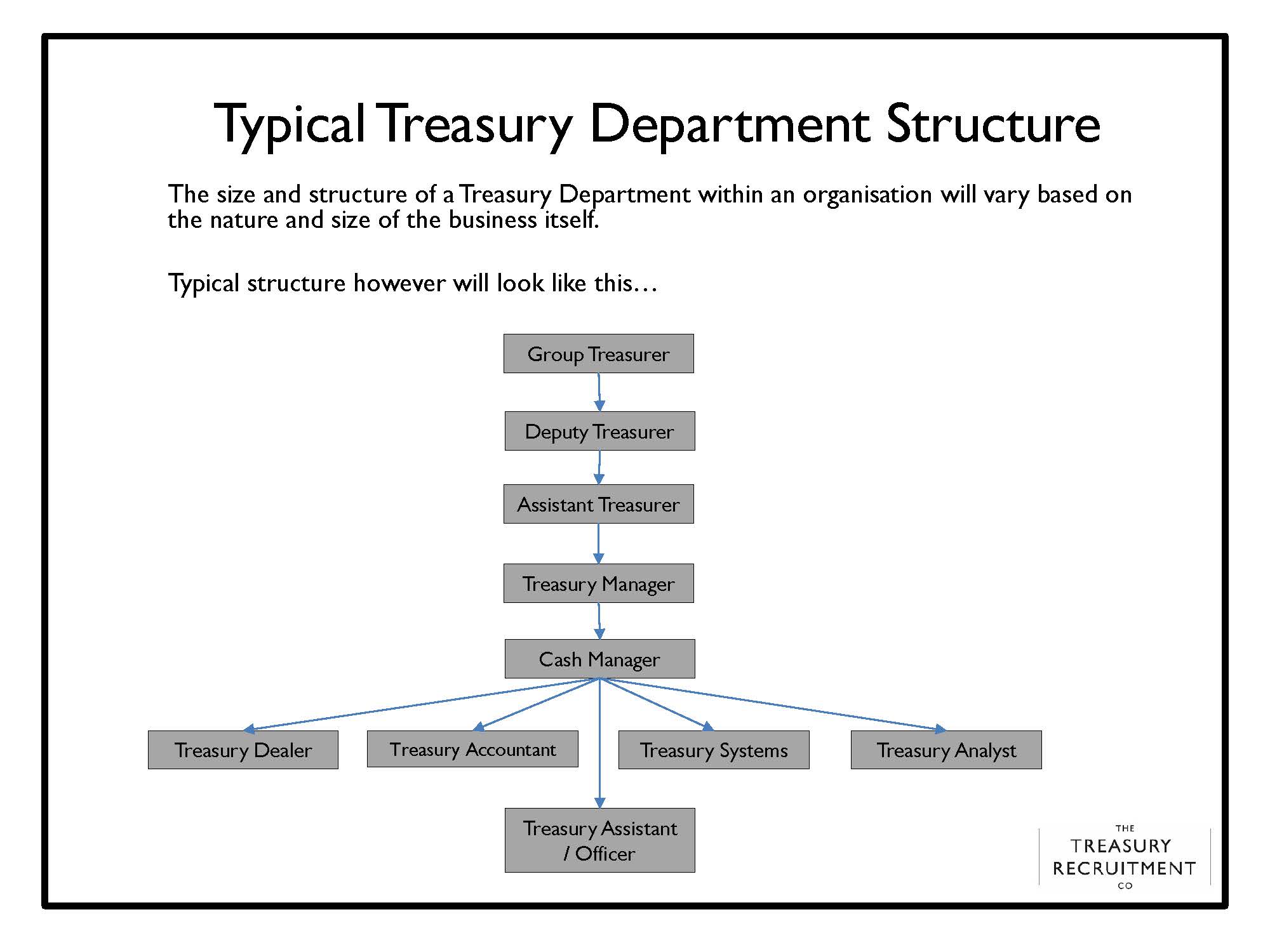
The simplest way to explain it;
- an Assistant Treasurer assists, whereas
- a Deputy Treasurer deputises
But let me explain more!
The Assistant Treasurer
The Assistant Treasurer role tends to feature in larger organisations.
In some businesses there can even be 2 Assistant Treasurers — one might focus on Front Office activity and supervise the operations team whilst the other oversees treasury controls and the Middle and Back Office functions.
An Assistant Treasurer role is hands-on with strategic touchpoints.
On any given day, an Assistant Treasurer might be setting FX and interest rate strategy, executing funding and deals, managing risk exposures, handling intercompany loan documentation, running rolling cash flow forecasts, or making sure treasury activity stays compliant with group policies.
Crucially, an Assistant Treasurer is expected to refer many major decisions up the chain to the Group Treasurer.
They are senior, trusted operators but they are not the Deputy.
The Deputy Treasurer
The Deputy Treasurer is a different proposition. Where there may be two Assistant Treasurers in a large business, there is usually one Deputy.
They are the defined second in charge and the deputy to the Group Treasurer.
Often the most important distinction is authority: a Deputy Treasurer carries the same sign-off capability as the Group Treasurer and is expected to act in their stead when required to do so.
The remit is correspondingly broad.
A Deputy Treasurer takes overall responsibility for daily treasury operations, oversees the Treasury Management System, helps arrange and implement business debt across bank and debt capital markets, ensures financial risk is identified and mitigated, manages the Group’s liquidity position, maintains key banking relationships and leads the wider treasury team.
They oversee front, middle and back-office activity rather than sitting within one of them.
How to Tell Them Apart
Job titles across treasury can be misleading.
A Treasury Manager in a mid-sized business may be doing the work of an Assistant Treasurer elsewhere, and an Assistant Treasurer in a smaller organisation may effectively be operating as a Deputy.
The most reliable way to assess seniority is to look past the title and examine three things:
- The scope of decisions the person can sign off on
- The breadth of the function they oversee
- The reporting line into the Group Treasurer
As a simple rule of thumb.
- an Assistant Treasurer runs a significant piece of the treasury function and escalates major decisions upwards
- a Deputy Treasurer is empowered to make those decisions themselves.
Why This Matters
For hiring managers, getting this right affects everything from the brief to the calibre of candidate you attract.
Briefing a search for an Assistant Treasurer when the role genuinely needs a Deputy will lead to mismatched expectations on both sides.
For treasury professionals, understanding where you sit on this ladder and what the next step actually looks like is key when planning you next step in your treasury career.
Both roles are critical to a well-run treasury function.
The Assistant Treasurer brings depth and execution across a specific remit.
The Deputy Treasurer brings authority and breadth across the whole function.
Knowing which one you need or which one you are – is the first step to making the right hire or the right move.
If you are recruiting for a senior treasury role or exploring your next career step, we would be delighted to help.